
Give your prayer plant bright, indirect light and evenly moist soil. Water less in winter. Keep the air humid, and keep the plant away from cold drafts. Skip direct sun, which bleaches the leaves. Get those four habits right and most common problems, like crispy edges, get easier to fix.
Most prayer plants arrive the same way. Someone gives you one, or you grab it on impulse for those painted-looking leaves. A few weeks later, the edges go crispy and the leaves curl. I’ve been there, and it feels awful.
The good news is that you probably did very little wrong. Your plant is not a lost cause. This evergreen tropical plant is grown indoors in temperate climates, and it just wants steady conditions. Here, I’ll walk you through the basics of Maranta care and fix the problems that trip people up, one at a time.
Wait, Which “Prayer Plant” Do I Actually Have?
I was confused by this for a long time. One store labeled a plant “prayer plant.” Another labeled a nearly identical one “Calathea.” I even bought the wrong one once. The truth is that the name “prayer plant” gets stretched over several relatives.
The one that really earns the name is Maranta leuconeura. University of California extension writers call it the “true” prayer plant. It is an evergreen tropical plant in the arrowroot family. Ctenanthe and Stromanthe are relatives that also get sold as prayer plants.
Then there is Calathea. Many plants sold under that name have been reclassified as Goeppertia. So your tag might say Calathea, Goeppertia, or both.
| Name on the tag | What it means |
| Maranta leuconeura | The true prayer plant. This guide is about this one. |
| Calathea or Goeppertia | A relative. Many Calatheas now carry the Goeppertia name. |
| Ctenanthe or Stromanthe | Other relatives sold as prayer plants. |
Why does this matter? The Latin name tells you what you really bought. This guide covers Maranta leuconeura. Relatives can be pickier or more relaxed, so I don’t want you copying advice meant for a different plant. The name also matters when you check pet safety lists, which I cover later.
Before you read on, check your tag. If it says Maranta leuconeura, you are in the right place. If the tag is gone, look up the seller’s page for the Latin name. Take ten seconds to check. It saves a lot of guessing later.
Light, Temperature, and the “Cold Window” Warning
Let’s settle the outdoor question first. Some sellers say prayer plants can live outside in zones 11 to 12. NC State Extension lists only USDA zones 11a and 11b. That is the warmest slice of the map, so for almost every reader, this is strictly a houseplant. If you do live in 11a or 11b, NC State describes dappled shade, not open sun.
Florida readers may wonder about invasiveness. UF/IFAS assesses non-native plants in Florida natural areas and does not consider this one a problem species at this time. That assessment covers Florida only, so I can’t speak for other states.
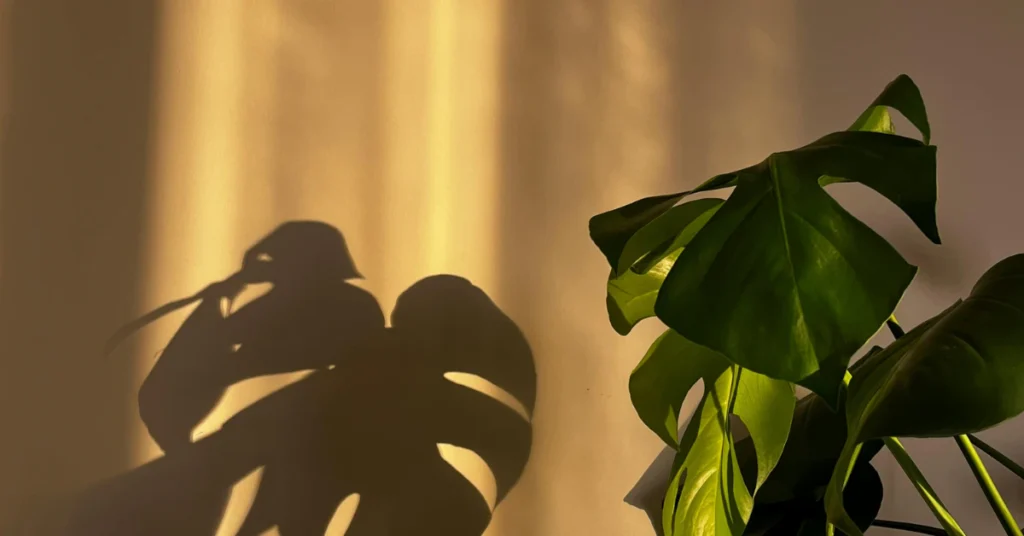
Indoors, give it bright, indirect light. Think of a bright room where the sun’s rays never hit the leaves directly. Sheer curtains can soften strong rays. Direct sun bleaches the leaf colors. Lower light is tolerated, but the colors fade, so don’t push it too far into a dark corner.
For temperature, UF/IFAS research on commercial growing shows that 70 to 80°F is ideal for growth, with good growth up to 90°F. That is a greenhouse number, not a rule for your living room. Still, it tells you this plant likes steady warmth. NC State adds that it does not tolerate cold drafts.
Now the winter trap that catches people. A window is bright, so it feels like the perfect spot. But an extension expert warns that leaves touching a cold window can turn yellow. On cool nights, condensation on the glass can also let infection in.
If your soil and watering are fine but leaves keep yellowing, look at the glass. Check where your leaves rest at night. Pull the pot back so no leaf touches it. It is an easy fix once you know to look for it.
Watering: Why Your Tap Water Might Be the Enemy
Crispy edges on a plant in moist soil confuse almost everyone. I used to blame underwatering. Often, the problem is not how much water I gave but what was in it.
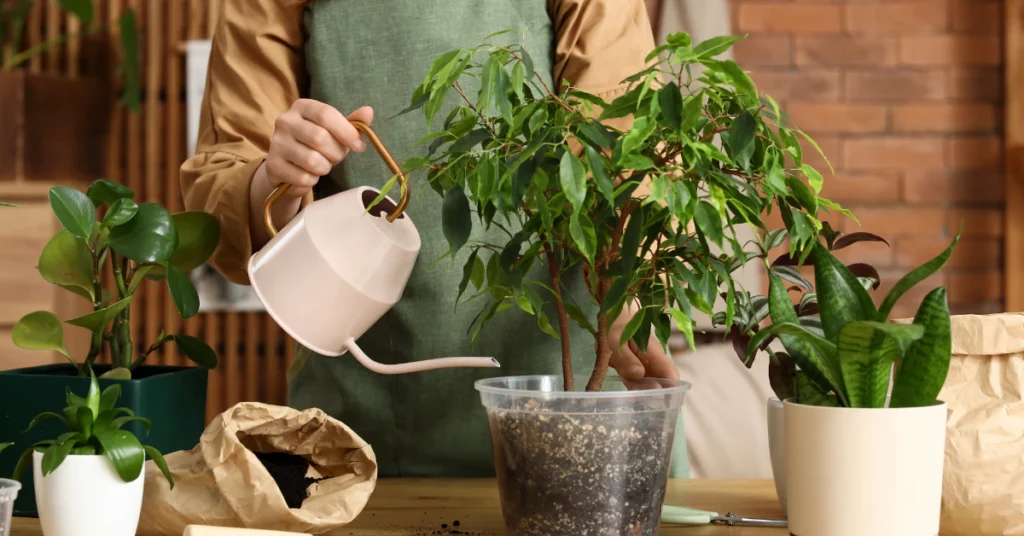
Start with the basics. Water when the top inch of soil feels dry. I check with my finger instead of following a calendar. Keep the soil evenly moist while the plant is growing. In winter, water less and let the soil dry out a bit more. Pour until water drains out, then empty the saucer, since standing water can lead to root rot. Pour on the soil, not the leaves, because wet leaves can invite fungal or bacterial infection.
Now the water itself. Here is what can be in your tap and what experts say about each.
| In your water | What experts say |
| Fluoride | Can burn prayer plant leaves. |
| Hard water minerals | Can stress the plant over time. |
| Softener sodium | Can stress it too. |
| Chlorine | Sitting out may help. |
Letting water sit out may help with chlorine. It will not fix the rest. Garden experts say fluoride does not leave the water that way. An extension expert also warned that pitcher-style filters may not remove fluoride or minerals. So that jug on your counter may not be saving your plant.
Before you buy distilled water by the gallon, find out what is in yours. Fluoridation varies. The CDC reports that in 2020, 72.7% of Americans served by community water systems had fluoridated water. That is a big share, but not everyone. Check your utility’s water quality report, or try the CDC’s My Water’s Fluoride tool, which works in participating states.
Hardness varies too. The USGS found the softest waters in parts of New England, the South Atlantic-Gulf states, the Pacific Northwest, and Hawaii. About half of the sites it checked were hard to very hard. That data is older, so treat it as a general pattern, not a verdict on your tap.
If fluoride shows up or your water is hard, try rainwater, distilled water, or water from a dehumidifier. Garden expert Melinda Myers suggests all three for sensitive plants. Already seeing brown edges? An extension column suggests flushing the soil with rainwater or bottled water. Switching water feels like a hassle, but it removes one big suspect.
If your tap water looks fine, your crispy edges may come from dry air instead. I cover that next.
The Great Humidity Advice Fight
I misted my prayer plant faithfully for months, and it still went crispy. The spray bottle was never going to save it.
Extension experts are blunt about this. Iowa State Extension says misting is not an effective way to raise humidity, because leaves dry quickly. Penn State Extension says the boost lasts only until the water evaporates, which can take just minutes. Even daily misting does not change the humidity around a plant.
Prayer plants face a second problem. One extension expert advised stopping misting a prayer plant, because wet leaves can invite fungal or bacterial infection. So you add effort and risk, with no real payoff.
Winter makes it worse. NC State says this plant needs high humidity and does not tolerate low humidity. Iowa State says many houseplants prefer 40 to 50 percent. But a winter home can fall to just 10 to 20 percent. That gap is likely why crispy edges show up once the heat comes on.
So what works? Here is my short list:
- Buy a cheap hygrometer. It is a small gauge that shows your room’s humidity, so you stop guessing.
- Stop misting. Put that energy elsewhere.
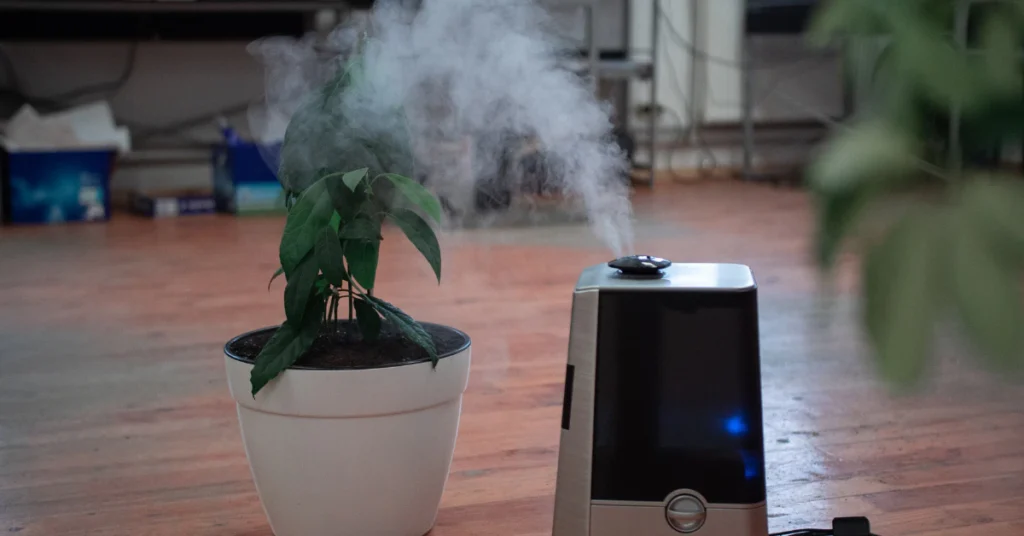
- Run a room humidifier. Iowa State calls humidifiers an excellent way to raise humidity.
NC State gives no exact number for prayer plants, so I use that 40 to 50 percent range as a general target and watch the leaves. Check the hygrometer in the room where the plant actually lives, and check it again in winter, when readings drop most.
What about pebble trays? Honest answer: experts disagree. NC State suggests setting the pot on a tray of wet pebbles. Some growers and writers say the effect is tiny and fades within inches. I treat a pebble tray as a small bonus, not a fix. If you try one, keep the pot above the water line so the roots never sit in water.
New leaves tell the story. If they stay green at the edges, you are on the right track. Old brown edges will not heal, but you can trim them for looks.
Soil, Fertilizer, and Strategic Repotting
Soil first. Use a regular potting mix in a pot with drainage holes. NC State warns that poorly drained soil can lead to root rot, so the goal is steady moisture, not a swamp.
Feeding comes next, and here less is better. NC State says leaves can burn from over-fertilization. It also notes that leaf colors fade in low light or poor fertility, so check your light before reaching for plant food. An extension expert adds that fertilizer salts can harm roots. If you have been feeding heavily, dilute your doses or stop until spring. Follow the label on whatever you use, and when in doubt, go lighter.
In winter, skip fertilizer completely. Growth slows with the shorter days, so plain water is enough.
Now for repotting. You will often see advice to repot every 2 to 3 years. I think of repotting differently. Fertilizer salts and minerals from your water build up in the soil over time. An extension expert suggests repotting roughly once a year to clear that residue, with the timing depending on how fast it builds. So if your water is hard, fluoridated, or softened, expect to repot more often than every 2 to 3 years.
Do it in spring, when the plant is actively growing. Winter repotting is possible, but it is harder on a stressed plant. Fresh mix is the real goal, so a bigger pot is optional. Do not skip drainage holes in the new pot.
Here is the shift in thinking. Repotting is not only a fix for a root-bound plant. It is a treatment for water chemistry buildup. If your leaves keep browning even after you fixed your water and humidity, old soil full of residue may be part of the problem. Fresh soil gives your plant a clean start.
Troubleshooting: Symptom-to-Cause Diagnosis

Take a breath before you act. Most prayer plant problems come from a handful of causes, and you can sort them out one at a time. Ask yourself five quick questions first:
- Is the soil wet or dry an inch down?
- Are old leaves or new leaves affected?
- Is any leaf touching cold glass?
- What does your hygrometer read?
- When did you last fertilize?
Brown tips and edges have four look-alike causes. UF/IFAS describes tip scorch as dead brown margins with a yellow band next to the green, and links it to excess soluble salts, very high light, and high temperatures. NC State adds fluoride. Because they look alike, I diagnose by habits, not by staring at the leaf.
| Likely cause | Clues from your routine | First fix |
| Fluoride or minerals in water | You use tap, softened, or pitcher-filtered water | Check your water report, switch water, flush the soil |
| Fertilizer salts | You feed often, or fed in winter | Stop or dilute feeding, repot in fresh mix |
| Sun scorch | Direct sun, very bright spot, or heat | Move to bright, indirect light |
| Dry air | Worse since the heat came on; low hygrometer reading | Run a humidifier, skip misting |
Yellow leaves also have look-alike causes:
- Oldest bottom leaves, healthy new growth: This is normal. An extension expert says yellowing on the oldest leaves, those farthest from the center, is usually normal, and losing a few during the growing season is expected. Do not panic-water.
- Yellow leaves, soggy soil, full saucer: Too wet. NC State links poor drainage to root rot. Empty the saucer and let the top inch dry before watering again.
- Yellow leaves touching the window in winter: Cold glass. An extension expert warns that cold contact can yellow leaves and condensation can allow infection. Pull the pot back.
- Yellow with speckles or webbing: Check for spider mites. UF/IFAS lists yellow or speckled leaves and webbing as signs.
Pests are not common. NC State notes only occasional spider mites and mealybugs. UF/IFAS describes mealybugs as cottony masses in leaf axils and under leaves. If you treat, test any spray on one leaf first, since plants can react badly to pesticides.
Salts and fluoride often overlap. If you use tap water and fertilize, fix both before you decide which one was to blame. Resist the urge to water more. Crispy edges can come from water quality or dry air, not just thirst. If you are unsure after all this, start with the water and the humidity.
Change one or two things, then give it a few weeks. New leaves show your progress. Old brown edges will not turn green again, so trim them if they bother you.
Why Isn’t Mine Praying? (And Fixing Leggy Stems)
Here is what is normal. NC State says the leaves lie flat by day and fold upward at night. That daily move gives the plant its name.
Why does it do this? Honestly, scientists have not settled it. You will read that the plant catches water or defends against insects. Those are theories, not proven facts, so I do not build my care routine around them.
What if yours stays flat all day and night? Forums are full of ideas. Some growers blame grow lights left on around the clock. Others blame thirsty soil. I see these as community theories, not hard rules. Still, they are cheap to test. Turn grow lights off at night so the plant gets real darkness, and check the soil with your finger.
Movement alone is not a diagnosis. Look at the whole plant. Are new leaves coming in? Are the colors strong and the edges green? If so, I would not panic.
Now for stretched, bare stems. If your plant looks tired and gappy, starting fresh can be easier than coaxing it back. NC State lists dividing the rhizomes as a way to propagate prayer plants. Rhizomes are the underground stems this plant spreads from.
NC State does not give steps, so here is the simple way I approach it:
- Do it in spring, when the plant is actively growing. An extension expert gives that same window for repotting.
- Slide the plant out of its pot.
- Gently separate the root mass into sections. Each one needs roots and healthy growth.
- Pot each section in fresh mix with drainage holes, then water.
- Keep humidity up while the new plants settle in, and give them bright, indirect light.
Bonus: dividing gives you fresh soil, which helps clear the residue I talked about earlier.
Pet Safety: The ASPCA Fine Print
Cat and dog owners, here is the good news. The ASPCA lists “Prayer Plant” as non-toxic to dogs, cats, and horses, with no toxic principles. If you searched “prayer plant toxic to cats,” that is a reassuring result. It is a good pick if you want pet safe plants.
Now the fine print. On the ASPCA’s page, the scientific name field reads Calathea insignis. Maranta is listed only as a common name. So the entry does not list Maranta leuconeura by its Latin name. Some sellers still cite the ASPCA for it, which goes a step beyond what the page shows.
That is why I do not trust blanket claims like “all prayer plants are safe.” Here is the quick check: find the Latin name on your tag, search it on the ASPCA list, and confirm it says non-toxic for your animal. I did not verify the relatives, like other Calatheas, Ctenanthe, or Stromanthe, so look up each one you own.
One more limit. The ASPCA covers animals only. It says nothing about people, so I can’t make any claims about human safety. If that matters in your home, ask a doctor or pharmacist.
If your pet chews a leaf and seems unwell, call your vet. Non-toxic still doesn’t make a houseplant a snack, so I keep mine out of chewing range.
Frequently Asked Questions
Are prayer plants toxic to cats and dogs?
No. The ASPCA lists “Prayer Plant” as non-toxic to dogs, cats, and horses. Its scientific-name field reads Calathea insignis, so check the Latin name on your tag against the ASPCA list.
Why are my prayer plant’s leaf tips turning brown?
Four look-alike causes: fluoride or minerals in your water, fertilizer salts, too much sun or heat, and dry air. Check your habits to find the likely one, then fix one thing at a time.
How often should I water a prayer plant?
Water when the top inch of soil feels dry. Keep the soil evenly moist while the plant grows, and water less in winter. Always empty the saucer.
Can a prayer plant live outside?
Only in USDA zones 11a and 11b, according to NC State Extension. For nearly everyone else, it is strictly a houseplant.
Why do prayer plant leaves fold up at night?
NC State says the leaves lie flat by day and fold upward at night. Why they do it is not settled, so treat it as normal behavior.
Do prayer plants flower?
Yes, but rarely indoors. NC State describes small white or purple flowers that are not showy.
Final Thoughts
Prayer plant care comes down to steady habits. Give it bright, indirect light, evenly moist soil, humid air, and the right water. Start with water and humidity, since those are the usual suspects behind crispy edges. Then give it a few weeks and watch the new leaves. Old damage stays, but fresh growth tells you it is working. You’ve got this.