
New potatoes are ready about 6 to 8 weeks after planting, often once the plants flower. Storage potatoes are ready about 2 weeks after the vines die back completely.
I know the pull to dig early. Every year I poke around a hill just to peek, and every year I find tiny tubers that needed more time.
Here is the rule I follow now:
- Want a few small, tender potatoes? Check at 6 to 8 weeks, and eat them fresh.
- Want potatoes to store? Wait for the vines to die. Then wait about 2 more weeks.
- Not sure? Dig up one or two hills first and see.
Your timing will shift with your climate and your planting date. I’ll show you how below.
The Two-Test Rule for Mature Storage Potatoes
Dead vines tell you the plant is done. They don’t tell you the potatoes are ready. Two quick tests fill that gap, and they take about five minutes.
Test 1: Dig Just One or Two Hills
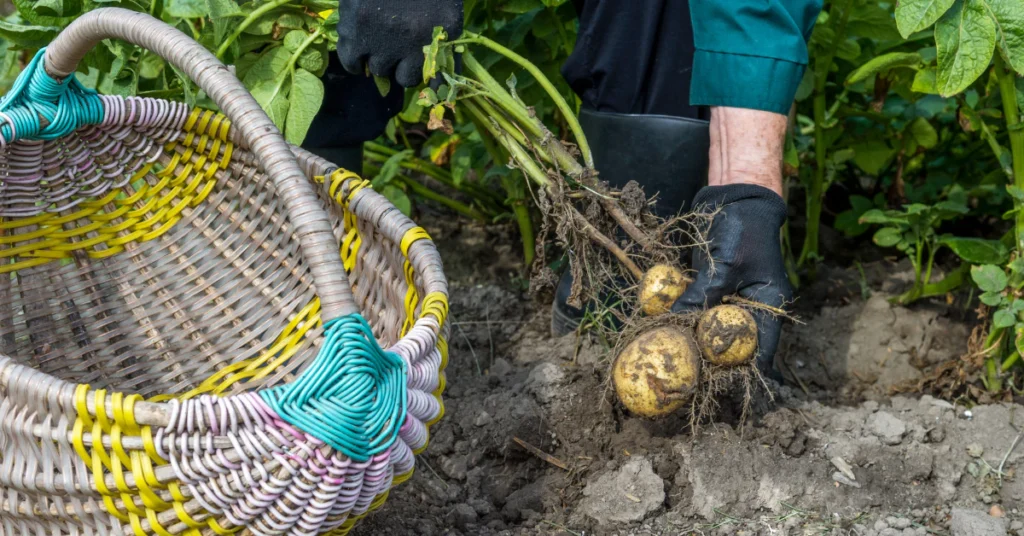
Wait until the plants have died. Then dig up one or two hills, not the whole row. Iowa State Extension recommends this step to check whether the crop is mature.
Use a garden fork and start well away from the stem. Lift gently so you don’t spear the tubers. Look at the size and shape of what you find.
If they look full-sized for the variety, move on to test two. If they look small, you can leave the rest in the ground a little longer.
Test 2: The Skin Rub
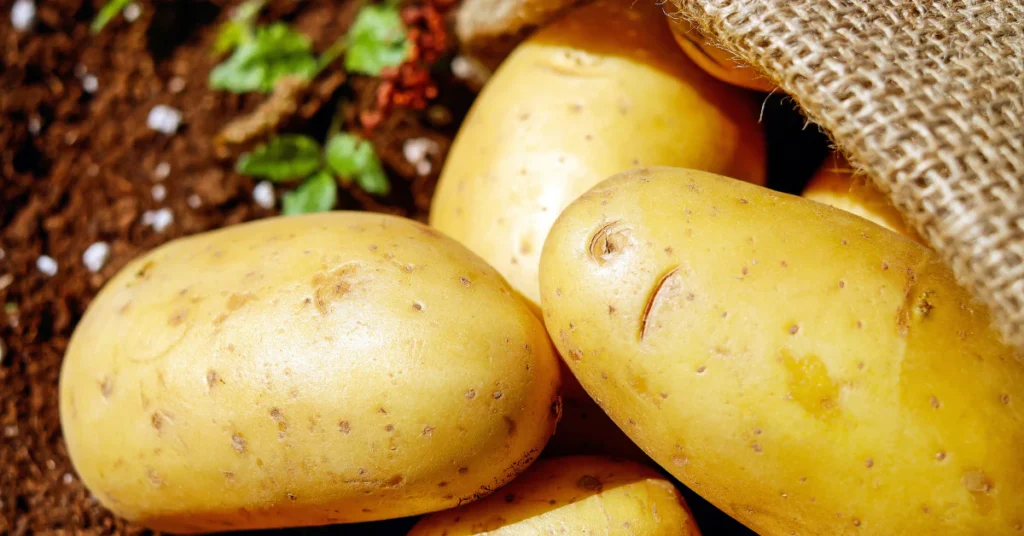
This one is my favorite because it needs no tools. Pick up a freshly dug potato and rub the skin with your thumb.
- Skin stays put: The skin is set. The potatoes are ready.
- Skin rubs or peels off: They need more time. Oregon State Extension says to wait another week, then test again.
Thin, loose skin is a warning sign. It means the potato is still young, and it will not store well.
Why This Beats Guessing
Each test covers what the other can’t. The dig shows size. The rub shows skin strength. Together they take most of the guesswork out of harvest day.
Harvesting New Potatoes (Without Killing the Plant)
You don’t have to choose between a taste of early potatoes and a full storage crop. You can have some of both if you go slowly.
Start at 7 to 8 weeks after planting. Nebraska Extension gives that timing, and UMD says 6 to 8 weeks, usually once plants have flowered. The plants should still be green at this stage.
How to Grab a Few Without Hurting the Plant
Missouri Botanical Garden suggests pulling back the mulch and soil around the plant. Take some of the young potatoes without disturbing the plant, so it can keep growing and making more. Clemson Extension says much the same: feel around the plant and take just a few.
Here is my routine:
- Choose a plant that looks strong.
- Move the mulch or loose soil aside by hand.
- Feel for tubers. Iowa State says new potatoes are over 1 inch across.
- Take two or three of the biggest ones. Leave the small ones to grow.
- Cover everything back up right away.
That last step matters. Light turns exposed potatoes green, so keep them buried.
What About Digging the Whole Plant?
Nebraska Extension describes a bigger method. You dig down about 12 inches with a fork and turn the whole plant upside down. This gets every small potato, but that plant won’t make a storage crop. I only do this with a plant or two I’m happy to give up.
Eat Them Fresh
New potatoes have thin skins and don’t store well. Iowa State says to use them right away. Cook them the same day if you can.
What If Your Potato Plants Die Early?
Brown, crispy vines are scary when the potatoes underneath are still small. Here is the catch: dead vines don’t always mean the potatoes are ready.
Heat Can Cut Growth Short
UMD Extension says soil above 80°F inhibits tuber development. A hot spell can slow the potatoes while the plant looks worse every day. Gardeners on forums often describe the same thing: a heat wave hits, the leaves brown, and the tubers come up small.
I’ve had weather wreck my timeline too. A hot stretch browned my vines weeks before I expected it, and the potatoes were smaller than the calendar promised.
Blight Is the Other Big Cause
Late blight can kill vines fast. If you suspect it, the advice changes a little.
- Michigan State Extension says to kill vines at least 2 weeks before harvest in blight-infected fields.
- University of Maine Extension says to dig at least 2 weeks after vines die, and preferably 3. It warns that digging too early exposes tubers to the disease and causes more bruises.
The waiting time also lets skins toughen. MSU adds that blight can survive in infected tubers, cull piles, and volunteer potatoes, so pull every tuber out at harvest.
One note: this blight guidance comes from commercial potato programs. If you spot blight in your home garden, call your local extension office for advice that fits your area.
Don’t Trust Dead Leaves Alone
When the vines are gone, the dead leaves can’t tell you what’s underground. Use the test-dig from earlier. Dig one or two hills and check the size and the skin.
Here is how I read the results:
- Vines fully dead, tubers small: UMD says tubers keep growing only until the plants die. They won’t get much bigger, so plan your harvest after the skins set.
- Vines partly green: Some growth may continue, so give it a little more time.
- Skin rubs off: Wait another week and test again.
Still Green? Frost Warnings and Cutting Vines
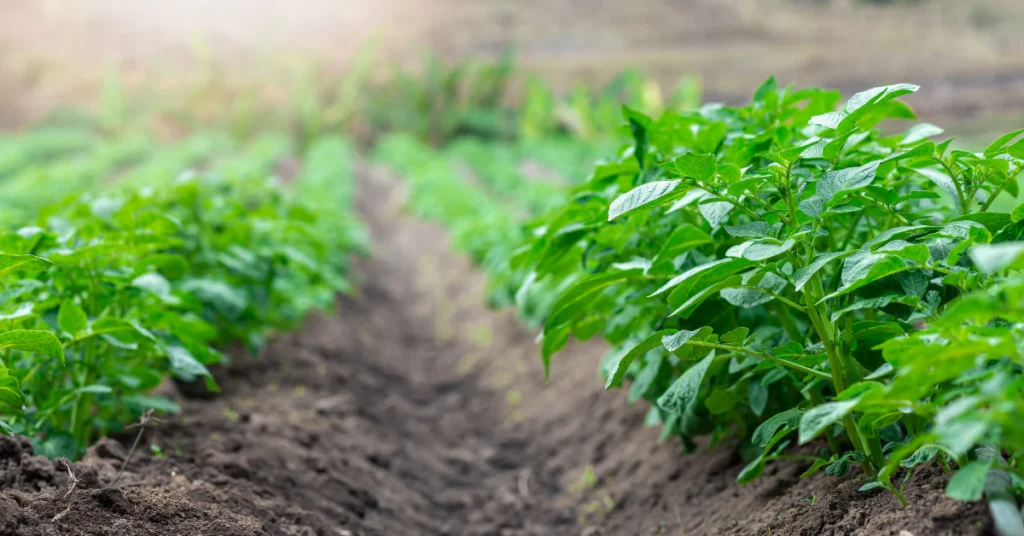
Sometimes the problem runs the other way. Fall is close, the forecast shows frost, and the plants are still bright green.
Here is what helps to know. UMD Extension says tubers keep growing until frost, mowing, or insects and disease kill the plants. So green vines mean growth is still happening. Montana State Extension says to harvest after the vines have died, often following the first killing frost. In colder areas, frost often ends the season for you.
Can You Cut the Vines Yourself?
Yes. UF/IFAS says that if the tops won’t die on their own, you can cut them to help the tubers mature. Cut the stems at ground level, then leave the potatoes in the soil to firm up.
Extension offices don’t agree on how long to wait:
| UF/IFAS office | Wait after cutting |
| Putnam County | 1 week |
| Columbia County | 2 weeks |
If you need a tie-breaker, use the skin rub test from earlier. Dig one potato. If the skin rubs off, give it more time. These tips come from Florida offices, so check with your local extension office if you garden somewhere very different.
Don’t Let a Hard Freeze Catch You
UC IPM says to harvest and store tubers before severe frost is likely. Watch your forecast closely. If a hard freeze is coming and the skins are close to ready, I would rather dig a little early than gamble.
A light frost that only burns the leaves is a different story. That usually just ends the season for the vines.
Here is my plan when fall pressure hits:
- Check the forecast.
- Cut green vines if they won’t quit.
- Test-dig one hill.
- Dig everything before severe frost.
Stop Watering! The Late-Season Moisture Rule
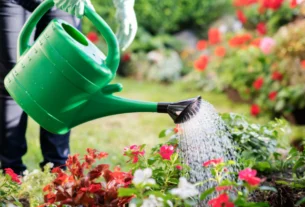
Many garden blogs say to keep watering until the plant dies. Extension offices say something different.
Michigan State Extension recommends not watering potatoes much after they flower. The goal is to toughen them up for storage. Oregon State Extension gives a similar tip: reduce watering in mid-August, and let the vines die back completely before you harvest.
So the finish line looks like this. You water well while the plants grow and the tubers bulk up. Once flowering is done, you pull back.
Why Less Water Helps
Dry-ish soil at the end helps the plant wind down. It also supports the skin setting that you test for with the skin rub. Thick skins protect the potatoes in storage.
How I Use This
- I ease off the hose once the blooms fade.
- I still check the soil in a long dry spell, so the plants don’t suffer.
- I adjust the timing for my area, since Oregon State’s mid-August date is a guide for its region.
Wet soil is also a bad place for ripening potatoes. UMD Extension says not to dig when the soil is wet, so dry ground helps on harvest day too.
Step-by-Step: How to Dig Safely and Prevent Blight
Digging looks simple, but this is where a lot of the crop gets hurt. Slow and gentle wins.
- Pick a dry day. UMD Extension says not to dig when the soil is wet. Wet ground is messy, and it makes damage easier.
- Start far from the plant. Texas A&M Extension says to keep the fork 8 to 10 inches away from the plant. Digging close is how forks stab tubers.
- Dig under, then lift. Push the fork down, loosen the soil, and raise the plant. Shake away the loose soil.
- Pick up the potatoes by hand. Go gently. Cuts and bruises don’t heal well in storage.
- Get them out of the sun. MSU Extension warns that even a short time in sun can start turning skins green. Move them to shade right away.
- Brush, don’t wash. UMD and MSU both say to brush off the dirt and skip the washing. Oregon State makes one exception. In heavy, sticky clay, you may need to rinse them. If you do, dry them completely before storage and keep light off them.
- Set damaged ones aside. Oregon State says to use cut or bruised potatoes within the first month.
Get Every Last Tuber
This tip comes from MSU Extension, and it protects next year’s crop. Late blight can survive in infected tubers, in cull piles, and in missed potatoes that stay unfrozen over winter. Dig out every tuber, and don’t leave a pile of rejects in the garden.
MSU’s blight advice comes from commercial growers. For a home garden, your local extension office can tell you how to handle culls in your area.
Regional Harvest Calendar: Timing by Climate
Potato harvest is not always a fall job. In warm places, the crop is in the ground over winter and spring, and you may be digging by May.
Here is what the extension pages say, by region:
| Region | Plant window | Harvest timing | Source |
| Florida Panhandle and North Central | Jan to Feb | Mid-Feb planting was ready mid-May in Bay County. Most are ready 80 to 115 days after planting | UF/IFAS |
| East Texas | Not listed here | 90 to 120 days after planting | Texas A&M AgriLife |
| Oregon, Central and Eastern | Apr to May | Aug to Oct | Oregon State |
| Oregon, Willamette Valley | Late Mar to May | Late Jun to Oct | Oregon State |
| Maryland | Mar 15 to May 1 (early types through Jun 1) | New potatoes 6 to 8 weeks after planting | UMD |
| Mountain West (Montana) | Not listed here | After vines die, often after the first killing frost | Montana State |
Notice that Oregon’s Willamette Valley can start digging in late June, while Eastern Oregon waits until August. Same state, very different calendars.
Texas Seed Trick
Texas A&M notes that seed potatoes are easier to find in spring than in fall. Many gardeners buy extra seed in spring and hold it over for fall planting. If you try this, plan ahead so you have healthy seed ready.
How to Use This
I would not pick a harvest date off a map. Instead:
- Write down your planting date.
- Count forward using the weeks or days above.
- Check your area’s frost dates.
- Call your local extension office to confirm timing.
The pages I read build their advice around planting windows and frost. They don’t tie it to USDA zone numbers, and I would not lean on a zone number for potatoes either.
Curing vs. Storing: Decoding the Numbers and Cold-Sweetening
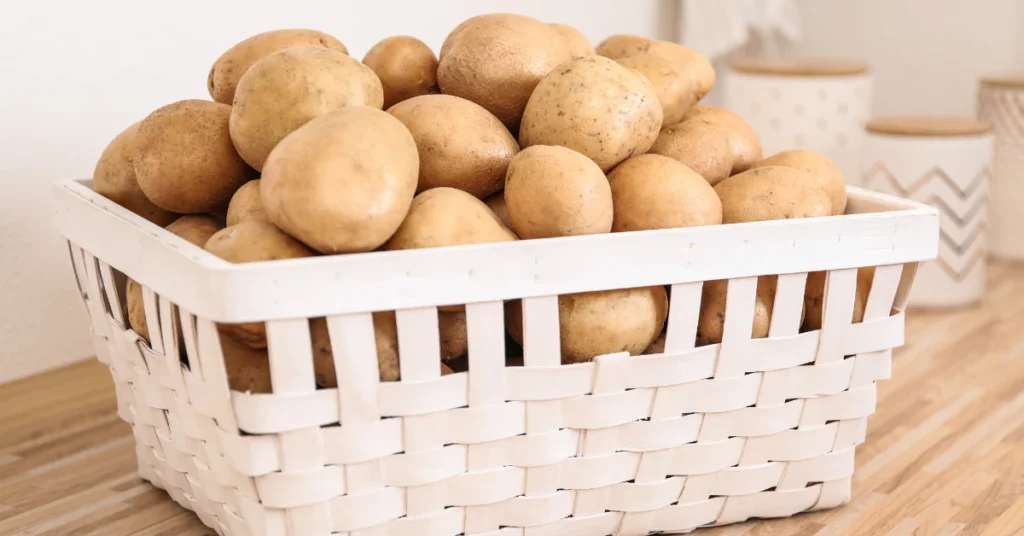
Curing and storing are two different jobs, and many pages blur them together. That is why the numbers look so confusing.
Quick timeline: skin sets in the ground (about 2 weeks after vines die), then you cure after digging, then you store.
Step 1: Cure (7 to 14 Days)
Curing heals small cuts and thickens skins. Extension offices give slightly different recipes:
- UMD: 10 to 14 days at 50 to 60°F with high humidity.
- Iowa State: 2 weeks at 50 to 60°F and 85 to 90% humidity.
- Oregon State: 7 to 10 days in a dark, ventilated spot with moderate temperatures and high humidity.
The pattern is the same: cool but not cold, damp air, no light.
Step 2: Store (Cool, Dark, Humid)
| Source | Storage range |
| UMD | 40 to 50°F, about 90% humidity |
| Iowa State | 40°F, 90 to 95% humidity |
| Oregon State | 40 to 46°F |
| NDSU | 45 to 50°F, 90 to 95% humidity, dark |
These ranges overlap around 45°F, and that is where I aim. Warmer is risky. Oregon State says above 46°F, shelf life falls to 2 to 3 months with sprouting.
The Cold-Sweetening Trap
Too cold backfires. Oregon State says below 38°F, sugar builds up. Iowa State says potatoes below 40°F taste sweet. The fix is easy: leave them at room temperature for a few days before cooking. Iowa State says this restores the normal flavor.
Small Rules That Save a Crop
- Variety matters: Oregon State says late-maturing types store best, up to 7 to 8 months. UMD says 6 to 8 months. Red and thin-skinned potatoes don’t last as long.
- Eat damaged ones first, within about a month (Oregon State).
- Keep potatoes away from apples. Iowa State says ripening fruit gives off ethylene gas, which promotes sprouting.
Important Toxicity Warnings: Green Potatoes and Pet Safety
Potatoes that turn green need your attention. Light makes the skin green, and the same change comes with higher levels of solanine and related compounds, which can make people sick.
What to Do With Green Potatoes
Extension offices don’t give identical advice, so here is the safest middle path:
- Small green patch: Nebraska Extension says you can cut it off and discard it.
- Largely green: Throw the potato out. Nebraska and Oregon State both say to discard heavily green ones.
- Green under the skin: NDSU is blunt: never eat tubers that are green beneath the skin.
- Sprouts: NDSU says sprouts carry the highest levels, so remove them.
Oregon State notes that the green color itself is harmless chlorophyll, but it often signals solanine. Treat green as a warning light.
Keep Kids Safe
Michigan State Extension recommends throwing away green-skinned and sprouted potatoes. It says not to serve green potatoes to small children, even if trimmed. Stomach upset can start within a few hours, or a day or two later.
Pet Note
Potatoes belong to the nightshade family. The ASPCA lists Solanum species as toxic to dogs, cats, and horses. To be safe, keep pets away from the vines and the harvested tubers.
If a pet chews on them, call your vet or ASPCA Poison Control at 888-426-4435. A fee may apply.
FAQ’s
How many weeks after planting can I harvest potatoes?
You can dig new potatoes about 6 to 8 weeks after planting, based on UMD and Nebraska Extension. Storage potatoes take longer. Wait until the vines die, then give them about 2 more weeks to toughen their skins.
How long after the plants die should I dig potatoes?
About 2 weeks is the common advice from UMD and NC State Extension. UF/IFAS offices say 1 to 3 weeks, depending on the office. Confirm with the skin rub test. If the skin rubs off, wait another week.
Do potatoes need to flower before I harvest them?
Not for storage potatoes. Flowering is a cue for new potatoes, which UMD says are usually ready once plants flower. For mature potatoes, the signal is vine die-back, followed by a test-dig of one or two hills.
Can I harvest potatoes before the plants die?
Yes, but only as new potatoes. Dig them while the plants are still green and the tubers are over 1 inch, as Iowa State advises. Eat them right away, because they don’t store well.
Should I wash potatoes after digging them?
No. UMD and MSU both say to brush off the dirt and skip the washing. Oregon State allows a rinse for heavy, sticky clay. If you rinse, dry the potatoes completely before storing them.
How do I store homegrown potatoes?
Cure them first for 7 to 14 days, depending on the extension office. Then store them in a cool, dark, humid, ventilated place. Most extension ranges fall between 40 and 50°F. Avoid going below 38 to 40°F, which makes potatoes taste sweet.
Final Thoughts
The best harvest date for potatoes comes from the plant, the weather, and a few quick tests, not a calendar alone. Check the timing for your region, and test-dig a hill or two before you commit.
I’ve learned that patience pays off. Wait for the vines, let the skins set, dig on a dry day, and store the crop cool and dark. If you do those things, your potatoes will reward you for months.