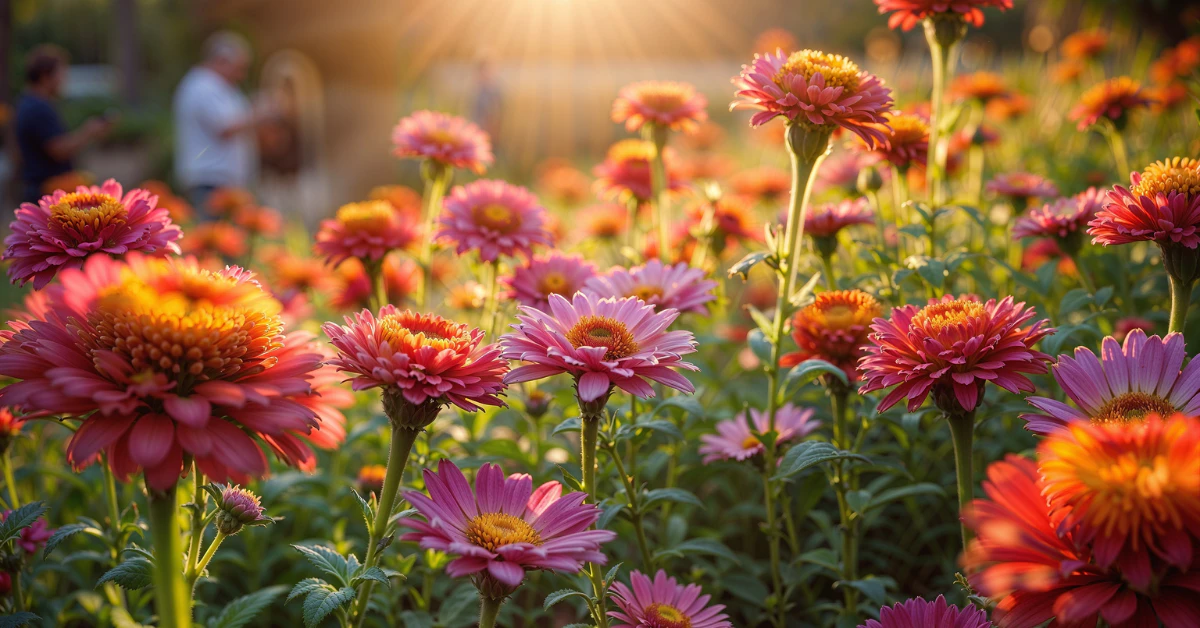
Zinnias are annuals grown from seed, so they won’t return next year and you start fresh each spring. Dahlias grow from tubers and are tender perennials, hardy in zones 8 to 10. In colder climates, you must dig up the tubers and store them over winter.
I’m planning my cutting garden for next year right now, and this is the perfect time to choose. Both flowers give big, bright, colorful blooms, but they ask for very different amounts of work. Here is how they compare, so you can pick the right one for your yard and your free time.
At a Glance: Zinnia vs. Dahlia Comparison & Pet Safety
Here are the main differences side by side.
| Feature | Zinnia | Dahlia |
| Plant type | Annual | Tender perennial, hardy in zones 8 to 10 |
| Grown from | Seed | Tubers |
| Effort | Low | Higher, needs staking and pinching |
| Sun | At least 6 hours of direct sun | 6 to 8 hours |
| Sprouting | Under a week from seed | Starts from a tuber |
| Comes back next year? | No | Yes in zones 8 to 10, dig and store in colder zones |
| Soil and water | Needs good air flow | pH about 6, even moisture, never soggy |
| Pets | Non-toxic | Toxic, mild signs |
Pet Safety Warning: The ASPCA lists zinnias as non-toxic to dogs, cats, and horses. It lists dahlias as toxic to all three. The signs are mild, usually an upset stomach and skin irritation. If your pet eats a dahlia, call your vet or ASPCA Poison Control at (888) 426-4435. A consultation fee may apply. You can check any plant on the ASPCA toxic and non-toxic plant list.
If a pet in your home nibbles on plants, zinnias are the safer pick. If you choose dahlias, plant them where pets can’t reach, and keep cut flowers up high.
Plant Identification: How to Tell Them Apart

Both flowers belong to the Asteraceae family, so their blooms are built in a similar way. That is why a mystery flower can be hard to name.
Start with the center. Zinnias show a clear central disk in every flower form, even the ruffled ones. Dahlias come in 14 forms, according to the UK National Dahlia Society. Some forms hide the center completely.
Be careful, though. Some zinnias are bred to look like dahlias. These double to semidouble types are 3 to 5 inches wide. A few dahlia forms, like single and collerette types, also show a center disk.
Size can help too. Tall dahlias can grow blooms over 10 inches wide, bigger than any zinnia flower.
A huge bloom with a hidden center is almost surely a dahlia. A clear center on a smaller flower points to a zinnia.
Growing Zones, Winter Survival, and Fall Timing
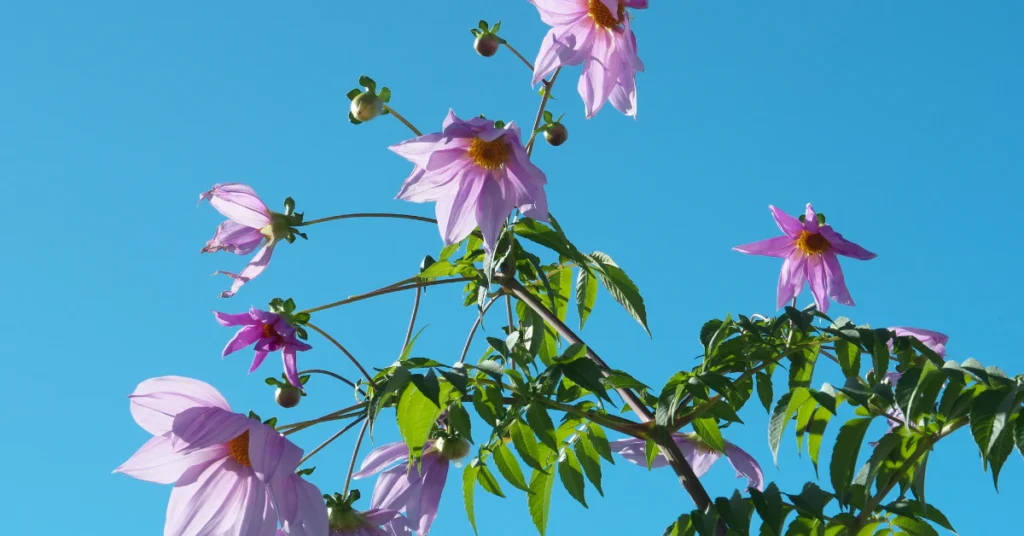
Look up your zone again this year. In 2023, the USDA updated its Plant Hardiness Zone Map, and about half the country moved to a warmer half zone. A zone shows the average coldest winter temperature over 30 years. It says nothing about summer heat or rain. That matters because dahlias are picky about winter cold. You can find yours on the USDA Plant Hardiness Zone Map.
What the Experts Say About Dahlia Hardiness
OSU Extension says dahlias are winter hardy in zones 8 to 10. In well-drained soil, you can leave them in the ground. Cut the stalks back, then cover them with black plastic and a layer of mulch. Utah State Extension says dahlias are frost sensitive in Utah, so growers there treat them as annuals.
Zone 7 and the Wetness Problem
Zone 7 sits outside that 8 to 10 range, so leaving tubers in the ground is a gamble. Cold is not the only danger. OSU Extension says a wet winter hurts flowers more than a colder one. OSU also warns soggy soil can rot tubers. Pick a spot that drains well, and pile leaves over the bed to keep tubers dry. If your yard stays soggy, digging is the safer plan.
Zone 6: The Science Is Unsettled
You may hear that zone 6 gardeners must always dig. That advice is not settled. A USDA SARE-funded trial in Missouri, funded in 2024, is testing overwintering methods in zone 6. Its team says little information exists for that zone. The project is set to end January 25, 2027. Until results come in, treat tubers left in the ground as a risk, since tubers can be costly to replace.
My Fall Checklist
Late October is the time to act. Dahlias bloom until the first frost, then the plants die back. After a killing frost, I cut the stalks to about 6 inches. If you dig, wash off the soil and split the clumps into single tubers with eyes. Layer them in vermiculite or sawdust. Keep them in a cool, dry place that never freezes, and check them monthly. Toss any that rot.
Heat, Sun, and Soil: Getting Blooms
Zinnias have a reputation as heat lovers, and that is mostly true. But they are not bulletproof everywhere. UF/IFAS describes zinnia as a drought-tolerant, warm-season annual. It also says mid-summer heat and disease problems limit zinnia production in warm climates, where spring and fall are the easy seasons.
Zinnias in the Gulf and Florida
If you garden in Florida or along the Gulf, plan around the hottest weeks. Sow for spring color, then plant again for fall. Don’t expect the same show in July and August.
Air flow helps, too. NC State Extension says powdery mildew thrives where air barely moves, so don’t crowd your plants. Resistant types also help. Illinois Extension says the Zahara and Profusion series resist mildew and leaf spot, and NC State says Profusion handles heat and humidity well.
Dahlias With Lots of Leaves and No Flowers
Green, bushy dahlias with no buds are a common worry. A University of Minnesota Extension expert answered a gardener in this exact spot. Nine tubers were lush and healthy but still had no buds by late July. The advice was to check two things.
- Sun: Dahlias need 6 to 8 hours of full sun.
- Nitrogen: Too much nitrogen builds leaves instead of blooms. That gardener was using two different fertilizers, which can add up fast.
Read your fertilizer labels. The first number is nitrogen. I stick to one fertilizer and skip extra boosters when plants look leafy.
Pest Timelines and Disease
Pests show up on a schedule. Knowing the calendar saves plants.
Slugs on Young Dahlias
Slugs love young dahlia shoots. OSU Extension says to start baiting or trapping two weeks after planting. Keep going all season. I set my traps early, because one slimy night can wipe out a tender shoot.
Four-Lined Plant Bug on Zinnias
University of Minnesota Extension says the four-lined plant bug is present on zinnias from May to early July. That is early in the season, so watch young plants closely during those weeks. Check the leaves often. Spot trouble early and you can act before it spreads.
Powdery Mildew on Zinnias
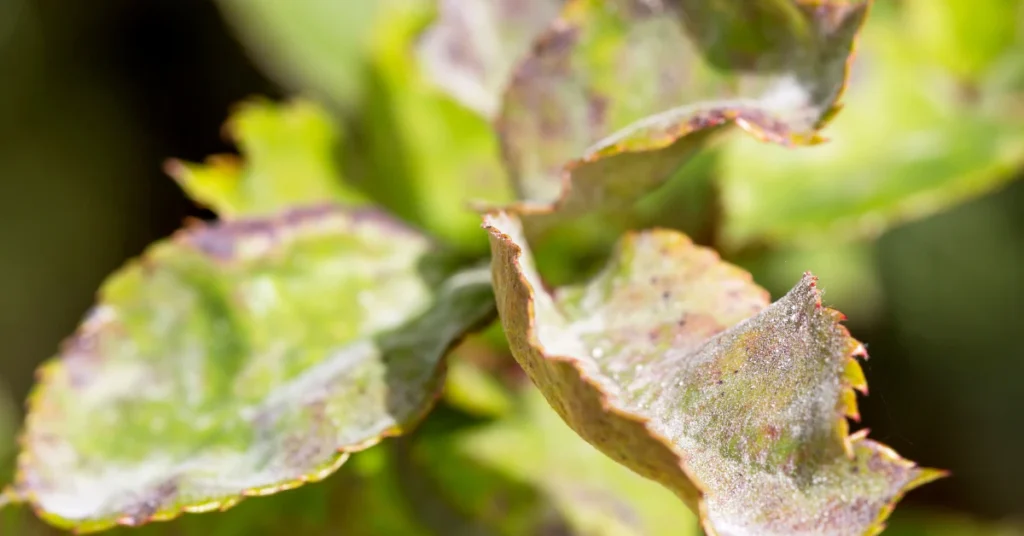
Powdery mildew is the zinnia problem most gardeners meet. It looks like white, fluffy patches on leaves. UMN Extension lists it first among the common zinnia leaf problems. It also lists bacterial leaf spot, which causes small dark spots with yellow edges.
Prevention beats cure. Here is what works:
- Pick resistant types: Illinois Extension says the Zahara and Profusion series resist leaf spot and mildew. It also says the Oklahoma series is less prone to mildew than other large cut-flower zinnias.
- Give plants room: NC State Extension says crowding and poor air flow help mildew spread.
- Clean up at season’s end: Illinois Extension says to remove infected plant material.
Spraying is rarely the answer. An Ask Extension reply says mildew seldom warrants chemical control. Good habits do most of the work.
Cut Flowers & Designing Together
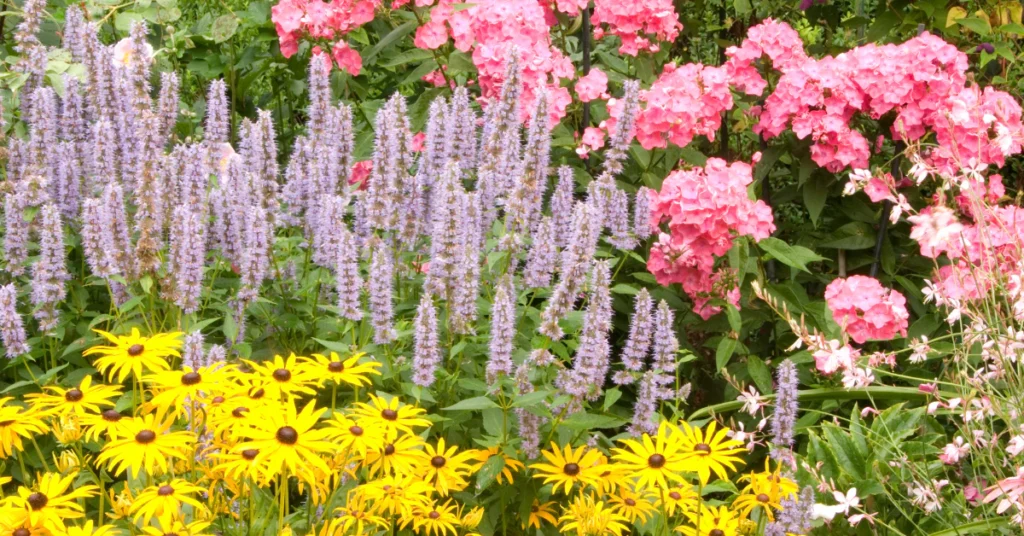
Dahlias are showstoppers in a vase, but they don’t stay showy for long. NC State Extension says cut dahlias typically have a short vase life. John Dole, a NC State floriculture researcher, calls vase life the dahlia’s weak spot. Most types last a short time and work best for events.
The giant dinnerplate dahlias are the worst offenders. Dole says they can be especially short-lived. Medium ball and decorative types are the ones commercial growers use most. They are productive, and their vase life is relatively longer.
I haven’t found a trusted extension number for zinnia vase life, so I won’t promise you a day count. I can say zinnias keep blooming from summer to frost, and deadheading keeps them going, according to UConn Extension.
That timing makes them great partners. Utah State Extension says dahlia production peaks in late summer to early fall. Zinnias fill the gap before then.
Here is how I plan my bed:
- Zinnias up front or between dahlias: they bring color while dahlias are still growing.
- Dahlias for the late-summer peak: save them for parties and big bouquets.
- Cut dahlias for the same day: enjoy them right away.
Frequently Asked Questions
Are dahlias and zinnias related?
Yes, both belong to the Asteraceae family, the aster family. They are still different plants with different needs.
Which one is easier for beginners?
Zinnias. They need at least 6 hours of direct sun, and seeds sprout in under a week, according to UConn Extension. Dahlias add pinching, staking, and in cold zones, digging and storing tubers.
Do dahlias come back every year?
In zones 8 to 10 with well-drained soil, yes, says OSU Extension. Cut the stalks back, then cover them with black plastic and mulch. In colder zones, dig the tubers up or grow dahlias as annuals. Zone 6 survival is still being tested in a USDA SARE trial.
Are dahlias or zinnias safe for pets?
Zinnias are listed by the ASPCA as non-toxic to dogs, cats, and horses. Dahlias are listed as toxic, with mild signs like an upset stomach and skin irritation. If a pet eats a dahlia, call your vet or ASPCA Poison Control at (888) 426-4435.
Which lasts longer in a vase?
Cut dahlias typically have a short vase life, and dinnerplate types are the shortest, according to NC State Extension. I don’t have a trusted extension number for zinnias, so I won’t guess.
How do I stop white powder on zinnia leaves?
That is powdery mildew. Give plants room for air flow, choose resistant series like Zahara and Profusion, and clear infected plant material at season’s end. Chemical control is seldom needed.
Why are my dahlias all leaves and no flowers?
Check two things. Dahlias need 6 to 8 hours of full sun, and too much nitrogen builds leaves instead of blooms.
Conclusion
Pick zinnias if you want easy color from seed and pet-friendly blooms. Pick dahlias if you want giant flowers and don’t mind the extra care, especially digging and storing tubers in colder zones. You can also plant both. Zinnias fill the early gaps, and dahlias take over in late summer.