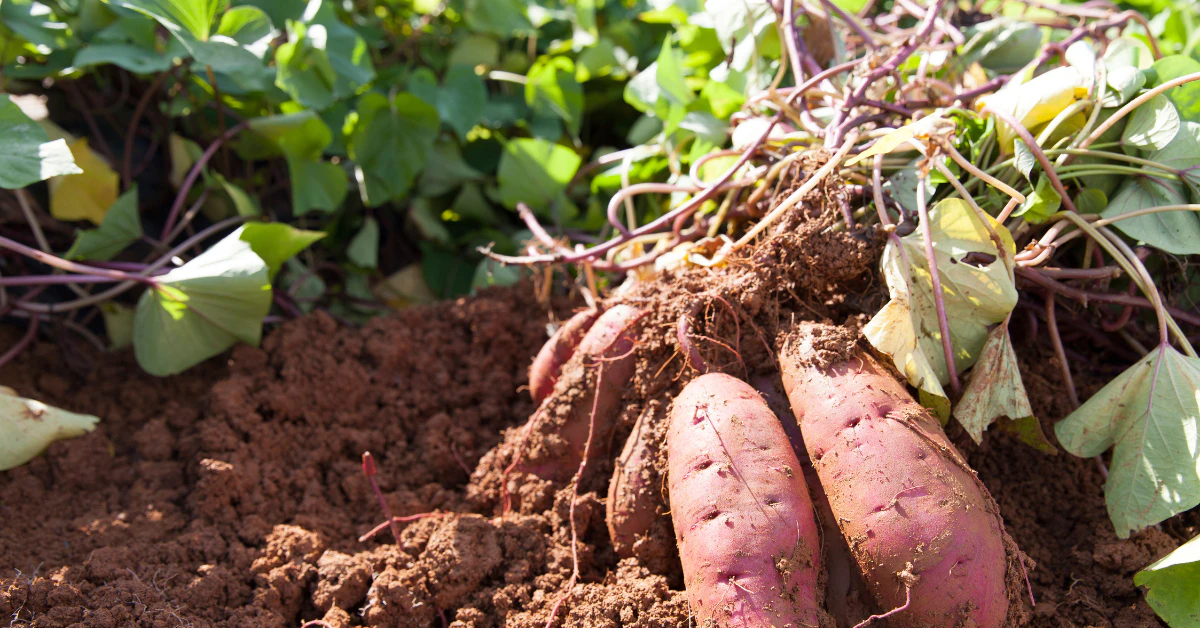
Potato plant leaves are dark green, oval-shaped leaflets that grow in pairs along a central stem. Each full leaf has six to eight leaflets. Healthy leaves stay green and upright during the growing season, then naturally yellow and die back once the tubers below are ready. To figure out what is wrong with your plant, check three things: the leaf color, where the problem leaves are on the plant (bottom or top), and what time of the growing season it is.
This guide walks through all of that. You will learn how to spot a healthy potato plant, how to tell normal leaf changes from real trouble like disease or pests, and what to do about yellow, brown, black, purple, curling, or wilting leaves.
We also cover something many guides skip: which parts of the potato plant are safe to eat, and which parts are toxic to people and pets.
CRITICAL SAFETY WARNING: Are Potato Plant Leaves Poisonous?
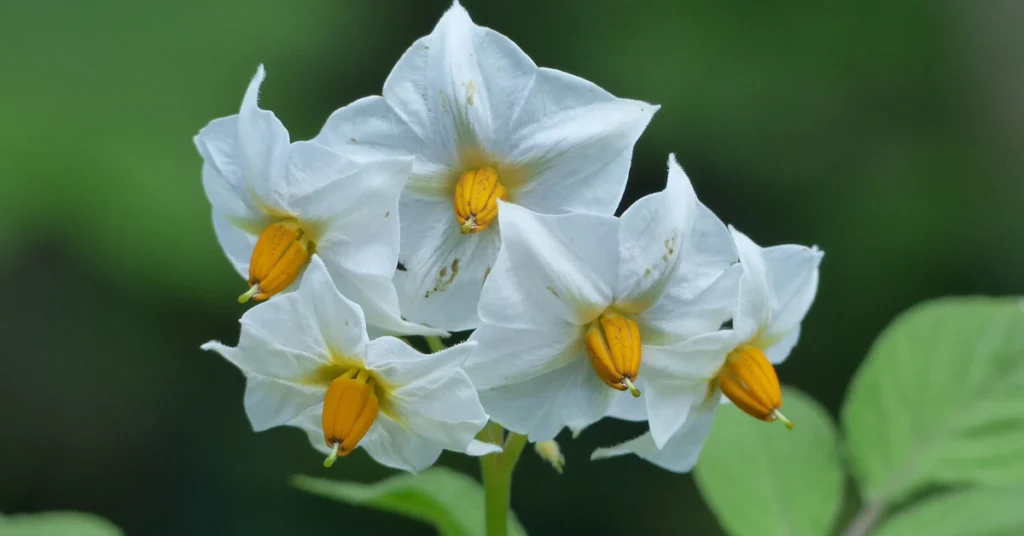
No. Potato plant leaves are not edible, and you should never eat them. The leaves, stems, sprouts, flowers, and any unripe green berries on the plant all contain a toxin called solanine. Only the tuber, the part we call a “potato,” is safe to eat, and only when it has no green coloring and the sprouts are removed.
The FDA considers potato products with glycoalkaloid levels above 0.2 mg per gram to be potentially toxic. Eating toxic parts of the plant can cause nausea, vomiting, stomach pain, diarrhea, weakness, and in serious cases, trouble breathing, according to MedlinePlus.
Pet and Child Safety
Keep children and pets away from potato foliage. The ASPCA lists solanine-containing plants in the nightshade family as toxic to dogs, cats, and horses.
If a child or pet eats any green part of a potato plant, call for help right away.
- US Poison Control: 1-800-222-1222
- ASPCA Animal Poison Control: (888) 426-4435
Identification and Healthy Growth: What Should They Look Like?
Healthy potato leaves grow one after another along the stem, not directly across from each other. Each leaf is actually a group of smaller leaflets, called a compound leaf. A full leaf usually has six to eight pairs of leaflets, and the whole leaf can grow up to 10 inches long. The leaf edges are smooth or only lightly toothed, which helps tell potato plants apart from tomato plants, since tomato leaves tend to have deeper, jagged lobes.
As the plant matures, it produces flowers in white, pink, purple, or blue, each with small yellow centers called stamens. Not every plant flowers heavily, and a lack of flowers does not mean something is wrong.
Potatoes can be grown across a wide range of US climates, from USDA Hardiness Zone 2a up through 11b, according to NC State Extension. That said, your exact planting window and the diseases most likely to affect your plant depend a lot on your local climate. Wetter regions tend to see more pressure from blight, for example. Check with your local extension office for planting dates suited to your area.
The Potato Leaf Diagnostic Guide: Normal Die-Back vs. Disease
Here is the question most gardeners ask first: is this normal, or is my plant in trouble?
There is a simple rule of thumb that answers this most of the time. Look at where the affected leaves are on the plant.
- Lower, older leaves turning yellow late in the season is usually normal. This is called senescence, and it means the plant is winding down as the tubers finish growing underground.
- New growth, upper leaves, or leaves curling and spotting early in the season is a different story. That pattern points to a real problem, not natural aging.
Use this quick-reference table to narrow things down before reading the full sections below.
| What You See | Where It Shows Up | Likely Cause |
| Yellowing, gradual | Lower leaves, late season | Normal die-back |
| Yellow with brown spots or rings | Any leaves | Disease (see blight section) |
| Curling, cannot be flattened by hand | New growth | Herbicide drift |
| Curling, can be flattened by hand | Any leaves | Heat or physiological stress |
| Purplish tint | Lower leaves, young plants | Nutrient deficiency |
| Wilting on one side of the plant | Lower leaves first | Wilt disease |
| Black, water-soaked stems | Near soil line | Bacterial disease |
This applies whether you are growing in open ground, raised beds, or containers. The location-on-the-plant rule holds true in all three.
Why Are My Potato Plant Leaves Turning Yellow or Brown?
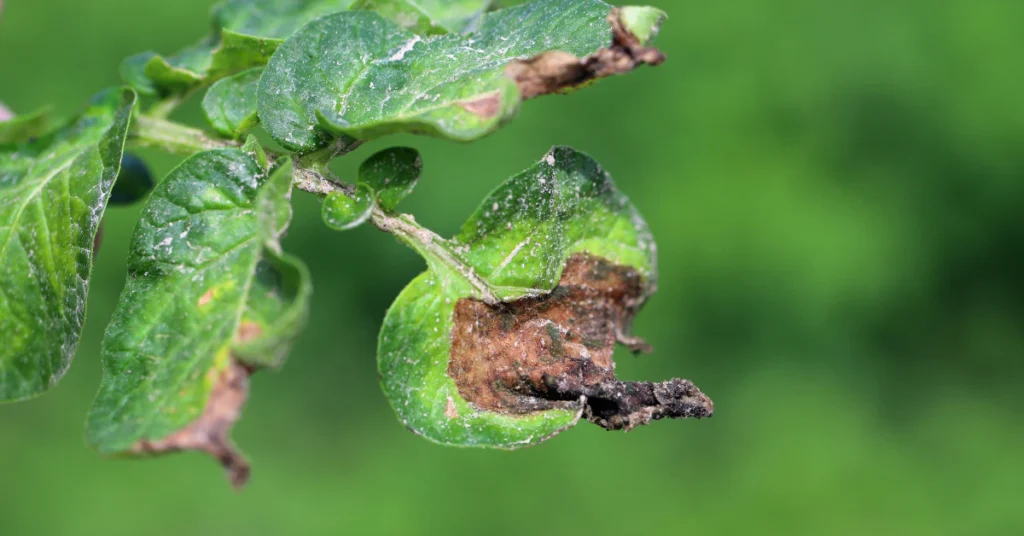
Yellow and brown leaves are the most common complaint potato growers have, and the good news is that most causes are easy to tell apart once you know what to look for.
Normal Yellowing
If it is late in the growing season and the yellowing starts with the lower, older leaves, this is most likely just the plant maturing. The leaves are not failing. They are finishing their job and signaling that the tubers underground are getting close to ready. No action is needed here.
Early Blight
Early blight shows up differently. Look for brown, roughly circular spots on the leaves. As the spots grow, they often form rings inside each other, almost like a small target. A yellow edge or “halo” frequently surrounds these spots. In bad cases, many spots merge into large brown patches, and the leaves turn yellow and die early. The tubers themselves can develop dark, sunken spots too.
Late Blight
Late blight is the more serious disease, and it moves fast. In cool, wet weather, leaves, stems, and leaf stalks can turn brown and shrivel within days. Watch for a pale green or light yellow border around the edges of brown lesions. This disease favors damp, cool conditions, so it tends to show up more in wetter regions or during rainy stretches, not dry heat.
Frost or Cold Damage
A late spring frost or an early fall cold snap can also leave dark brown, dead-looking patches on potato leaves. This is physical damage from cold temperatures, not a disease or pest. It can appear suddenly after a cold night and sometimes affects one variety in a field more than others, since some varieties handle cold a little better than others.
Telling Them Apart
- Senescence: Gradual yellowing, lower leaves only, late in the season.
- Early blight: Target-ring spots with yellow halos.
- Late blight: Fast browning and shriveling in cool, wet weather.
- Frost damage: Sudden dark brown patches right after a cold night.
If you are unsure which one you are seeing, a photo of the leaf pattern compared against these descriptions usually makes the answer clear.
Causes of Potato Plant Leaves Curling, Wilting, and Drooping
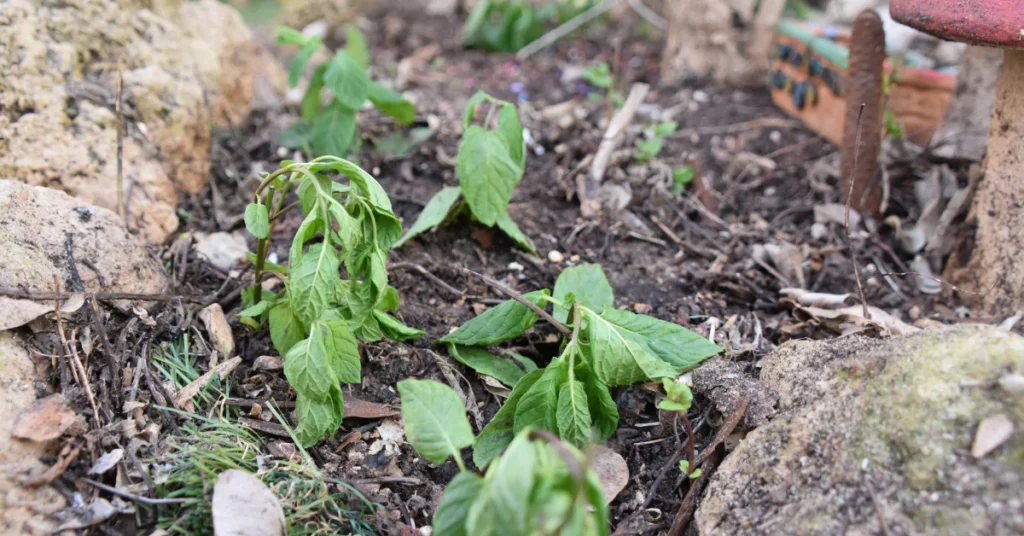
Leaves that curl, wilt, or droop can have several different causes, and figuring out which one you are dealing with changes what you should do next.
Physiological Leaf Curl
Sometimes leaves curl upward simply from heat or moisture stress. This is your plant’s way of protecting itself on a hot, dry day or after an uneven watering schedule. The good news is this type of curling is temporary.
Here is a simple test. Gently try to flatten the curled leaf with your fingers. If it flattens back out easily, you are likely looking at physiological curl, not a disease or chemical problem.
Herbicide Drift
If the curled leaves will not flatten out, herbicide drift may be the cause. This happens when weed killers like 2,4-D or dicamba, sprayed on a nearby lawn or field, drift through the air and land on your potato plants, even in small amounts.
NDSU Extension has documented a clear scale of how this damage shows up on potatoes, from mild to severe:
- Mild: A slight reduction in plant height, with cupped or bubbled leaves on the upper part of the plant and bent leaf stems.
- Severe: Heavily stunted plants, curled leaf stems, bent main stems, and badly twisted new growth.
Unlike physiological curl, leaves damaged by herbicide drift stay stiff and will not flatten back to normal by hand.
Verticillium Wilt
Wilting and drooping can also point to verticillium wilt, sometimes called “potato early dying.” This disease usually starts in the lower leaves on just one side of the plant. You will notice yellowing and wilting there first, and it tends to spread upward from that point, according to the University of Idaho Extension.
Quick Comparison
| Symptom | Can You Flatten It? | Pattern |
| Physiological curl | Yes | Whole plant, heat-related |
| Herbicide drift | No | New growth, twisted and stiff |
| Verticillium wilt | Not applicable (wilting, not curling) | One side, lower leaves first |
Nutrient Deficiencies and Rot: Leaves Turning Black or Purple
Purple and black leaves can look alarming, but both usually trace back to one of two clear causes.
Purple Leaves
Most gardeners assume purple leaves always mean a phosphorus deficiency, and that is one real cause. Phosphorus deficiency can cause purpling in the leaves and veins, and the problem often gets worse in cold soil, since cold conditions make it harder for roots to take up phosphorus in the first place.
But phosphorus is not the only cause worth checking. According to UC ANR, a university extension program, zinc deficiency can also turn potato leaves yellow or purplish. It often comes with another clue: new growth that looks stunted, delayed, or unusually narrow. If you see purple leaves paired with smaller new growth, zinc deficiency is worth considering alongside phosphorus.
Black Leaves and Stems
Black leaves are a different situation, and they often point to a disease called blackleg, caused by Pectobacterium bacteria. This one starts at the bottom, not the top.
Here is the typical pattern, based on University of Kentucky Extension research:
- The stem blackens and rots, starting right at the soil line.
- Leaves on the affected stem turn yellow.
- Those same leaves wilt, and their edges curl.
- In serious cases, the plant collapses entirely.
If you notice blackened, mushy stems near the soil, check nearby leaves for yellowing and curling edges. That combination is the clearest sign of blackleg, rather than a simple nutrient issue.
End of the Season: Harvest Signs and Removing Foliage
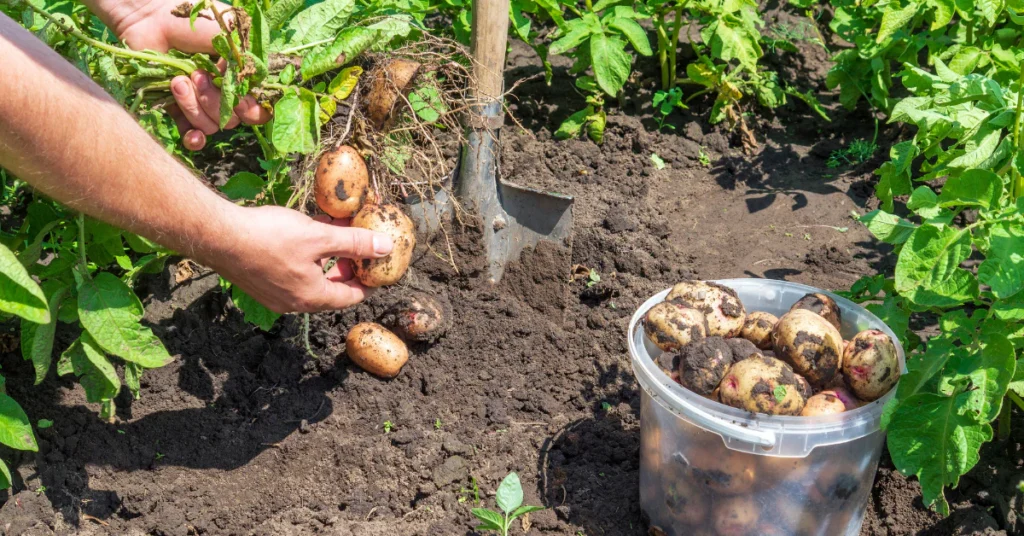
Your potato leaves can actually tell you when it’s time to dig. You just need to know what to look for, and that depends on which kind of potato harvest you’re after.
Early or “New” Potatoes
If you want small, tender new potatoes with thin skin, watch for flowering. Once the plant blooms, usually around 7 to 8 weeks after planting, you can dig a few up. These will not store well long-term, but they are great for eating right away.
Mature Potatoes for Storage
If you are growing potatoes to store through the winter, patience matters more. Wait until the foliage dies back fully on its own. This natural die-back is the plant’s signal that it has finished sending energy into the tubers, and the skins have had time to thicken for storage.
What If the Foliage Won’t Die Back?
Sometimes the season ends before the leaves do. If frost or your local harvest window is approaching and the tops are still green, don’t just dig them up right away.
Instead, follow this rule from the University of Maine Cooperative Extension: cut or pull the tops off the plant, then wait at least 7 days before harvesting. This waiting period lets the tuber skins set and toughen up, which matters a lot if you plan to store your potatoes rather than eat them right away.
Skipping this step can lead to potatoes that bruise easily and don’t keep well in storage. A week’s patience now saves you a lot of spoiled potatoes later.
Frequently Asked Questions
How do I identify a potato plant?
Look for an upright, branching plant with compound leaves made up of 6 to 8 leaflet pairs. Flowers are white, pink, purple, or blue with small yellow centers, and the tubers grow underground on the plant’s stolons.
What do potato leaves look like when they’re ready to harvest?
For new potatoes, the plant flowering is your signal. For mature, storage-ready potatoes, wait until the foliage yellows and dies back on its own.
Should I remove foliage from potato plants?
Only if it has not died back naturally by the end of the season. In that case, cut or pull the tops, then wait at least 7 days before harvesting.
Are the leaves from a potato plant edible?
No. They contain solanine and should never be eaten.
Is any part of the potato plant poisonous?
Yes. The leaves, stems, roots, and fruit all contain solanine and are considered highly toxic.
What should I do with regular potato leaves?
If the foliage is disease-free, you can compost it. If it shows signs of blight or other disease, discard it instead. Do not eat it.
What are potato leaves good for?
Nothing beyond feeding the growing plant. There is no verified culinary or medicinal use for them.
Which part of a potato plant is edible?
Only the tuber, and only once it is free of any green coloring.
Which organ of the potato plant do we eat?
The tuber, which is a swollen underground stem, not a root.
Conclusion
Most potato leaf problems fall into a few clear patterns once you know what to check. Look at the color, the location on the plant, and the time of season before you worry. Often, yellowing lower leaves late in the summer just mean your potatoes are getting close to harvest.
But stay alert for the real warning signs too, like target-ring spots, stiff curled leaves that won’t flatten, or blackened stems at the soil line. And always remember: no matter what the leaves look like, never eat them. Only the tuber is safe, and only once it’s free of green coloring.