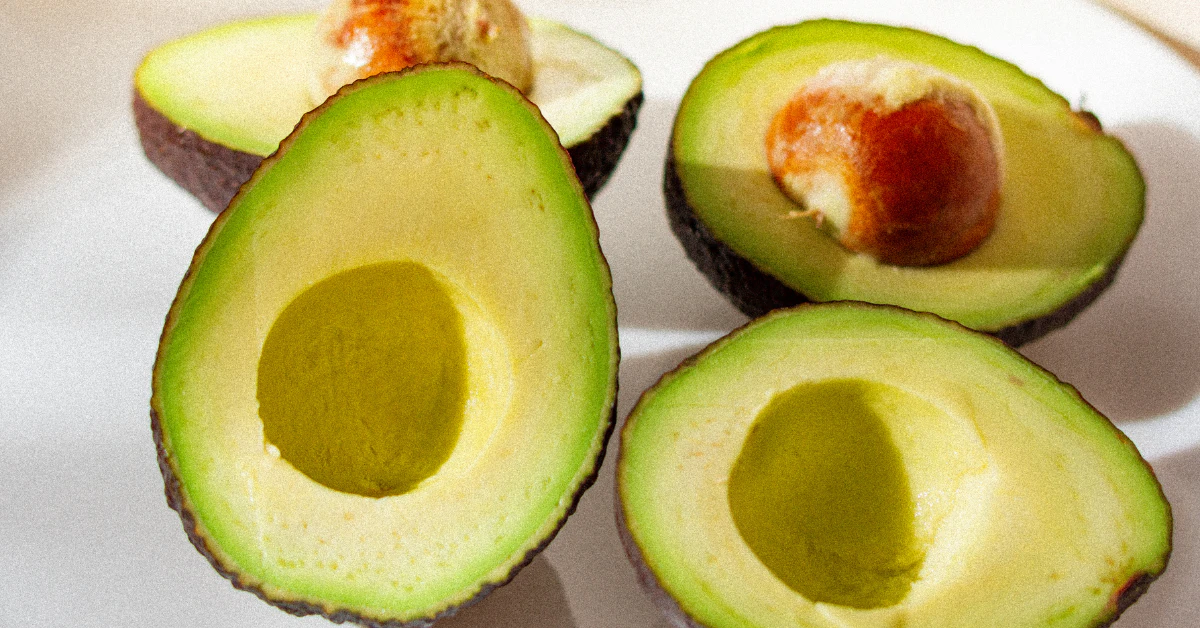
To plant an avocado seed pit, rinse off every bit of fruit flesh so mold has nothing to feed on. Find the flat bottom (that’s the root end) and the slightly pointy top (the shoot end). Then sprout it one of three ways: suspend it over water with toothpicks, wrap it in a damp paper towel inside a sealed bag, or plant it straight into moist potting soil.
That leftover pit from last night’s tacos can turn into a glossy, free houseplant, and it’s one of the most satisfying beginner garden projects out there. This guide covers more than the classic toothpick trick. You’ll learn why seeds rot or stall, how to skip toothpicks altogether, and what university research actually says about whether your tree will ever grow real avocados.
Reality Check: Will Your Seed Ever Grow Fruit (And Where Can It Live)?
Commercial growers never plant a pit and wait. They graft a cutting from a proven tree onto young rootstock. According to UC Cooperative Extension in Ventura County, a grafted tree usually gives a few fruit by year three and a full crop by years four or five. A seedling grown straight from a pit takes much longer, often a decade or more, and there’s no guarantee it will fruit at all. Some varieties also need a second, different avocado tree nearby to pollinate them.
Here’s the other catch. Avocados don’t grow “true to type.” A pit from a Hass avocado won’t grow a Hass tree. It’s more like a genetic lottery, similar to how siblings don’t look identical to either parent.
| Seedling (Grown from Pit) | Grafted Nursery Tree | |
| Time to first fruit | Many years, often a decade or more | About 3 years, full crop by 4-5 years |
| Fruit quality | Random, won’t match the parent fruit | Matches the known variety |
| Best use | Houseplant, or rootstock for grafting later | Backyard fruit production |
Where you live matters just as much as genetics. Avocado trees can only survive outdoors, in the ground, in USDA zones 9b through 11, according to University of Florida IFAS Extension. That covers parts of Florida, California, Hawaii, and South Texas.
Even within zone 9, location matters. Arizona State University Cooperative Extension notes that desert gardeners in zone 9 need to protect young trees from intense afternoon sun and heat. If you’re in a borderline zone 8b or 9a area, your only real shot outdoors is an established, cold-hardy Mexicola-type seedling, which can handle brief dips into the high 20s degrees Fahrenheit once mature.
If you garden anywhere colder than that, don’t worry. You can still grow a beautiful plant. It just lives in a pot indoors as a foliage plant, not a fruit tree.
Before You Start: Choosing a Viable Pit & Pet Safety Warning
Why Freshness Is Everything
Here’s something most guides skip: your pit needs to be fresh, not just clean. Scientists call avocado seeds “recalcitrant,” which just means they can’t be dried out and stored like a packet of bean or tomato seeds from the garden shed. Once an avocado seed dries out or sits in the fridge too long, it starts losing its ability to sprout at all.
A peer-reviewed study from Tishreen University backs this up with real numbers. Pits planted fresh, right out of the fruit, had an 87.5% germination rate. Pits stored in the refrigerator for just 60 days dropped to a 4.17% germination rate. That’s a massive difference for such a short wait.
Pit Prep Basics
Pick a plump, ripe avocado with a pit that looks healthy and isn’t nicked or cut. As soon as you scoop it out, scrub it under warm water until every trace of green flesh is gone. Leftover fruit bits feed mold, and mold is one of the top reasons seeds fail before they even get a chance to sprout.
Pet Safety Warning
All parts of the avocado plant, including the pit, leaves, and bark, contain a natural toxin called persin. The ASPCA officially lists avocado as toxic to horses, where it can cause edema, breathing trouble, and heart failure. It’s also considered risky for birds and rabbits.
Dogs and cats are less likely to be poisoned by persin itself, but don’t let your guard down. A slippery avocado pit left on a counter or windowsill is a serious choking and blockage hazard if a curious pet swallows it. Keep your germinating pit somewhere pets and other animals can’t reach it.
The Classic Toothpick-and-Water Method
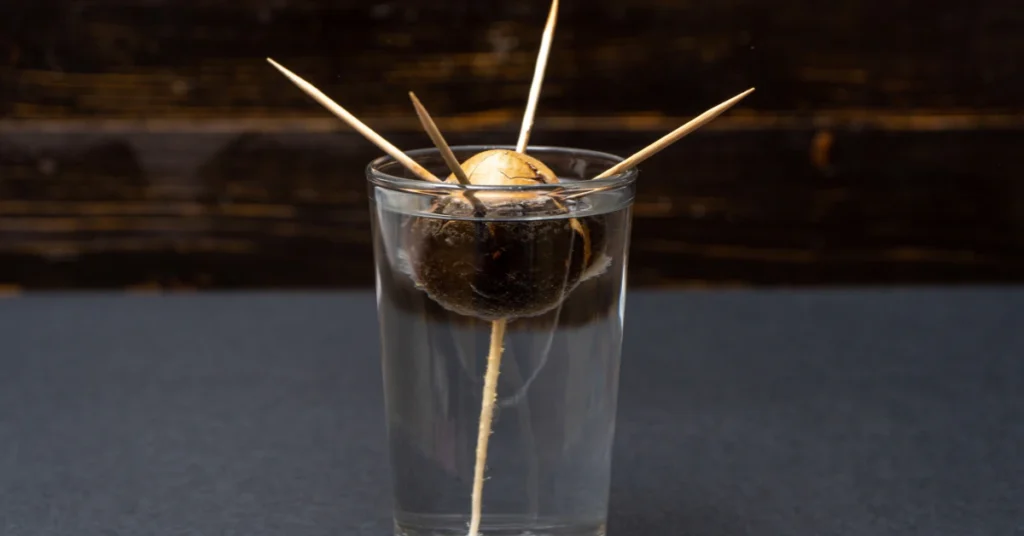
This is the method most people picture when they think of growing an avocado from a pit. It’s fun because you can actually watch the root split open and grow right through the glass. The trade-off is you have to keep an eye on evaporation, and the water can grow a bit of algae or film if you forget about it for too long.
Here’s how to plant an avocado seed in water, step by step.
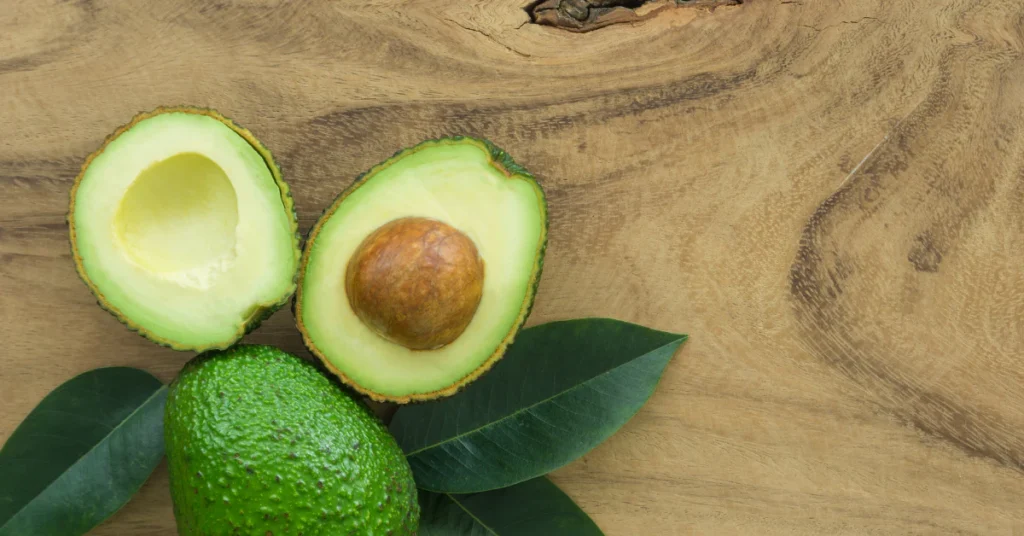
- Find the top and bottom. This is where most beginners go wrong. The slightly pointy end is the top, where the stem will eventually sprout. The flatter, slightly rounder end is the bottom, where the roots come out. Planting it upside down is the number one mistake people make with this method.
- Push in the toothpicks. Insert 3 to 4 toothpicks around the middle of the pit, angled slightly downward. These will rest on the rim of your glass and hold the pit in place.
- Suspend it over water. Fill a clear glass with water until the bottom third to half of the pit sits underwater. The top should stay dry.
- Pick a warm spot. This is where how to grow an avocado seed in water with toothpicks really comes down to temperature. According to grower Greg Alder, pits sprout in roughly a month when daytime highs sit around 75 to 80°F. A cooler spot, like a chilly windowsill around 65°F, can drag the wait out past 8 weeks. Skip direct, scorching sun since it can overheat the water. A warm kitchen counter works well.
- Change the water weekly. Swap it out every 5 to 7 days. Fresh water keeps oxygen levels up and stops bacteria from building up around the base.
How to Grow an Avocado Seed Without Toothpicks (Bag & Moss Method)
Why Skip the Toothpicks?
There’s a strange pattern that shows up again and again on gardening forums and in communities like r/avocado. People try the water jar method, fail a few times, give up, and toss a leftover pit into a zip-top bag in a cupboard. Months later, they open it up expecting a dried-out mess and instead find a thriving root system.
The reason is simple. A sealed bag keeps the pit at constant high humidity. There’s no water level to drop, no cold draft from a windowsill, and nothing to top off. If you’ve struggled with the toothpick method, this is worth trying.
Step-by-Step: The Paper Towel or Grow Bag Method
- Peel the skin off. After washing your pit, peel away the thin, papery brown seed coat. This is easier if you soak the pit in warm water for about 20 minutes first. Removing it cuts down on mold risk once the pit is sealed inside a bag.
- Wrap it up. Wrap the pit loosely in a damp paper towel that’s been wrung out so it isn’t dripping. You can also nestle it into a handful of damp sphagnum moss instead. Either way, place it inside a zip-top plastic bag.
- Seal it most of the way. Leave about an inch of the bag unzipped so air can still get in. Set it somewhere warm, ideally 75 to 80°F, like a kitchen cabinet or counter.
- Check in every two weeks. Make sure the towel or moss stays lightly damp, not soggy. You’re waiting for a taproot and stem to grow 2 to 3 inches long before moving it to soil.
Troubleshooting: Why Your Pit Has Slime, Mold, or Two Stems
“There’s Clear Jelly or White Slime on My Pit!”
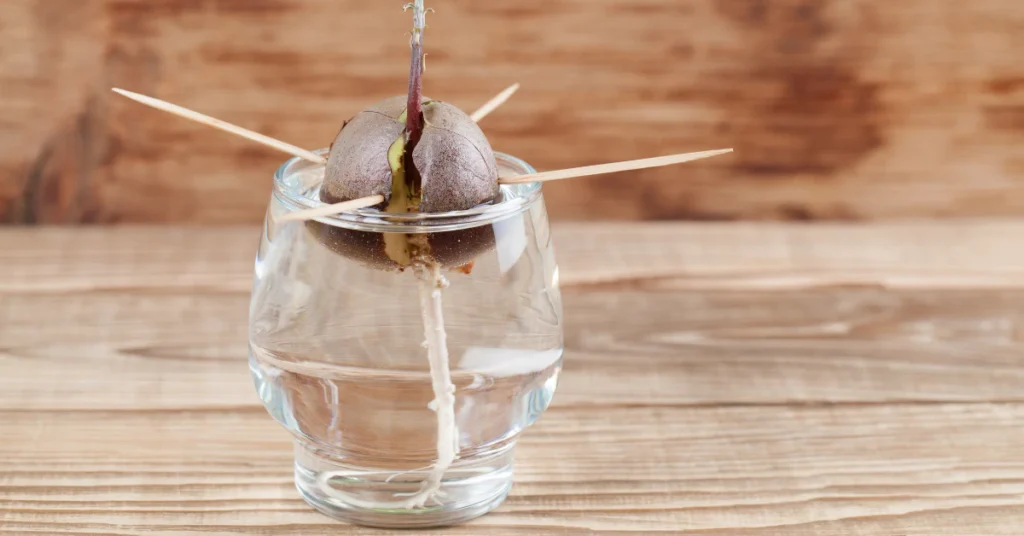
Don’t panic the moment you see something weird near the crack. Clear, jelly-like slime or small bumpy white growth around the base is usually just natural plant mucilage, or early root callus forming. It’s a normal part of the process, not a sign your seed is dying. Rinse it gently and change the water.
What’s not normal is a strong rotten smell paired with mushy, black or brown tissue. That’s true rot, and at that point it’s better to start over with a fresh pit.
“Why Did Two Stems Sprout From One Seed?”
This one surprises a lot of first-time growers. Avocado pits can contain more than one embryo inside, so it’s completely normal for two separate stems to sprout from a single pit. You haven’t broken anything. You can let both stems grow for a fuller, bushier plant, or snip the weaker one at the base so the stronger stem becomes the main trunk.
“My Seed Has Stalled for Weeks” or “I’ve Had an Avocado Seed in Water for a Year”
If your pit cracked open weeks ago and nothing else is happening, the most common cause is a room that’s too cold. Avocado seeds sprout fastest around 75 to 80°F, and anything cooler can stall progress for a long time.
As for keeping an avocado seed in water for a year, it can survive that way for a while once it has leaves. But plain tap water has no real nutrients in it. Over time, leaves tend to turn yellow or brown at the tips. Once the root is a few inches long and leaves have formed, it’s time to move the plant into soil, or start feeding it a diluted liquid fertilizer if you want to keep it in water longer.
Potting Up: Moving Your Sprouted Pit to Soil (Container Shape Matters)
When and How Deep to Plant
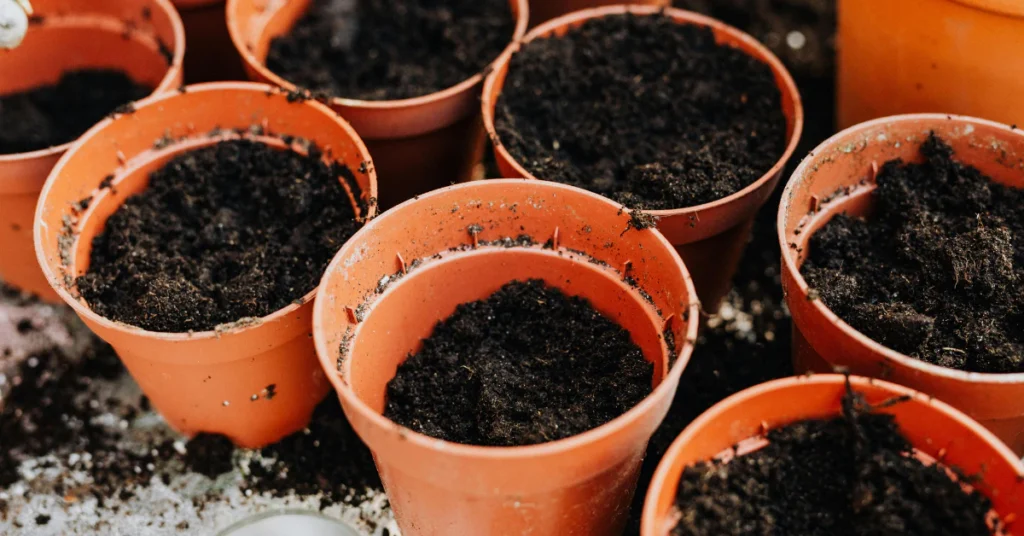
Once the taproot is 3 to 6 inches long and growing smaller side roots, with a stem starting to sprout from the top, it’s time to move your seed into soil. Use a chunky, fast-draining potting mix rather than heavy garden dirt. Plant it with the top third of the pit still peeking above the soil line. Burying the whole thing can cause the stem base to rot in damp soil.
The Secret Nobody Tells You: Container Shape
Here’s something most guides leave out completely. Avocado seedlings don’t branch out their roots right away. They send one strong, dominant taproot straight down first. According to grower Greg Alder, if you plant that seedling in a short, wide decorative pot, the taproot hits the bottom within weeks and the whole plant stalls out.
The fix is simple. Choose a tall, slender container instead, something like a deep 1 to 3-gallon nursery tree pot, or even a clean milk carton with drainage holes punched in the bottom. Giving that taproot room to grow down means a stronger, healthier plant later on.
Skip the Coffee Grounds
You may have seen advice online to mix used coffee grounds into the pot to make the soil more acidic for your avocado. It’s worth skipping. University of Missouri Extension horticulturist Todd Higgins points out that brewing coffee washes out most of its acid. Spent grounds often test around pH 7 to 8, which is neutral to slightly basic, not acidic at all. On top of that, grounds hold extra moisture in the pot, which can increase the risk of root rot instead of helping your plant.
What to Expect: Your 1-Year-Old Avocado Tree From Seed
Height and Appearance Benchmarks
So your seedling has been growing for a year now, and you’re wondering if it looks the way it should. A healthy 1-year-old avocado tree grown from seed is usually 18 to 36 inches tall indoors. It will have a central green, slightly woody stem topped with a cluster of large, glossy dark green leaves, often 6 to 10 inches long.
If your plant looks a little tall and thin rather than full and bushy, that’s common too. Indoor light is rarely as strong as full outdoor sun, and avocado seedlings tend to stretch toward whatever light they can find, a look often called leggy.
Ongoing Care
A few simple habits keep a 1-year-old plant healthy.
- Light: Give it the brightest spot you have, ideally a south or west-facing window with at least 6 hours of light.
- Water: Water deeply until it runs out the drainage holes, then let the top 2 inches of soil dry out before watering again. Soggy roots lead to root rot, while mineral buildup from tap water can turn leaf tips brown.
- Shaping: If you’d rather have a fuller, bushier plant instead of one tall stem, you can pinch off the growing tip once the plant reaches about 12 inches tall.
Moving Outdoors
If you live in USDA zones 9b through 11 and want to plant your yearling outside, spring, roughly March through June, is commonly recommended by growers. That timing gives young roots a chance to settle in before summer heat or winter cold becomes a problem.
Frequently Asked Questions About Planting Avocado Pits
Can you just plant an avocado pit?
Yes. You don’t need water or toothpicks at all. Simply plant the cleaned pit directly into moist, well-draining potting mix with the top third left exposed above the soil. It’s slower to watch since you can’t see the roots, but it skips the mold problems that water methods can bring.
How long does it take for an avocado pit to bear fruit?
According to UC Cooperative Extension in Ventura County, grafted trees give a few fruit by year 3 and a full crop by years 4 to 5. A seedling grown from a pit takes much longer, may never fruit indoors, and won’t taste the same as its parent fruit.
Can you grow a seed from a bought avocado?
Yes. A mature, healthy pit from a grocery store avocado is just as capable of sprouting as one from a home-grown tree. There’s nothing special about where the avocado came from.
How many avocados does one avocado seed grow?
One seed grows one tree. How much fruit that tree eventually produces depends on more than the seed itself. UC Cooperative Extension notes some avocado varieties aren’t self-fertile and need a second, different variety planted nearby to set fruit at all.
What is the 5 day rule for avocados?
This is a kitchen tip, not a planting rule. It means a firm, green avocado takes about 4 to 5 days to ripen on the counter. It’s handy for timing when your avocado, and its pit, will be ready to use.
What month do you plant avocados?
For outdoor planting in frost-free zones 9b through 11, spring is commonly recommended, since it helps young roots settle before summer heat or winter cold arrives. If you’re growing yours as an indoor houseplant, you can start the pit any time of year.
Are coffee grounds good for avocado trees?
Not really, at least not for acidifying soil. University of Missouri Extension found that brewing removes most of the acid from coffee grounds, leaving spent grounds testing around pH 7 to 8. A proper soil test is a better guide than grounds alone.
Why are avocado trees hard to grow?
Sprouting a pit into a houseplant is easy. Growing one into a fruiting tree is the hard part. Avocados are frost-sensitive and only survive outdoors in zones 9b to 11, per UF/IFAS Extension. On top of that, seedlings have unpredictable genetics and sometimes need a second tree nearby to pollinate, per UC Cooperative Extension.
Can I grow an avocado tree from a seed that is 5 years old?
Almost certainly not. A Tishreen University study found germination rates drop from 87.5% in freshly planted seeds to just 4.17% after only 60 days of cold storage. A seed sitting around for 5 years would be well past any realistic chance of sprouting.
Conclusion
Growing an avocado tree from a pit is one of the easiest and most rewarding kitchen scrap projects you can try. Whether you go with the classic toothpick jar or the no-fuss bag method, the real keys to success are starting with a fresh pit, keeping it warm, and giving the roots room to grow once it’s time to pot up. Just remember to keep your expectations realistic about fruit, protect pets from the pit, and enjoy watching a free houseplant grow from something you almost threw away.