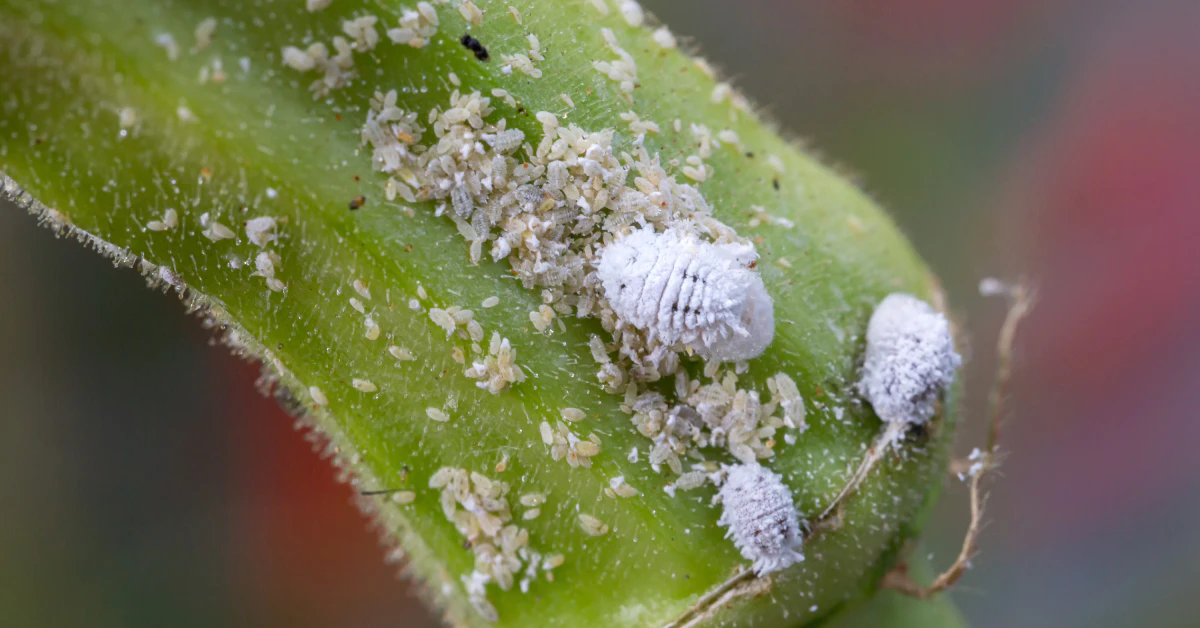
The earliest signs of mealybugs are tiny, white, cotton-like specks tucked into leaf joints, along stems, or where a leaf meets the main stalk. They look like small tufts of lint stuck to your plant, and they will not wipe away like dust does.
Catching mealybugs at this stage matters more than you might think. A single female can lay 100 to 200 eggs in just 10 to 20 days. That means one missed bug today can turn into a full colony within a few weeks.
This is not about panic. It is about timing. Spotting mealybugs early is the difference between a five-minute fix and a months-long battle that keeps coming back. If you caught something suspicious on your plant and came here to check, you are already doing the right thing.
What Do the Early Stages of Mealybugs Look Like?
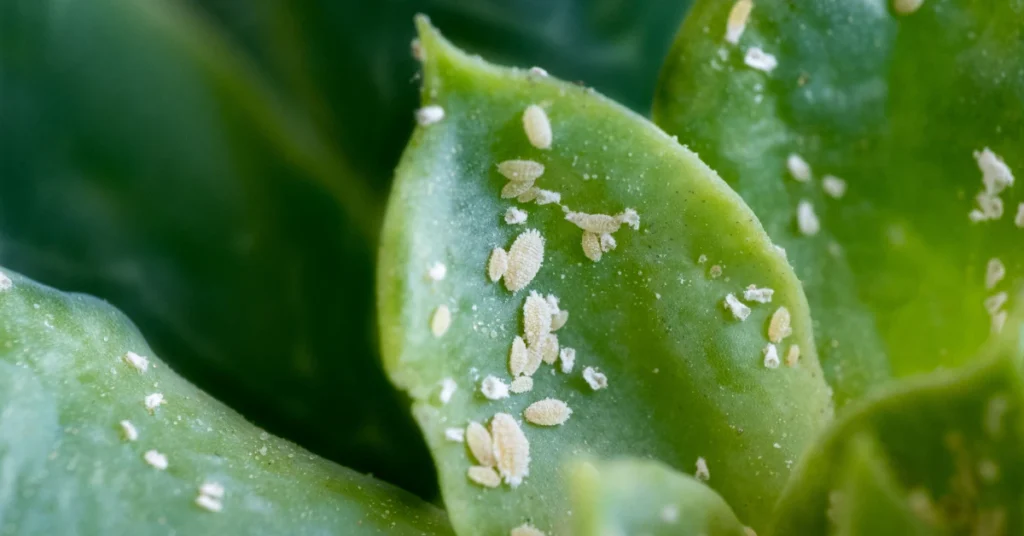
Before you ever see a full bug, you will usually see its wax. Mealybugs cover themselves in a white, powdery or cottony coating. That coating often shows up before the insect underneath looks recognizable at all.
Here is where to check first:
- Undersides of leaves. This is their favorite hiding spot.
- Where leaves meet the stem. These tight joints give them cover.
- Along stems and in new growth folds. Soft, tender tissue is easiest for them to feed on.
- Around the outside of the pot. Yes, they can crawl there too.
In the earliest stage, you might just see a few small white flecks that look like lint or mold. If you touch them, they will not brush off clean the way dust does. That stickiness is your clue.
Watch for Ants, Too
Here is something most guides skip. Ants are a real early warning sign of mealybugs, not just a random nuisance.
Mealybugs produce a sugary waste called honeydew. Ants love it. In exchange for that food, ants actively protect mealybugs from predators and help them survive longer. It is a trade that benefits both bugs and hurts your plant.
So if you notice an ant trail heading up a houseplant, do not ignore it. Even if you have not spotted mealybugs yet, that ant activity is often a sign they are already there, just hidden in a leaf joint you have not checked yet.
The Hidden Threat: Root Mealybugs
Sometimes a plant struggles for no clear reason. The leaves turn yellow. Growth slows down. You check every leaf and stem and find nothing. That might mean the problem is below the soil, not above it.
Root mealybugs live underground and feed on roots and root hairs. They stay completely out of sight, which is why this kind of infestation often goes unnoticed until it is severe.
If your plant looks stressed with no visible bugs anywhere, it is worth unpotting it to check. Gently slide the root ball out and look for white, cottony residue clinging to the roots or along the inside of the pot. That waxy coating is the same telltale sign mealybugs leave above ground.
Root mealybugs spread easily too. Young ones are active crawlers that can move from pot to pot through drainage holes, or hitch a ride in irrigation water shared between plants.
If you grow several houseplants that sit close together or share a watering routine, keep this hidden form in mind any time a plant seems off without a clear cause.
Look-Alikes: What Can Be Mistaken for Mealybugs?
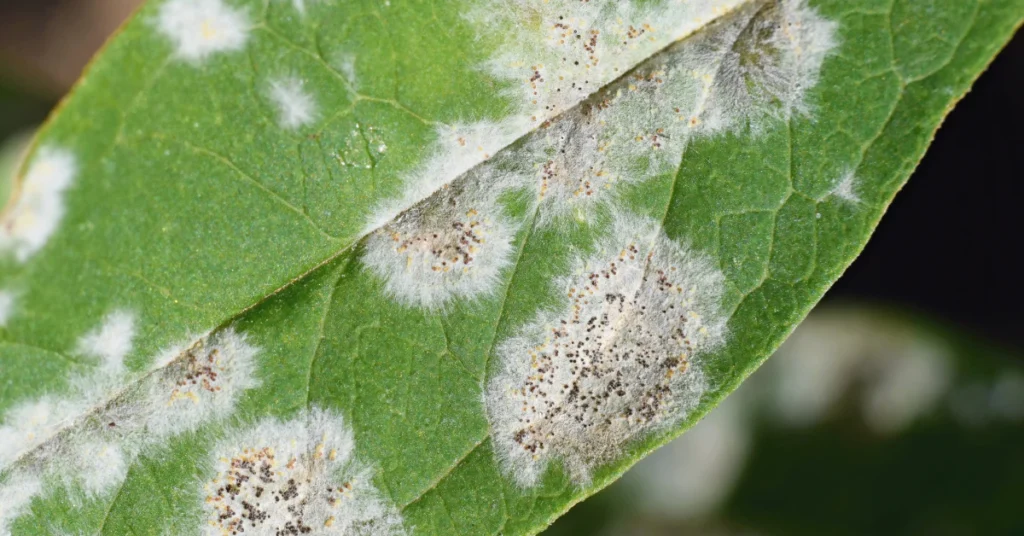
Mixing up mealybugs with something else is incredibly common, especially in the first few weeks. You are not the only one who has stared at a plant wondering if it is bugs or just mold.
The easiest way to tell them apart is to touch the white patch. Mealybugs form raised, cottony clusters you can physically pick or wipe off. Powdery mildew stays flat and dusty on the leaf surface, like a dry coating that smears instead of lifting away in a clump.
Here is a quick breakdown of the usual suspects:
| Pest or Problem | What It Looks Like | Where It Shows Up |
| Mealybugs | Raised, cottony white clusters you can pick off | Leaf joints, stems, undersides of leaves |
| Powdery mildew | Flat, dusty white coating, fungal, not an insect | Spread across the leaf surface |
| Cottony cushion scale | Similar white, waxy look, but attaches more firmly | Twigs and stems |
| Woolly aphids | Fuzzy white clusters, also feed on sap | Stems and new growth |
If you are still unsure after a close look, that is normal. Even experienced growers mix these up, since several of them produce the same white, waxy coating and sticky residue. When in doubt, a gentle touch test and checking leaf joints first will usually point you in the right direction.
Why Do Mealybugs Appear? The Root Causes

Mealybugs rarely show up out of nowhere. In most cases, your plant’s care routine is quietly inviting them in.
The biggest culprit is a combination of overwatering and too much nitrogen fertilizer. This pairing pushes plants to grow soft, tender new leaves and stems. That kind of growth is exactly what mealybugs prefer to feed on. Worse, it does not just attract them. It can cause females to lay even more eggs than usual, speeding up how fast an infestation grows.
So if you have been feeding heavily and watering often to help a plant along, it may be working against you.
There is also a regional piece to this. Mealybugs are mostly an indoor problem, since houseplants offer the warm, stable conditions they thrive in. But gardeners in warmer zones, roughly zones 9 through 11, often deal with them outdoors year-round too.
In colder zones, outdoor infestations are less common. Instead, the usual trigger is bringing plants inside for the winter. A plant that looked fine outside can carry mealybugs indoors without you noticing right away.
How to Treat the Early Signs (Safely)
Good news. Catching mealybugs early means you have real options, and most of them are simple.
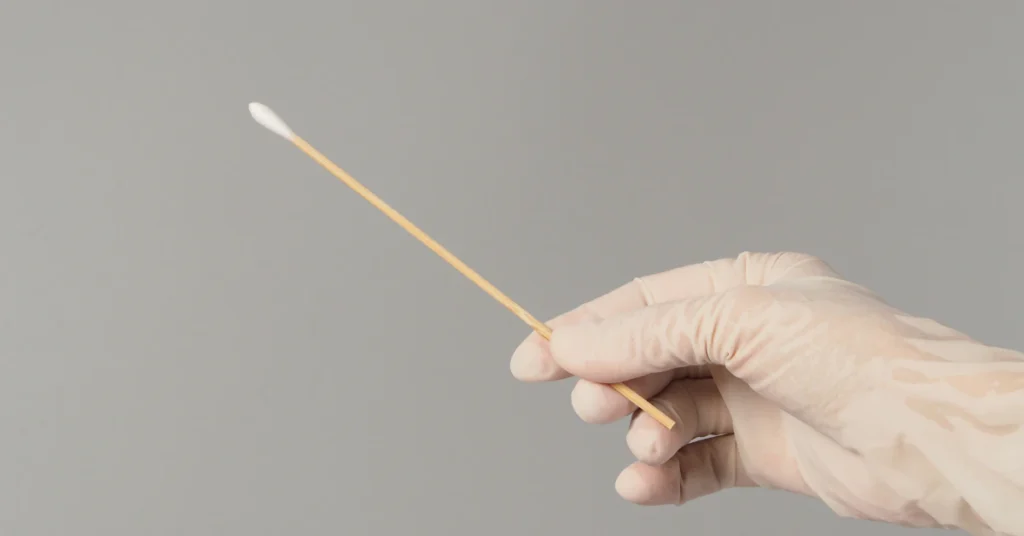
Start with a spot treatment. Dip a cotton swab in isopropyl alcohol and dab it directly onto the mealybugs. This is the fastest way to kill them on contact. One important rule here: use alcohol that is 70 percent or weaker. Full-strength rubbing alcohol can burn your plant’s leaves, so skip anything stronger.
Go over every leaf joint, stem, and the underside of each leaf. Mealybugs hide well, so take your time.
If the infestation is larger, an insecticidal soap or horticultural oil spray can help. These work by coating the bugs directly, so full coverage matters more than the product itself.
For stubborn or repeat infestations, some gardeners turn to systemic insecticides containing imidacloprid. These are stronger, and they come with real safety rules you should not skip. According to EPA pesticide labels, children and pets must stay away from the treated area until the spray has fully dried. These products can also harm bees and other pollinators if they come into contact with it while it is still wet. If you use a systemic spray outdoors, apply it carefully and keep the area off-limits until it dries completely.
One more thing worth knowing upfront. Treating mealybugs is rarely a one-time job. Eggs can survive a first round of treatment and hatch days later. That means checking your plant again every few days for at least a couple of weeks, not just once and moving on.
Think of this as short-term vigilance, not a forever chore. A little consistency now is what keeps a small problem from turning into that months-long battle.
For more detail on using pesticides safely around children and pets, the EPA’s pesticide label guidance is a reliable place to check product-specific rules.
Frequently Asked Questions
What kills mealybugs immediately?
Direct contact with 70% isopropyl alcohol on a cotton swab kills mealybugs on contact. Insecticidal soaps and horticultural oils also work fast, but you need to coat the bugs fully for them to take effect.
Is it okay to touch mealybugs?
Yes. Mealybugs do not bite humans, so touching them is safe. Just wash your hands afterward, since their sticky honeydew residue can spread and lead to sooty mold on nearby surfaces.
Do mealybugs ever go away?
Not on their own. They tend to return suddenly, even after you think they are gone. Clearing an infestation usually takes repeated treatment over several weeks, not a single pass.
What do mealybugs hate?
Dry, well-ventilated conditions and moderate feeding. Mealybugs thrive in humid, still air and on plants pumped up with high-nitrogen fertilizer, so cutting back on both makes your plant less appealing to them.
What is the natural enemy of mealybugs?
The mealybug destroyer ladybird, Cryptolaemus montrouzieri, is their main natural predator. One beetle can eat about 250 mealybugs over its lifetime, making it a strong biological control option for larger infestations.
Do mealybugs infest your house?
No, they only infest plants, not your home itself. That said, they spread easily from plant to plant through touching leaves, air currents, or even on your hands and tools.
What bug spray kills mealybugs?
Insecticidal soaps and horticultural or neem oils are solid low-toxicity choices. For severe or repeat infestations, sprays containing imidacloprid are stronger, but keep children and pets away from the treated area until it fully dries.
What is a natural way to get rid of mealybugs?
For small spots, 70% rubbing alcohol on a cotton swab works well. For larger indoor or greenhouse infestations, introducing mealybug destroyer beetles gives you natural, ongoing control.
Conclusion
Spotting mealybugs early puts you in control. A few cottony white flecks in a leaf joint, an ant trail climbing the stem, or a plant that seems stressed for no reason are all worth a closer look today, not next week.
Most early infestations respond well to simple steps like a 70% alcohol swab or a thorough soap spray. The key is staying consistent for a few weeks, since eggs can hatch after your first treatment. Catch it now, stay watchful, and you can avoid the long, repeat battle so many gardeners describe.