You went out to check your cucumber vines and found a fat yellow cucumber where a crisp green one should be. That’s annoying, especially if you’ve been watering and feeding your plants like clockwork.
Here’s the quick answer. Yellow cucumbers almost always come down to one of three things: the fruit got too ripe before you picked it, the flower never got properly pollinated, or the plant is stressed from too much or too little water. Nutrient problems and pests can also play a role.
Before you worry too much, take a breath. A yellow cucumber might taste bitter or feel mushy, but it is not dangerous. Cucumber is listed as non-toxic to dogs, cats, and horses by the ASPCA, so even if a dropped one gets nibbled by a pet, there’s no need to panic. Let’s figure out what’s actually going on with your plant.
The #1 Cause of Large Yellow Cucumbers: Overripeness & Environmental Stress
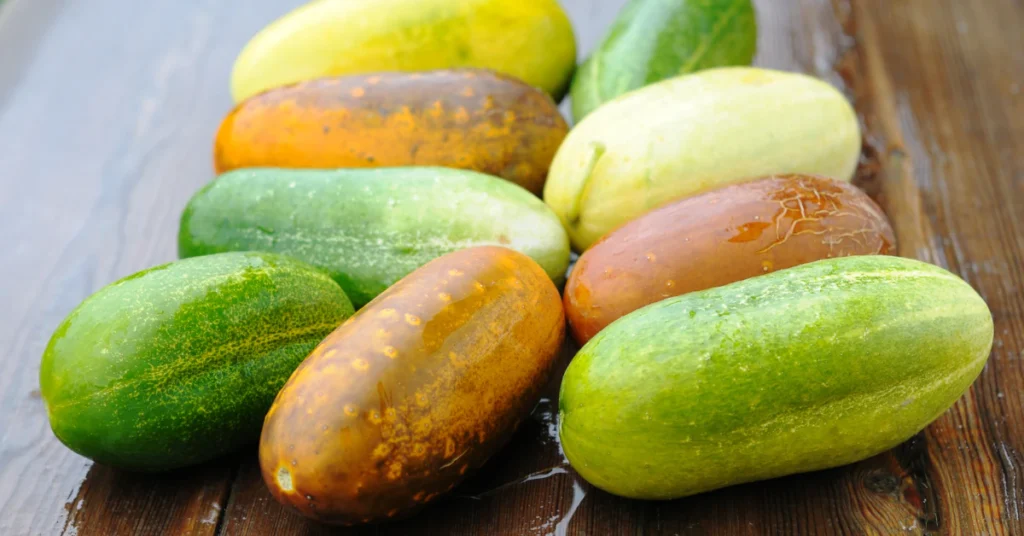
If your cucumber is big, round, and yellow all over, the most likely story is a simple one. It stayed on the vine too long. This is the classic answer to why are my cucumbers yellow and fat instead of slim and green.
As a cucumber keeps growing past its prime, its green color fades and its seeds get bigger and more numerous. At the same time, a natural compound called cucurbitacin can build up inside the fruit. This compound is what makes an overripe cucumber taste bitter.
Heat and drought are usually the trigger. When your plant gets stressed by high temperatures or dry soil, it produces more cucurbitacin as a kind of defense response. That bitterness tends to pool in specific spots, mainly near the stem end and just beneath the skin.
There’s an easy fix if you already picked one. Cut off the stem end and peel the cucumber before eating it. This removes most of the bitter compound and often makes the rest perfectly enjoyable.
Here’s the good news many gardeners never hear. One bitter cucumber does not mean your whole vine is doomed. If you correct the stress that caused it, by watering more consistently or mulching to keep the soil cool and moist, the next cucumbers that form on that same plant can taste completely normal. Bitterness is a response to conditions, not a permanent flaw in the vine itself.
The Missing Link: Pollination Failure
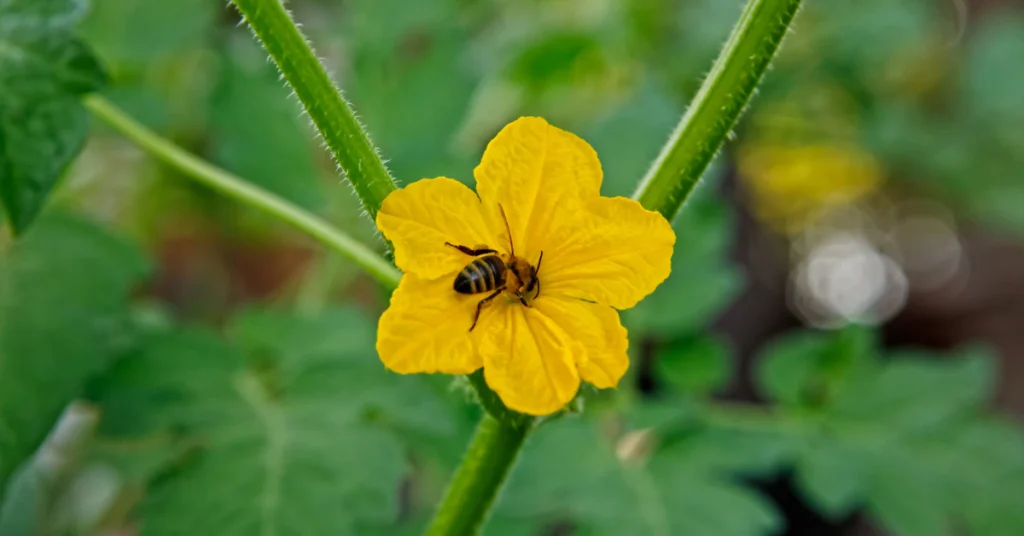
Here’s a problem that trips up a lot of gardeners. Your cucumber plant looks healthy. It’s blooming like crazy. But the tiny baby cucumbers keep turning yellow and falling off before they ever get a chance to grow. If this sounds familiar, you’re dealing with why are my cucumbers turning yellow when small, and the answer usually has nothing to do with watering or fertilizer.
This is almost always a pollination problem.
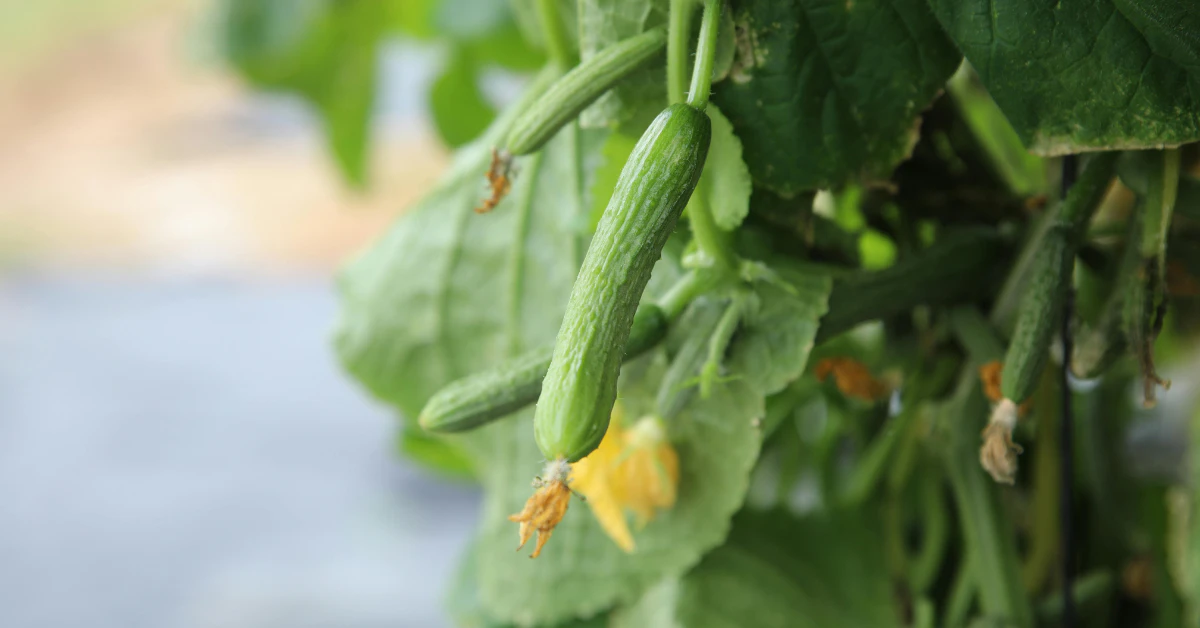
Cucumber plants grow two kinds of flowers on the same vine, male and female. You can tell them apart by looking closely. A female flower has a tiny swollen bump right behind the petals. That bump is the beginning of a cucumber. If pollination happens, that little bump grows into a full-size fruit. If it doesn’t, the flower and the baby fruit behind it turn yellow and drop off the plant within a few days.
This is exactly what’s behind cucumbers turning yellowing before maturity. The fruit isn’t sick. It just never got fertilized.
Pollination itself takes more effort than most people realize. Each female flower typically needs 8 to 12 visits from bees to be pollinated well enough to form a proper cucumber. If your yard only gets a few bee visits, or the weather has been rainy, windy, or unusually cool, pollinators may not show up often enough. The result is a fruit that only gets partial pollination. It may grow a little, come out lopsided or club-shaped, then turn yellow and drop before it matures.
It helps to remember that this is not a sign your plant is unhealthy or that you’re doing something wrong. It’s simply a math problem between flowers and bee visits. More bee activity in your garden, whether from planting bee-friendly flowers nearby or just waiting out a stretch of bad weather, often solves it on its own.
One more thing worth knowing if you’re buying seeds for next season. Some cucumber varieties are labeled gynoecious, which means the plant produces mostly or all female flowers. These varieties can be very productive, but they still need a pollinator source nearby, since a plant covered in female flowers with no male flowers around still needs pollen from somewhere. Seed catalogs usually flag this trait, so it’s worth checking before you plant if pollination has been a recurring headache in your garden.
Watering Woes & Root Zone Temperatures
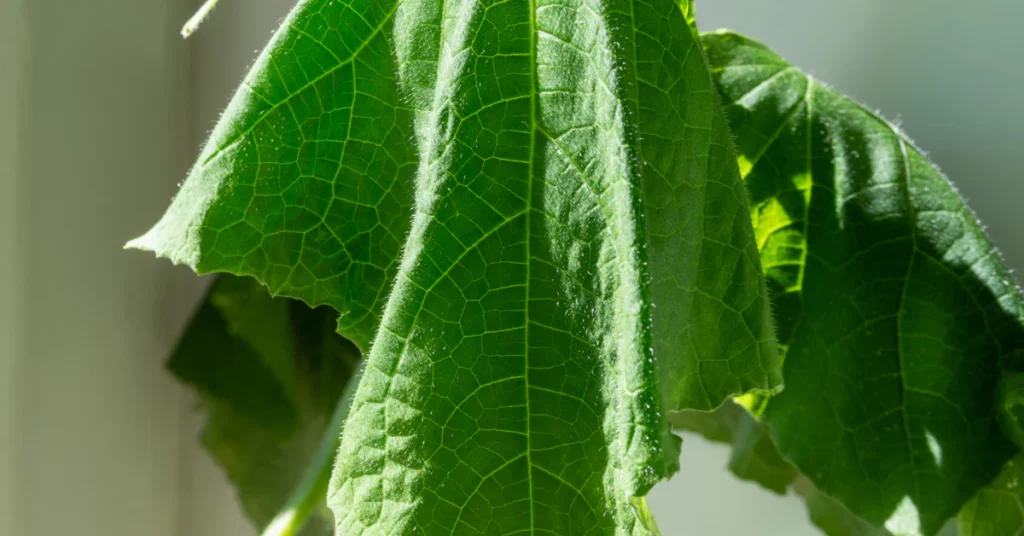
Water is one of the biggest levers you have over how your cucumber plant behaves, and it’s worth getting right. As a general rule, cucumbers need about 1 inch of water per week, whether that comes from rain or from you.
Too little water stresses the plant and can trigger yellowing, both in the leaves and in the fruit. But too much water causes just as many problems, and the two can actually look pretty similar at first glance.
An overwatered cucumber plant tends to show pale, washed-out yellow leaves. You might also notice wilting even though the soil feels wet, along with soft, limp stems. This happens because soggy soil pushes oxygen out of the root zone. The roots essentially suffocate, and they stop pulling up the nutrients the plant needs to stay green.
Now here’s the part that trips people up. Some gardeners adjust their watering schedule carefully, cut back or increase as needed, and still watch their cucumbers turn yellow anyway. If that’s you, the water amount might not be the real issue. The water temperature might be.
In regions with cool nights, like parts of coastal California, soil can stay chilly even when the days feel warm. If you’re watering with cold water, or if the root zone itself is cold, the roots react almost like the plant is dealing with drought. They slow down and struggle to take up nutrients properly, even though there’s plenty of moisture sitting right there in the soil.
This is easy to miss because it doesn’t look like a watering problem on the surface. You did everything the guides tell you to do, and the yellowing kept happening anyway. If you’ve ruled out overwatering and underwatering and you’re still stuck, check your local nighttime temperatures and consider whether your root zone is simply too cold for the plant to work efficiently, rather than assuming you’re still getting the amount of water wrong.
Nutrient Deficiencies: A Quick-Diagnostic Guide
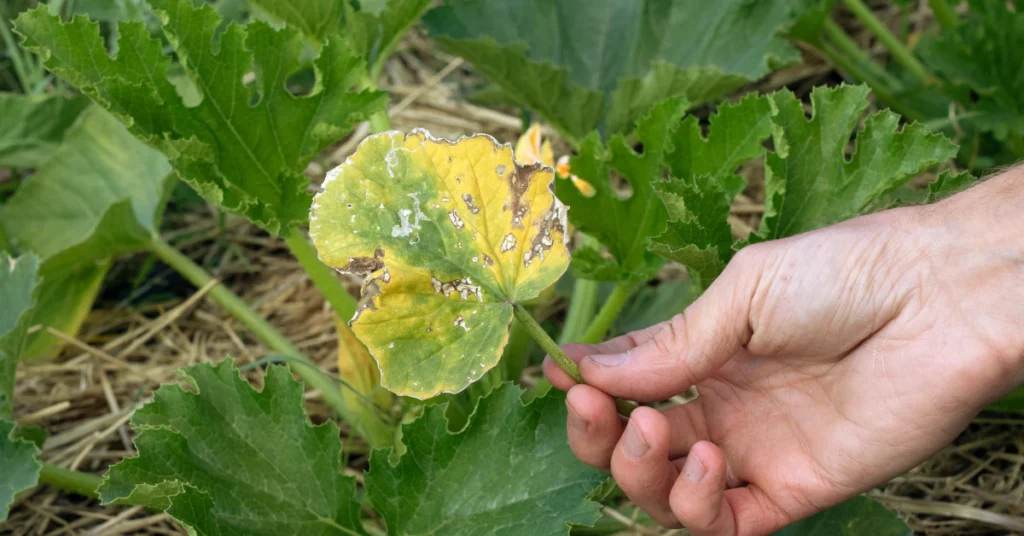
Yellow leaves are a different puzzle than yellow fruit. When the fruit turns yellow, the story is usually about ripeness, water, or pollination. When the leaves start yellowing, especially in a pattern that spreads across the plant, nutrients often come into play.
Before you reach for fertilizer, think about timing. If your plant is young and it’s still early in the growing season, cold soil could be the real cause. Soil that hasn’t warmed above 70 degrees Fahrenheit keeps soil microbes sluggish, and those microbes are what release nitrogen for the plant to use. In that case, the fix isn’t more fertilizer. It’s patience. Once the soil warms up, the nitrogen already in your soil becomes available again, and the yellowing often clears up on its own.
If it’s later in the season and the yellowing keeps showing up, it helps to look closely at exactly where on the plant the yellow appears. Different nutrient shortages show up in different spots, and this quick table can help you narrow it down.
| Deficiency | Where Yellowing Appears | What It Looks Like |
| Nitrogen | Older, lower leaves first | Whole leaf turns pale yellow, not just patches |
| Iron | Younger, upper leaves | Leaf turns yellow but the veins stay green (called interveinal chlorosis), often linked to high soil pH |
| Magnesium | Older, lower leaves | Yellowing appears between the veins, while the veins themselves often stay green |
Nitrogen deficiency tends to be the most common of the three, and it usually spreads from the bottom of the plant upward if it isn’t corrected. Iron deficiency is a bit trickier, since it’s often tied to soil that’s too alkaline rather than an actual lack of iron in the ground. Magnesium shortages show a similar pattern to nitrogen but stay closer to the leaf veins.
Matching the pattern to the table above gives you a solid starting point, but a simple soil test is still the most reliable way to confirm exactly what your plant needs before you start adding anything to the soil.
Climate Matters: Growing Zones & Container Plants
Where you garden actually changes which explanation is most likely to be right. Cucumbers grow best in a fairly narrow comfort zone, ideally between 75 and 85 degrees Fahrenheit, and stepping too far outside that range in either direction causes trouble.
If you’re gardening in a hot, dry USDA zone, somewhere in the range of zones 7 through 10, heat and drought stress are probably your main suspects. That combination pushes plants toward blossom drop and can trigger the bitterness discussed earlier in this guide. Watering deeply and consistently matters more in these regions than almost anything else you can do.
If you’re in a cooler zone, roughly 3 through 6, the picture usually looks different. Damp, chilly weather keeps bees from flying as much, which limits pollination and leads to those small yellow cucumbers that drop before they mature. Cold soil in these zones can also lock up nitrogen, as covered earlier, since the microbes that release it need warmth to stay active.
Container gardeners deserve a special note here, no matter which zone they’re in. Pots hold far less soil than an in-ground bed, so they dry out much faster in warm weather. That means drought stress, and the yellowing that comes with it, can show up within a day or two of missed watering rather than the week or so it might take in open ground. If you’re growing cucumbers in containers, check the soil moisture daily during hot stretches rather than sticking to a weekly schedule.
Frequently Asked Questions
Are cucumbers that turn yellow still good?
Not usually, at least not for fresh eating. Once you’re wondering if yellow cucumbers are safe to eat, the honest answer is that they’re safe in the sense of not being toxic, but the taste and texture take a hit. Overripe cucumbers get bitter and often turn mushy or seedy inside. They’re not spoiled or dangerous, just past their best for slicing into a salad.
What to do with cucumbers that turn yellow?
Pull them off the vine as soon as you spot them. Leaving an overripe cucumber in place signals the plant to slow down and stop putting energy into new fruit. Once removed, you can toss them in the compost pile, or if you’re curious about saving seeds for next year, you can scoop them out before composting the rest.
What do overwatered cucumbers look like?
Pale, faded yellow leaves are the first sign. You’ll often see wilting even though the soil is clearly wet, along with stems that feel soft and limp instead of sturdy. This happens because waterlogged soil pushes air out of the root zone and the roots can’t function properly.
Why are my cucumbers not turning green?
A few things can cause this. It might be a naturally yellow-skinned variety, it might be overripe fruit whose color has already faded, or it could be tied to a pollination problem or a nutrient shortage. In rarer cases, a plant disease like cucumber mosaic virus can cause yellow, mottled patterns on both leaves and fruit. This virus has no cure, so infected plants generally need to be removed.
How do I green up my cucumber plants?
For leaves, correcting a nitrogen or iron shortage with the right fertilizer usually helps, along with adjusting soil pH if iron chlorosis is the issue. For fruit that has already turned yellow, there’s no way to reverse it. Your best move is harvesting earlier next time and keeping water and pollination on track.
What does baking soda do for cucumber plants?
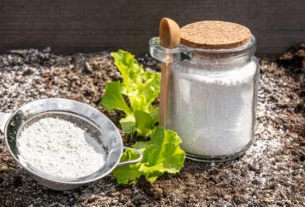
Baking soda sprays are mainly used to help prevent powdery mildew, not to fix yellowing directly. Research shows it can work in low concentrations, but results outdoors are inconsistent compared to controlled greenhouse settings, and it tends to work best mixed with a horticultural oil or mild soap. Think of it as a mild preventative tool, not a cure-all.
Conclusion
A few yellow cucumbers are just part of learning to grow this crop, not a sign of failure. Most cucumbers reach maturity in 50 to 70 days, so pick fruit early, keep an eye on your watering, and watch for bees doing their job. Green, crisp cucumbers will follow.