The scaredy cat plant (Coleus caninus) is a real plant sold to repel cats, dogs, and rabbits with its smell. Does it work? There’s no real proof either way. The claim is based on gardener stories, not science.
Here’s the catch most sellers leave out. This plant doesn’t release its skunk-like smell just by sitting in your yard. The odor only shows up when a leaf gets touched, brushed against, or bruised. So a cat would have to walk right into it first.
That means the “smell alone keeps cats away” idea has a built-in problem. If the scent only appears after contact, it can’t warn a cat off before it steps into your flower bed.
This guide gives you the honest picture. You’ll get real care steps, straight talk on US growing zones, and the truth about why “scaredy cat plant seeds” are so hard to find.
What is the Scaredy Cat Plant? (The Cloning Secret)
Let’s clear up what you’re actually buying at the garden center.
The plant sold as “Coleus canina” is a member of the mint family. Its real botanical name is Coleus caninus, also called Plectranthus caninus. It comes from Africa and parts of South Asia. People say it offers real benefits: it’s drought tolerant, easy to grow, and produces small blue flowers that bees like.
Here’s where it gets interesting. Most “scaredy cat plants” sold in stores are not just any Coleus caninus. They are one specific patented plant called ‘Sumcol 01’. This exact plant is protected under US Plant Patent PP13,843. A grower named Ralf Schrader was granted this patent back in 2003.
That patent matters more than most buyers realize. When a plant is patented, growers usually reproduce it by cuttings, not by planting seeds. This is a big reason true seeds for this plant are so hard to find.
There’s an even stranger twist. European plant officials looked closely at “Coleus canina” and tried to register it as its own unique variety. They said no. Officials ruled it was genetically identical to a different plant already known as Coleus comosus. In plain terms, it wasn’t a new discovery. It was the same plant with a catchy new name and a clever marketing angle.
So when you buy a “scaredy cat plant,” you’re not buying a wild, newly found species. You’re buying a specific patented clone of an existing plant, sold under a name designed to grab attention. That doesn’t make it a bad plant. It just means the name promises more mystery than the plant actually delivers.
You can read the original patent details yourself through the US Plant Patent PP13,843 record.
Understanding this history helps explain a lot of the confusion buyers run into later, especially around seeds, plant labels, and why two “scaredy cat plants” from different sellers might not act exactly the same.
The Smell and Effectiveness: Does It Actually Work?
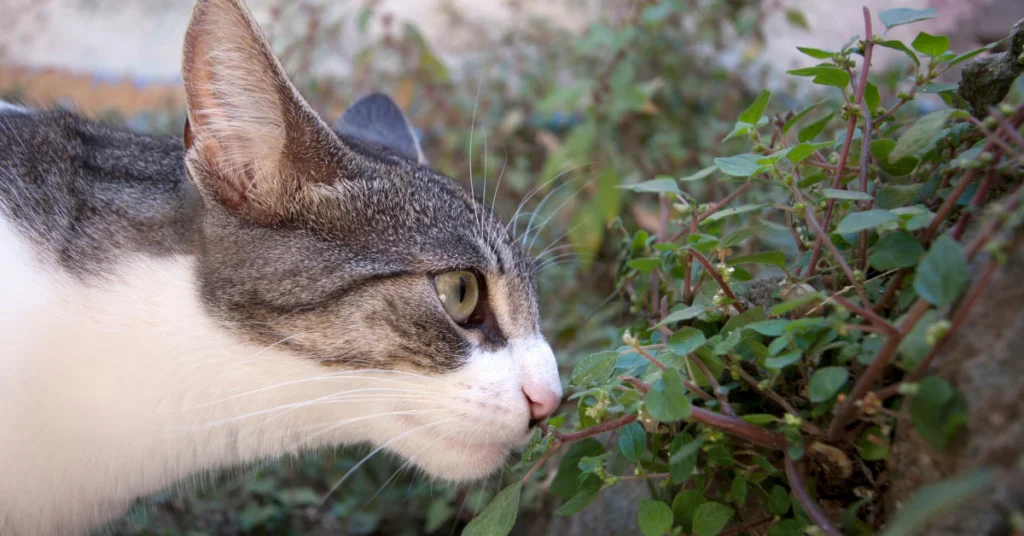
Let’s look closely at the smell, because that’s the whole point of this plant.
Most people describe the odor as close to skunk spray. Others say it smells more like tomcat urine. Either way, it is not pleasant. But there’s a key detail that changes everything about how this plant actually works.
The smell does not sit in the air on its own. It only shows up when the leaves get touched, brushed against, or bruised. A cat walking near the plant, without contact, likely won’t smell anything strong at all.
This matters for one big reason. A true repellent works by warning an animal away before it gets close. This plant can only react after contact happens. So the “defense” kicks in a bit too late to stop that first visit.
You may have seen a specific claim floating around gardening sites. Some say this plant “repels two-thirds of all cats.” That number sounds convincing, but it has no science behind it. No study or research backs this figure up. It is garden folklore, repeated often enough that it starts to sound like fact.
The honest answer is simpler. There is no solid proof this plant reliably keeps cats away. Some gardeners swear by it. Others notice no difference at all. That kind of mixed feedback is exactly what happens when something spreads through stories, not testing.
So should you plant it? It can still be worth trying. Just don’t expect it to work like an invisible fence. Think of it as one small layer of defense, not a guaranteed fix. Pairing it with other deterrents, like textured mulch or motion-based sprinklers, gives you a much better shot at actually keeping cats out of your beds.
USDA Zones and Outdoor Care
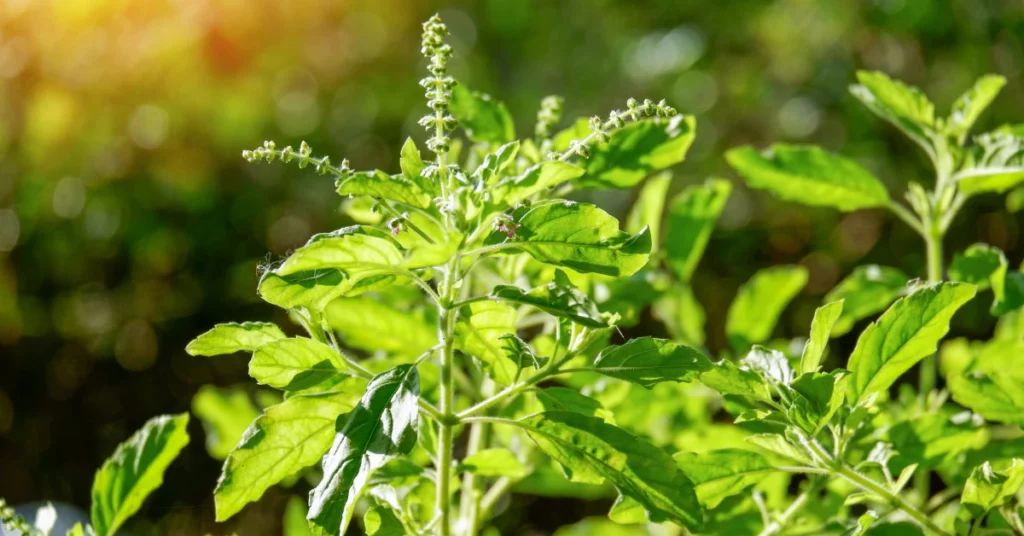
Now for the part most gardens skip: whether this plant will actually survive where you live.
The scaredy cat plant is only a true perennial in USDA zones 9 to 11. That covers places like southern Florida, coastal and southern California, southern Texas, and Hawaii. In these zones, the plant can live outdoors year after year without much fuss.
If you live anywhere else, and most of the US falls into this group, you need a different plan. In zones 3 through 8, this plant cannot survive winter outdoors. It is frost tender, which means a hard freeze will kill it. You’ll need to treat it as an annual, or take steps to save it before cold weather hits.
You can check your exact zone using the USDA Plant Hardiness Zone Map, which is the official tool for this kind of planning.
Here’s what basic outdoor care looks like, no matter your zone:
- Light: Full sun to partial shade. More sun usually means a stronger scent when the leaves are touched.
- Soil: Well-drained soil is a must. This plant does not like sitting in wet, heavy dirt.
- Water: Let the soil dry out between waterings. It handles short dry spells better than soggy roots.
If you’re outside zones 9 to 11, plan ahead before your first hard frost. You have two solid options.
Option one: Grow it as an annual. Enjoy it for one season, then let it go at the end of fall like you would with many warm-climate plants.
Option two: Bring it inside for winter. You can dig up the whole plant and pot it, then keep it in a garage or sunroom that stays above freezing. Cuttings taken in late summer also root easily and can overwinter indoors in a small pot, ready to replant once the weather warms back up.
Skipping this step is the most common mistake gardeners make with this plant. They plant it outside a warm zone, expect it to come back next year, and end up disappointed when it doesn’t.
Can You Grow It Indoors?
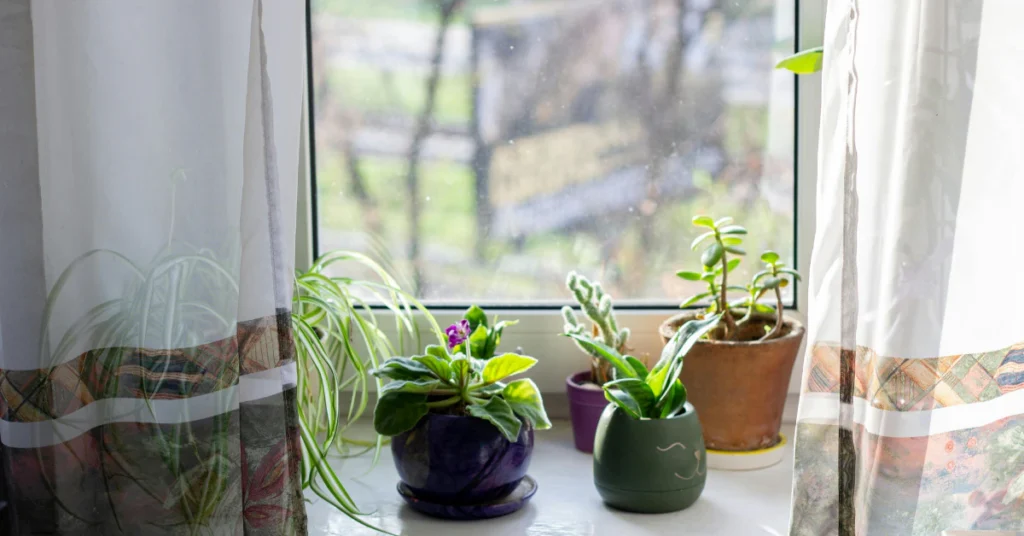
Yes, you can grow this plant indoors, but it comes with a smelly catch.
Indoors, this plant needs bright light. A sunny window works well, ideally one that gets several hours of direct or strong indirect sunlight each day. Without enough light, expect thin, floppy growth instead of a full, healthy plant.
Keep the soil on the drier side. Let the top layer dry out before watering again. Wet, soggy potting mix indoors is one of the fastest ways to cause root rot.
Now for the part that really matters inside a house: placement.
Remember, this plant only releases its strong smell when the leaves get bumped, brushed, or crushed. That’s fine in a backyard. Indoors, it’s a different story.
Think about where people and pets actually move through your home. A hallway, a spot by the front door, or a shelf near a busy kitchen counter are all bad choices. Any accidental brush against the leaves can fill a room with a smell close to skunk spray.
A safer spot is somewhere quiet and out of the way. A sunny windowsill in a room that doesn’t get much foot traffic works better than a high-traffic walkway. Keep it away from pets that like to rub against leaves too, since curious sniffing is exactly the kind of contact that triggers the odor.
Growing it inside is possible. Just plan the location carefully, or you may regret it the first time someone brushes past it on the way to the coffee maker.
The Truth About Seeds and Propagation
If you’ve searched for “scaredy cat plant seeds” and come up empty, or wasted money on seeds that barely sprouted, there’s a real reason behind it.
Remember that patent from Section 2? That’s the key here. The plant you actually want is ‘Sumcol 01’, a patented clone. Patented plants like this are grown and sold as cuttings, not as seeds. That’s simply how the plant is legally and practically reproduced by growers.
So even if you find seeds labeled “scaredy cat plant,” you’re taking a gamble. Seeds may not grow into the same plant. They might not smell the same, look the same, or grow the same way as the patented original.
On top of that, regular coleus seeds are already tricky. They need light to germinate, so covering them with soil is a mistake. They also need soil temperatures between 60 and 75°F to sprout well. Miss that window, and germination becomes slow, spotty, or fails completely.
Put those two problems together, an unreliable clone plus a fussy seed, and you can see why so many gardeners give up on growing this plant from seed.
Skip the seed packet. Cuttings are the better path, and they’re genuinely easy.
Here’s how it works:
- Snip a healthy stem about 4 to 5 inches long.
- Remove the lower leaves, leaving a few at the top.
- Place the cut end into moist potting soil.
- Keep the soil consistently moist while roots form.
New roots usually develop within a few weeks. This method gives you a plant that matches the parent exactly, with none of the guesswork that comes with seeds.
If you want a plant that actually behaves the way this guide describes, cuttings are the honest, reliable way to get there.
Toxicity Warning and Pet Safety
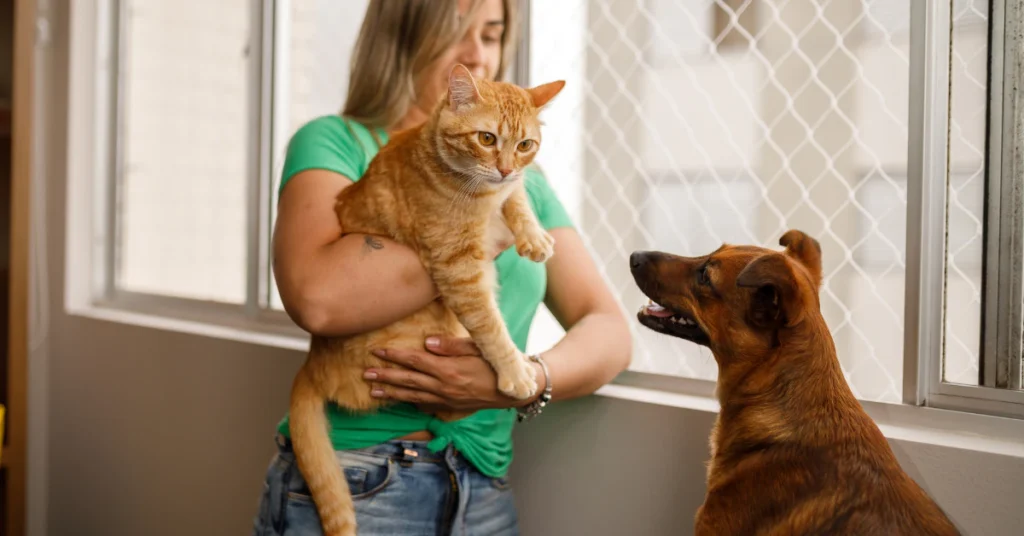
Let’s be exact here, since pet safety isn’t a place for guessing.
There is no listing for Coleus caninus, Coleus canina, or Plectranthus caninus on the ASPCA’s Animal Poison Control Center database. That means it isn’t officially labeled toxic, and it isn’t officially labeled non-toxic either. It simply isn’t listed.
Some blogs claim this plant is “toxic but low risk” to pets. That claim has no clear source behind it, so we won’t repeat it here as fact.
Interesting side note: a related plant, Plectranthus coleoides, does appear on the ASPCA list. It’s officially marked non-toxic to dogs, cats, and horses. That’s a different plant, though, so it doesn’t confirm anything about Coleus caninus itself.
If your pet ever eats any unfamiliar plant from the mint family, don’t wait and guess. Contact your vet, or call the ASPCA Animal Poison Control Center at (888) 426-4435 for guidance.
Frequently Asked Questions
Does the scaredy cat plant work?
There’s no solid proof either way. The claim relies on gardener stories, not science. The plant’s odor only appears after a leaf is touched or bruised, so it can’t warn cats off before contact happens. It may act as one small layer of defense, but it shouldn’t be treated as a guaranteed fix on its own.
Do scaredy cat plants come back every year?
Only in USDA zones 9 to 11, where it grows as a true perennial. Everywhere else, including most of the US, it cannot survive winter outdoors and will die in a hard frost. Gardeners in colder zones need to treat it as an annual, or bring it indoors, or root cuttings before the first freeze.
What are the common problems with scaredy cat plants?
The biggest issue is winter die-off outside zones 9 to 11. Overwatering can cause root rot, and too much shade leads to weak, floppy growth. Many gardeners also struggle with seeds, since the plant sold commercially is a patented clone usually grown from cuttings, not seed.
What does a scaredy cat plant smell like?
Most people compare it to skunk spray, while others describe something closer to tomcat urine. Either way, it’s unpleasant. The key detail is that the smell doesn’t linger in the air on its own. It only shows up when a leaf gets touched, brushed, or crushed.
Is the scaredy cat plant poisonous?
There’s no clear answer available. The ASPCA has no listing for Coleus caninus, Coleus canina, or Plectranthus caninus, so it isn’t officially marked toxic or non-toxic. A related plant, Plectranthus coleoides, is listed as non-toxic, but that doesn’t confirm anything about this plant. Contact a vet if a pet eats it.
What plant do cats hate the smell of?
Along with the scaredy cat plant, lavender and rue are commonly mentioned as scents cats tend to avoid. As with the scaredy cat plant, none of these come with strong scientific backing. They’re worth trying alongside other deterrents, but shouldn’t be relied on as a standalone solution.
Final Thoughts
The scaredy cat plant is a real, easy-to-grow plant with an interesting backstory. But it’s not the miracle fix some sellers make it sound like. The smell only activates on contact, the “repels most cats” numbers aren’t backed by any study, and the toxicity question has no official answer yet.
If you live in zones 9 to 11, it can be a long-term garden fixture. Everywhere else, treat it as a season-long experiment or plan to bring cuttings indoors for winter. Either way, go in with realistic expectations, not a guarantee.