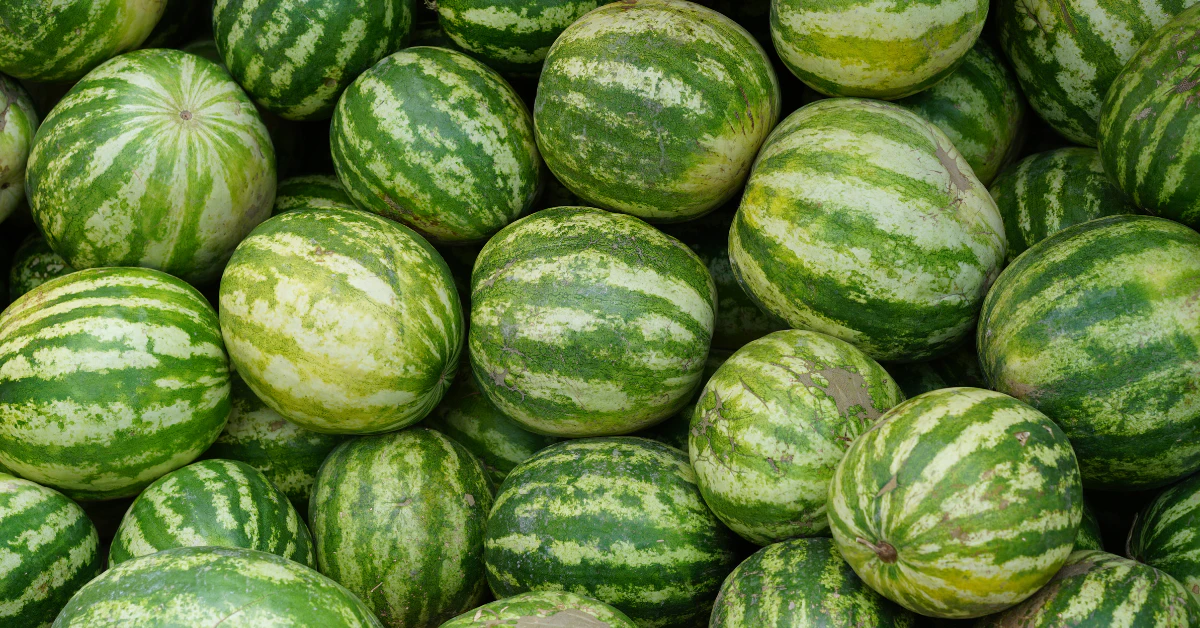
Watermelon comes in more varieties than most people expect. US growers plant over 50 commercial varieties each year, and they sort into four main groups: Allsweet, Ice-Box, Seedless, and Yellow Flesh. Each group has its own size range, seed type, and flavor style.
If you start looking into the different types of watermelon names, you will find options that fit almost any garden. Some stay small enough for a patio pot. Others grow big enough to feed a whole backyard party. The right pick just depends on your space and your taste.
How Watermelon Types Differ (Size, Seeds, and Color)
Watermelons do not just differ by name. They differ in three real ways: size, seeds, and flesh color. Once you understand these three things, every seed catalog starts to make sense.
Size categories
Growers sort watermelons into three main size groups. Here is what each one actually means:
| Category | Typical Weight | Best For |
| Mini (Personal) | Around 5 pounds | Small gardens, containers, single servings |
| Icebox | Around 10 pounds | Small families, fits in a standard fridge |
| Picnic (Large) | Up to 15 pounds or more | Big gardens, parties, canning |
A mini watermelon is small enough to finish in one sitting. An icebox watermelon gets its name because it fits whole in a refrigerator, which made it popular with home gardeners decades ago. A picnic watermelon is the classic backyard size, often too big to eat in one meal.
Seeded or seedless
Some watermelon varieties produce full black seeds. Others are bred to be seedless, though seedless types can still have small, soft, white seed coats that are safe to eat.
Flesh color
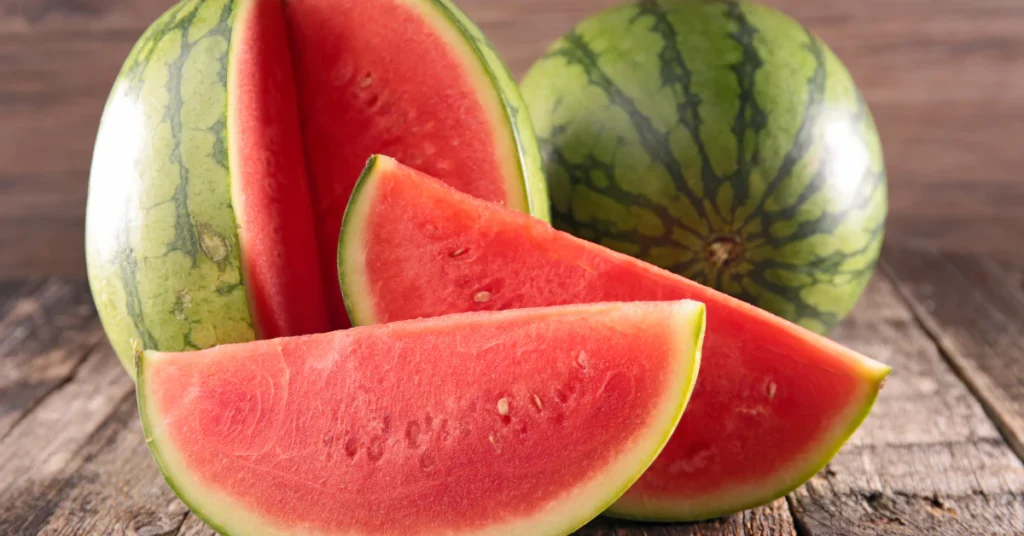
This is where the different types of watermelon color really stand out. Most people picture red flesh, but that is only one option. Watermelon flesh can also be:
- Pink
- Yellow
- Orange
Yellow and orange varieties often taste slightly sweeter or more honey-like than classic red ones, though flavor still depends on the specific variety and how ripe it is.
The 4 Main Size Categories (With Top Varieties)
Picking a watermelon variety gets easier once you know the four main categories. Here is what falls into each one, along with some well-known names you may recognize from seed catalogs.
Mini (Personal) Watermelons
These are the smallest type, usually around 5 pounds. They work well in raised beds, containers, or any garden with limited space. Popular mini varieties include types bred for personal-size servings rather than big slices to share.
Icebox Watermelons
Icebox types land around 10 pounds, small enough to chill whole in a refrigerator. Sugar Baby is one of the most familiar names in this group. It has a compact vine and a dark rind, making it a favorite for smaller yards.
Picnic (Large) Watermelons
These are the classic backyard watermelons, often reaching 15 pounds or more. Crimson Sweet and Jubilee both fall into this category. They need more space to vine out, so they suit gardeners with a larger plot.
Yellow and Orange Watermelons
This group is sorted by flesh color rather than size. Yellow Doll is a well-known example, prized for its bright yellow flesh and sweet flavor. These varieties can come in mini, icebox, or picnic sizes, so flesh color is really a separate layer on top of the size categories above.
| Category | Example Variety | Typical Weight |
| Mini | Personal-size types | Around 5 lbs |
| Icebox | Sugar Baby | Around 10 lbs |
| Picnic | Crimson Sweet, Jubilee | Up to 15 lbs+ |
| Yellow/Orange | Yellow Doll | Varies by type |
A quick note on pets
If you have a dog or cat who likes to sniff around the garden, watermelon flesh itself is not toxic to dogs or cats. The real risk comes from the rind and seeds, which are not poisonous but can cause an upset stomach or even a blockage if swallowed in large pieces. Keep rinds and seeds out of reach, and stick to small bites of plain flesh if you ever share a piece. You can read more on this from the AKC’s guide on watermelon and dogs.
How to tell when any of these are ripe
No matter which size or color you grow, there is one trick that works across almost every type. Look at the tendril closest to where the watermelon attaches to the vine. When that tendril dries out and turns brown, the melon is ready to pick. This works better than guessing from the sound of a thump, since it does not depend on experience or skill to read correctly.
Seeded vs. Seedless: The Secret Pollinator Rule
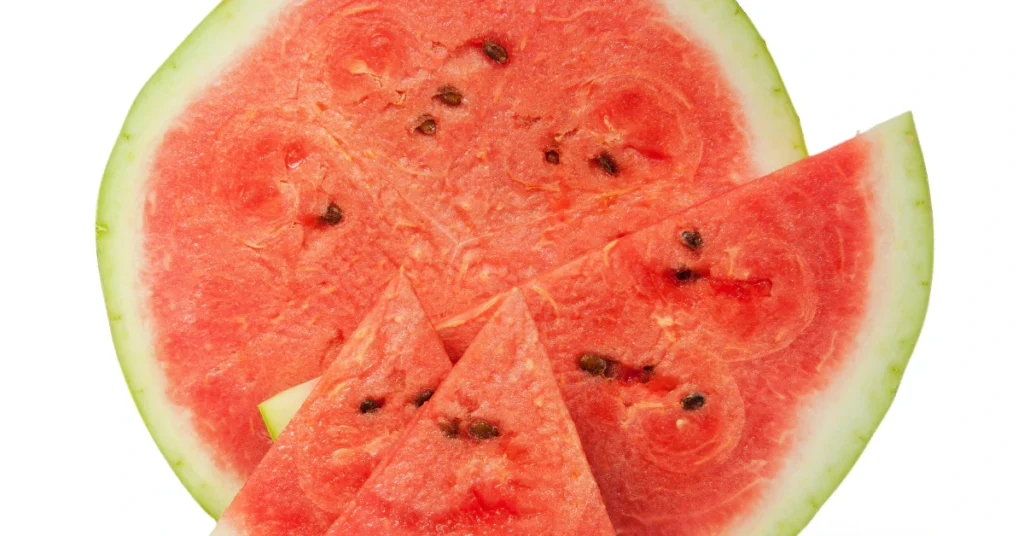
Confused about why your seedless watermelon never grew any fruit? You are not alone. This is one of the most common problems home gardeners run into, and it comes down to one simple fact: seedless watermelons cannot pollinate themselves.
Why seedless plants need a partner
Seedless watermelons are called triploids. They are bred by crossing two different parent plants, which makes them sterile. A seedless vine can still flower, but it does not produce enough working pollen to set fruit on its own.
That means you need to plant seeded watermelon vines nearby as pollinators. University of Florida IFAS Extension recommends that 25 to 33 percent of your watermelon plants be seeded pollinator types. So if you plant 9 seedless vines, aim for about 3 seeded ones mixed in. For full details, you can check UF IFAS Extension’s guide on pollenizers.
Among the different types of watermelon plants in your garden, pick a seeded variety with a different rind pattern than your seedless type. That way, you can tell the two apart at harvest time.
Will cross-pollination ruin this year’s melons?
No. This is a common worry, but it is not how it works. Cross-pollination affects the seeds that form inside the fruit, which matters only if you plan to save those seeds for next year. It does not change the taste or safety of the watermelon you are eating this season.
Why seedless seeds behave differently
If you have ever struggled to get seedless watermelon seeds to sprout, there is a reason. Among the different types of watermelon seeds, seedless ones are known to be slow and finicky to germinate. They need warm soil, between 65 and 95 degrees Fahrenheit, to sprout reliably. Starting them indoors on a heat mat often works better than sowing directly outside in cool soil.
Finding the Best Types by Growing Zone
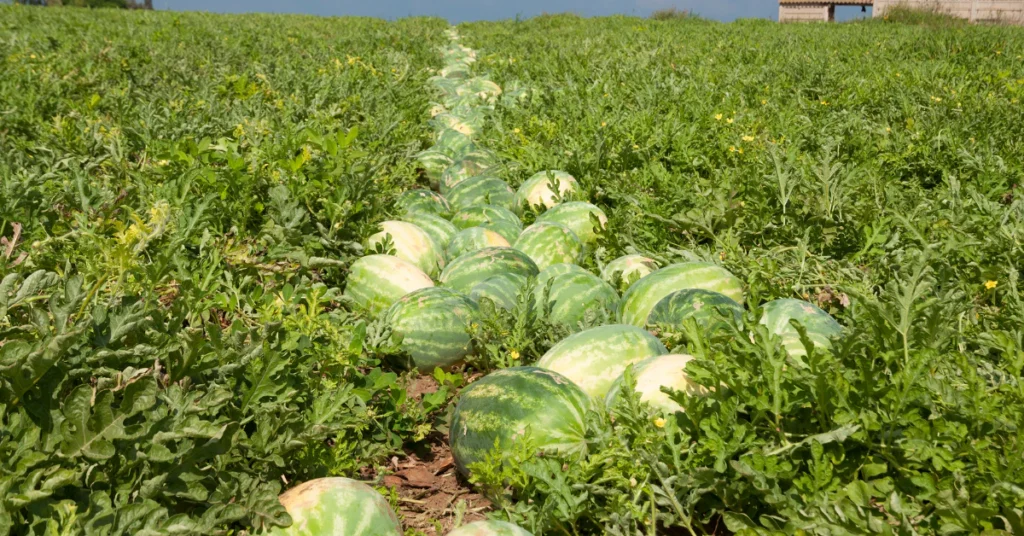
Where you live changes which watermelon variety will actually work for you. Watermelon grows as an annual in USDA Zones 3 through 9, and in practice does best from about Zone 5 through Zone 11, depending on how long and warm your growing season is.
If you garden in Zone 5 or cooler
Here is something that surprises a lot of gardeners: there is no such thing as a cold-hardy watermelon. No variety can survive frost, no matter what the seed packet promises. So if you garden in a cooler zone, do not waste time searching for “cold-hardy” types.
Instead, focus on speed. Look for varieties that mature in under 90 days from planting. These fast varieties give your plant enough time to grow, flower, and ripen fruit before your first fall frost shows up. Starting seeds indoors a few weeks early can also buy you extra time.
If you garden in Zone 8 or warmer
Gardeners in hot, long-season zones have it easier. With a longer frost-free stretch, you can grow almost any variety, including the big, slow-ripening giant types that need more time on the vine. You may even have room to stagger two plantings in one season.
The simple rule
No matter your zone, the real question is not “can this survive cold.” It is “will this finish ripening before my season ends.” Match the days-to-maturity listed on your seed packet to the length of your frost-free season, and you will avoid planting a variety that never gets the chance to ripen.
Best Watermelon Varieties for Juicing & Sweetness
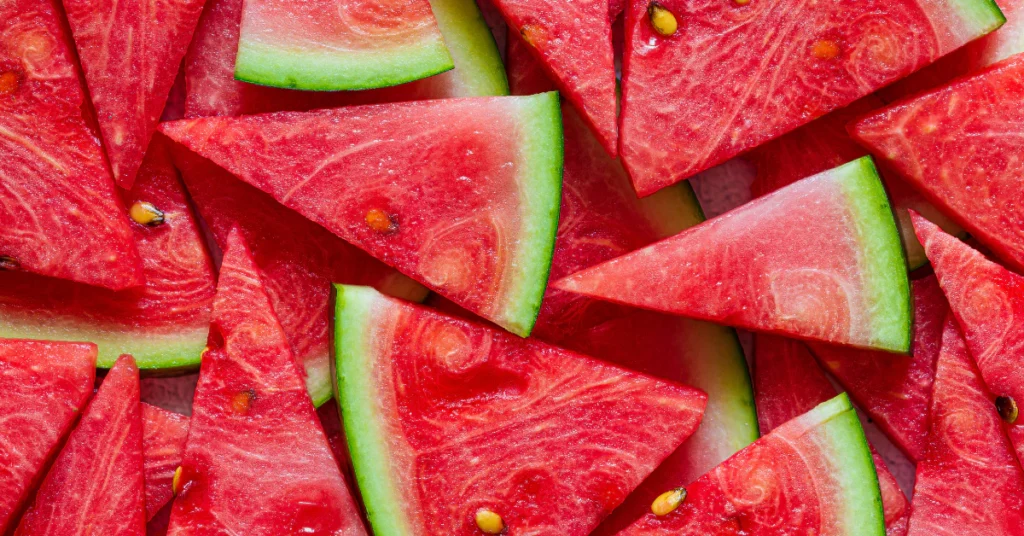
Not all watermelons taste the same. Sweetness is measured using something called a Brix score, which tells you how much sugar is packed into the fruit. The higher the number, the sweeter the melon.
Washington State University tested a range of watermelon varieties and found clear winners in each size group.
| Size Category | Sweetest Variety | Brix Score |
| Personal (Mini) | Pony Yellow | 12.3 |
| Icebox | Super Gold | 12.8 |
| Picnic (Large) | Sultan / Summer Sweet | 12.3 to 12.4 |
If you are growing watermelon for juice, these are great places to start. High-Brix varieties pack more natural sugar and water into every bite, which means more flavor per cup when blended.
Pony Yellow is a smart pick if you only have room for a personal-size plant but still want serious sweetness. Super Gold works well for home gardeners who want a mid-size melon without sacrificing flavor. Sultan and Summer Sweet are both strong choices if you are growing a full-size patch and planning to make a big batch of juice for the whole family.
When you are chasing the best different types of watermelon juice, sweetness matters more than size. A smaller, high-Brix melon can actually out-juice a bigger, blander one in terms of flavor per glass.
Identifying Plants: Watermelon Leaves and Vines
If you are trying to identify a watermelon variety, skip the leaves. Looking at different types of watermelon leaves will not get you very far, since most cultivars share the same deeply lobed, dark green leaf shape. One vine can look almost identical to another, even if the fruit they grow is completely different.
The real clues are in the fruit itself. Rind pattern, stripe color, overall size, and shape tell you far more than the leaves ever will. A Sugar Baby and a Crimson Sweet vine may look like twins in the leaf stage, but their melons are easy to tell apart once they mature.
So if you spot an unfamiliar watermelon vine in your garden or a neighbor’s plot, wait for the fruit before guessing the variety.
Frequently Asked Questions
How many types of watermelon are there?
US growers plant over 50 commercial watermelon varieties each year. Looking worldwide, seed catalogs list several hundred named cultivars, sorted into categories like Allsweet, Ice-Box, Seedless, and Yellow Flesh.
Which watermelon type is best?
There is no single best variety. The right choice depends on your growing zone, how much garden space you have, and whether you prefer red, yellow, or orange flesh. A gardener in a short-season zone needs a fast-maturing type, while someone with a big backyard and a long summer can grow almost anything.
Which variety of watermelon is the sweetest?
Based on Washington State University trial data, the sweetest varieties by size are Super Gold for icebox types at 12.8 Brix, Pony Yellow for personal-size melons at 12.3 Brix, and Sultan for large picnic-size melons at 12.3 Brix. All three are strong picks if sweetness is your top priority.
What is the rarest type of watermelon?
That title goes to the Densuke watermelon, known for its dark, almost black rind. It is grown exclusively in Toma, a small town on Japan’s Hokkaido island. Production is limited to a small number of melons each year, which makes it a true novelty rather than something you will find at a typical US nursery. It is a fun fact for watermelon lovers, even if it is not a variety you can easily grow at home.
Conclusion
Watermelon is not a one-size-fits-all fruit. Between size, seed type, flesh color, and sweetness, there is a variety suited to almost every garden and every taste. A small patio grower in a cool zone has just as many good options as someone with a big backyard in Texas or Georgia.
The key is matching the variety to your actual growing conditions. Check your days-to-maturity against your frost-free season, plan for a pollinator if you are growing seedless types, and pick your flesh color based on what you like to eat. Do that, and you will end up with a watermelon patch that actually produces fruit worth bragging about.