You can propagate a snake plant (Dracaena trifasciata) three ways: soil cuttings, water cuttings, or root division. Division is fastest. Leaf cuttings grow roots in 4 to 6 weeks in a warm room (70 to 75°F). New leaves take 3 to 4 more months. Striped types must be divided to keep their stripes.
Is your snake plant flopping over after too much water? Or is the pot so full that leaves are leaning? Either way, you can turn it into free new plants. Jump to your method: Soil cuttings | Water cuttings | Root division
Pet Safety Warning: Snake plants are toxic to dogs and cats. They contain saponins, which can cause nausea, vomiting, and diarrhea, according to the ASPCA. Pet Poison Helpline also lists drooling, and in cats, dilated pupils and a wobbly gait. Keep cuttings and leaf scraps out of reach. Call ASPCA Animal Poison Control at (888) 426-4435. A fee may apply.
Choosing Your Method: Water vs. Soil vs. Division (Plus the Variegation & Patent Rules)
| Method | Time to Roots/Plants | Rot Risk | Keeps Stripes? | Best For |
| Soil cuttings | Roots in 4-6 weeks, leaves in 3-4 more months | Lower | No | Patient beginners |
| Water cuttings | Roots in weeks to about 2 months | Higher | No | Watching roots grow |
| Division | Fast, no waiting on new roots | Lowest | Yes | Striped or crowded plants |
So, is it better to propagate a snake plant in water or soil? Soil wins for most people. It carries a much lower rot risk than water. Water is fun because you can watch the roots grow. But those roots are coarse and can struggle once you move them into soil. The cutting may wilt or drop leaves as it adjusts.
Some snake plants can’t be leaf-cut at all if you want to keep their color. Cultivars like ‘Laurentii’, ‘Futura’, ‘Golden Hahnii’, and ‘Bantel’s Sensation’ are periclinal chimeras. That sounds complex, but it just means the yellow or white edge is only in the outer layer of cells. Cut the leaf, and that outer layer doesn’t carry over.
The plant won’t die from this. It just grows into a different, named green plant. ‘Futura’ and ‘Moonshine’ revert to ‘Robusta’. ‘Golden Hahnii’ reverts to plain ‘Hahnii’. ‘Nelsonii’ has two forms, and only one grows true from cuttings. Some newer dwarf types only stay true when grown from basal side shoots, the small new growth at the base of the plant.
One more thing to check before you cut: is your plant patented? The classic ‘Laurentii’ is unpatented, and old patents on ‘Hahnii’, ‘Bantel’s Sensation’, and ‘Golden Hahnii’ expired decades ago. But trendy modern cultivars like ‘Spearmint’, ‘Green Mermaid’, and ‘Black Jack’ hold active 20-year U.S. plant patents. Propagating a patented plant, even one you own, is against the law, whether it’s fully patented or marked “PPAF.”
Timing, Climate Zones, and Setup Prep
You can start snake plant cuttings indoors any time of year. Spring and summer give the fastest results. One breeder’s data shows cuttings rooting in about half the time in warm summer conditions (around 84°F) compared to cool winter conditions (around 64°F).
Outdoors, snake plants only survive year-round in USDA Zones 10 to 12. In cooler zones, indoor pots can spend summer outside in a shady spot, then come back in before frost. If you live in Florida, don’t plant snake plants in the ground. UF/IFAS rates them a high invasion risk there.
For setup, give cuttings 4 to 6 hours of bright, indirect light. Keep room air between 65°F and 75°F, and never let it drop below 60°F. A seedling heat mat can hold the potting mix at 75 to 80°F for faster rooting. Loosely tent the pot with an unsealed plastic bag or dome to raise humidity.
Use a well-draining mix, like cactus soil, perlite, or sand. Skip the rooting hormone. UF/IFAS and Southern Living both say it offers little to no benefit for snake plants.
One more pet note: keep callusing leaf pieces and water jars off low counters and tables where curious cats and dogs can reach them.
How to Propagate Snake Plant from Leaf Cuttings in Soil
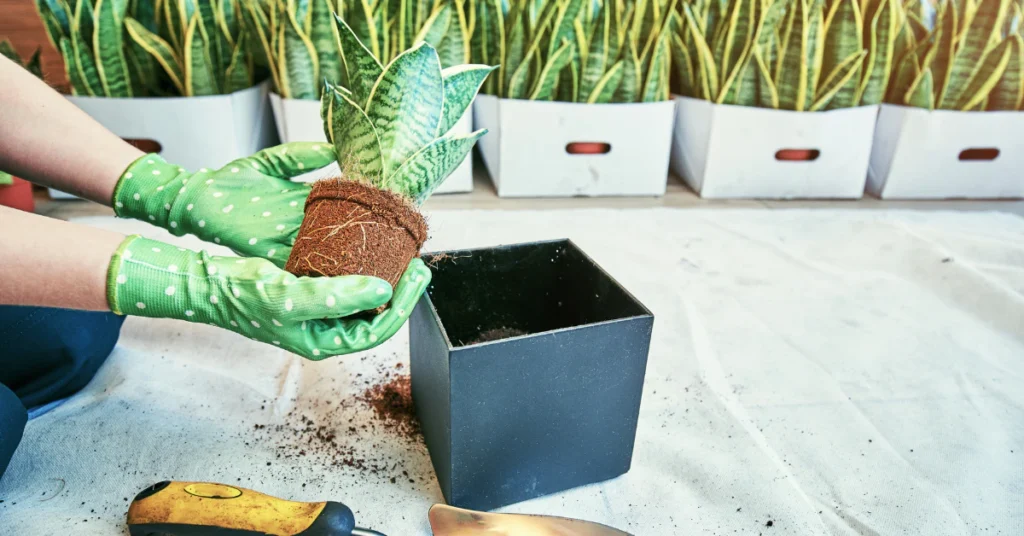
Propagating a snake plant in soil starts with choosing the right leaf. Dwarf types do best as whole 3 to 4 inch leaves. Tall types should be cut into 4 to 8 inch sections. Shorter pieces take longer to root and make fewer new plants, so don’t cut them too small.
Before you cut, know this: plant cells only send growth signals one way. That means an upside-down cutting will never grow roots, no matter how long you wait. To avoid mixing up top and bottom, cut a small triangle notch in the top edge of each piece. The notched end always faces up. The end that was closest to the soil goes down into your growing mix.
Once your leaf sections are cut and marked, let the cut ends dry out for 2 to 3 days. This callus stops rot before it starts.
Now it’s time to plant. Insert the bottom end into moist, but never soggy, potting mix. Depth varies a bit by source: some growers plant just ½ inch deep, while others go 1 to 1.5 inches, and some go as deep as 2 inches. Any of these can work. If a tall cutting keeps tipping over, tuck a few small pebbles around the base to hold it steady.
Then comes the hard part: waiting. Roots usually start forming in 4 to 6 weeks if the room stays around 70 to 75°F. New shoots, usually 1 to 5 of them, show up 2 to 4 more months after that. Don’t panic if those first baby leaves look short and curved instead of tall and straight. That’s normal. These early juvenile leaves always look different from the mature leaves on the parent plant.
How to Propagate Snake Plant in Water (And When to Transfer to Soil)

Propagating a snake plant in water starts the same way as the soil method: cut your leaf, notch the top so you remember which end is which, and let the cut heal for a couple of days.
Once it’s callused, place the bottom end down in a jar. Only the bottom quarter of the leaf should sit in water. Set the jar in bright, indirect light. Change the water 1 to 2 times a week, and always top it off. If the water level drops and leaves the forming roots hanging in dry air, that can slow or stall rooting.
So how to propagate snake plant from leaf in water without losing patience? Just wait it out. Roots can take up to two months to appear.
How long to leave snake plant cutting in water once roots show up? Move it to soil once the roots reach about ½ inch to 1 inch long. Some growers wait until roots hit 2 inches, but shorter is safer.
Here’s why timing matters so much. Roots that grow in water are coarser than roots grown in soil. They’re not built the same way. If you leave the cutting in water too long, those coarse roots struggle once you finally pot it up. The plant may wilt, brown, or die back at the tips as it adjusts to soil. Moving it earlier, while the roots are still short, gives it an easier transition.
How to Propagate Snake Plant by Division (The Fastest Method)
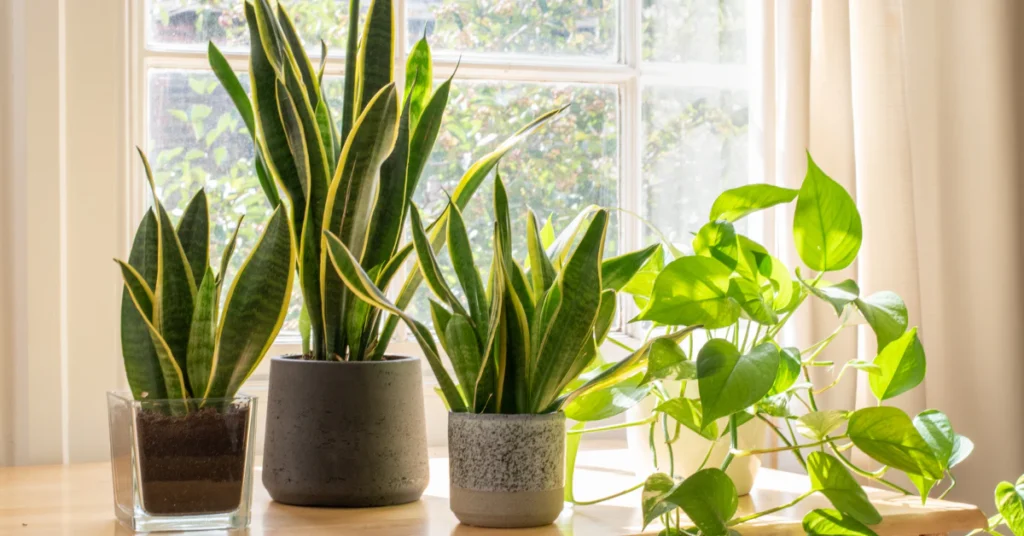
Division is the fastest way to make new snake plants. It’s also the only reliable way to keep the yellow or silver stripes on chimera cultivars like ‘Laurentii’ or ‘Golden Hahnii’. Spring and summer are the best times to divide, while the plant is actively growing.
Unlike leaf cuttings, divisions skip the wait for juvenile growth. Each new piece already has its own roots, so it grows full-sized, mature-looking leaves right away.
To divide, slide the whole root ball out of its pot. Look underneath the leaves for the thick, horizontal underground stems called rhizomes. These store water and connect the different clumps of leaves. Slice or gently pull the clumps apart, making sure each new section keeps its own roots and several leaves attached.
Pot each division into well-draining mix. Choose a container only about 2 inches wider than that section’s root ball. Snug is good here.
If your plant is a single stalk that hasn’t made any new pups yet, don’t rush to size up the pot. Snake plants tend to send up new shoots only once they feel a bit snug in their container.
Aftercare, Troubleshooting Rot, and Regional Disposal Rules

Once your cutting or division starts growing, a little worry is normal. But not every strange sight means trouble.
Light orange roots and rhizomes are healthy. That color is completely normal. The real warning signs are brown or black, mushy roots. If the buried end of a cutting turns soft and mushy and starts smelling fishy, that’s bacterial soft rot. It happens from soil or water that stayed too wet for too long. Cut away that soft part right away, since it won’t recover.
Once your cutting or division grows plantlets with their own roots, you have a choice. Let them stay clustered together for a fuller-looking pot, or snip away the old parent leaf once the new plantlets are established on their own.
One more pet reminder: keep newly potted baby snake plants on a high shelf, away from curious dogs and cats.
Florida and Warm-Climate Disposal Warning: UF/IFAS rates Sansevieria trifasciata a High Invasion Risk across north, central, and south Florida. Any leftover leaf, seed, or tuber can regenerate into a new plant, and there are no herbicides labeled to stop it once it spreads. A related plant, bowstring hemp (Dracaena hyacinthoides), is also rated invasive in central and south Florida. If you live in Zones 10 to 12, especially Florida, never toss spare trimmings into a compost pile or yard waste. Bag them and put them in the trash instead.
Frequently Asked Questions
Is it better to propagate a snake plant in water or soil?
Soil is the safer choice. It carries a lower risk of bacterial soft rot, and it avoids the transplant shock that comes from moving coarse water-grown roots into soil. Neither method keeps stripes on variegated plants, though. Only division does that.
What is the fastest way to propagate a snake plant?
Division. Splitting the rhizome (the plant’s underground stem) into sections with roots and leaves attached skips the long wait that leaf cuttings need to grow their own roots from scratch.
How long does it take for snake plants to propagate in water?
Roots can take up to two months to form. Once they reach about ½ to 1 inch long, move the cutting to soil. New leaves show up 3 to 4 more months after that.
Can I plant a snake plant without roots?
Yes. A leaf cutting has no roots by design. Just let the cut end callus for 2 to 3 days first, then plant the basal end (the end closest to the original soil line) down.
Can cuttings go straight into soil?
Yes. After callusing for 2 to 3 days, plant the cutting basal-end down, anywhere from ½ inch to 2 inches deep. There’s no need to root it in water first.
What are the downsides of having a snake plant in the house?
It’s toxic to dogs and cats. It can rot if overwatered. In Florida, it’s a high invasion risk if planted outdoors. And the “air purifier” reputation is overstated. Drexel University found you’d need 10 to 1,000 plants per square meter of floor space to match what an open window does.
Why is it illegal to propagate plants?
It isn’t illegal in general. But a plant with an active U.S. plant patent is protected for 20 years, and asexual propagation (cuttings, division) of that specific plant is against the law, even for personal use at home, according to UGA Extension.
What plants are illegal to propagate in the USA?
Check the nursery tag. Any plant marked with a “PP” number or “PPAF” is patent-protected and off-limits. This includes newer snake plant cultivars like ‘Spearmint’, ‘Green Mermaid’, and ‘Black Jack’. The classic ‘Laurentii’ is unpatented and fine to propagate.
Conclusion
Multiplying a snake plant doesn’t have to be complicated. Pick soil cuttings if you want the lowest rot risk, water cuttings if you want to watch the roots grow, or division if you want the fastest results and need to keep a striped variety looking the same. Whichever method you choose, give it time, keep the mix on the dry side, and keep cuttings and new plants away from curious pets. In a few months, you’ll have a whole new pot of snake plants to keep or share.