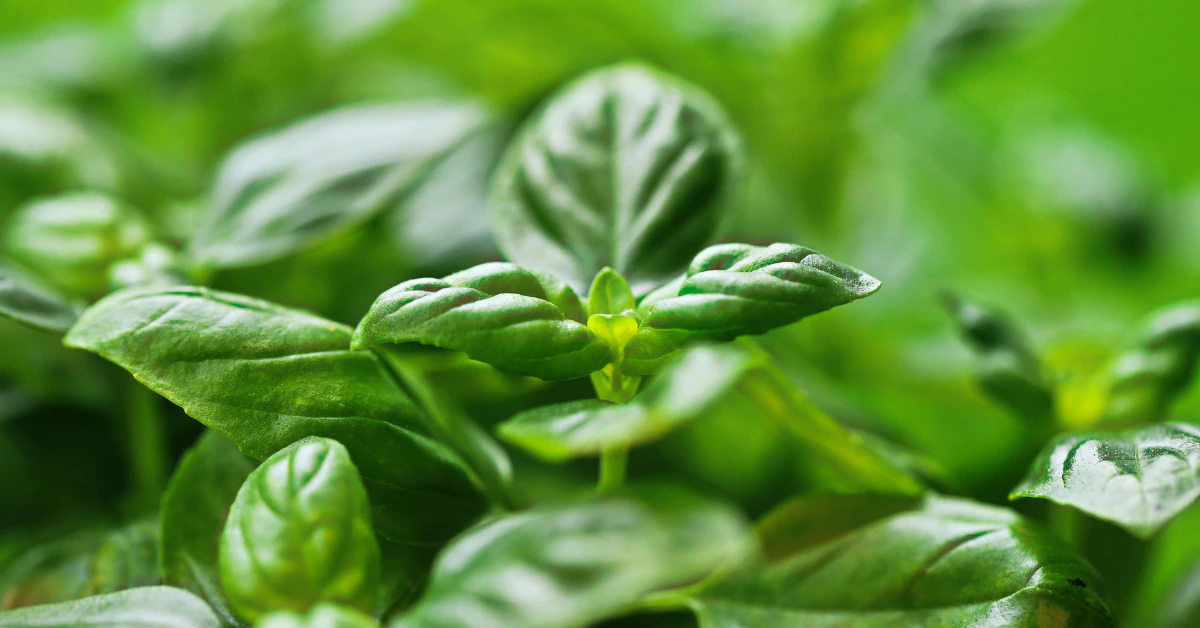
Basil is easy to grow once you get a few things right. Give it well-draining soil, at least 6 to 8 hours of sun, and steady moisture. Pinch and harvest from the top of the plant to keep it bushy. Most important, don’t plant or move basil outside until nighttime temperatures stay above 50°F. Below that, basil starts to suffer even without frost.
Maybe you just brought home a basil plant and want it to actually survive past this week. Or maybe you’ve tried before, watched it turn black and sad within days, and want to know what went wrong. Either way, you’re in the right spot. This guide walks through exactly what basil needs, why it fails so often, and how to keep it thriving all season long.
The 3 Best Ways to Start Basil
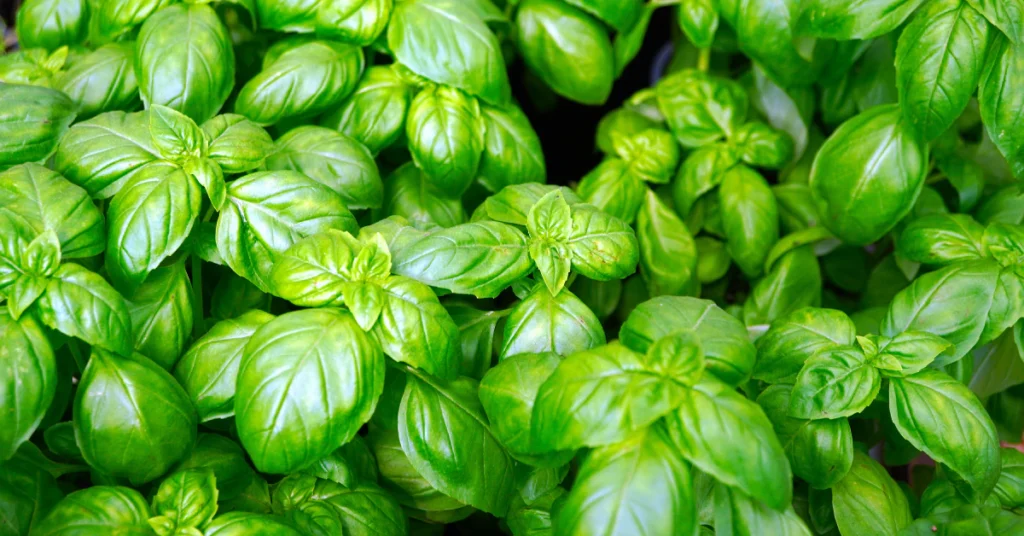
There are three common ways to start basil, and none of them are wrong. Which one fits you depends on how patient you are and how much you want to fuss with seeds.
From seed is the slowest option but gives you the most control over variety. Seeds germinate in about 5 to 7 days when soil stays at or above 70°F, though cooler conditions can stretch that to 10 to 14 days.
From cuttings is a great middle ground. Snip a healthy stem, root it in water or soil, and you’ll usually see new roots within a week or two. This works whether the cutting came from your own plant or a bunch you bought at the store.
From a supermarket plant is the fastest way to get basil on your counter today. The catch is that these pots often hold many crowded seedlings packed together for looks, not long-term growth. Dividing them right away gives each one room to actually survive.
Here’s how the three stack up:
| Method | Time to First Harvest | Difficulty | Best For |
| Seed | 4-6 weeks after germination | Moderate (needs patience and light) | Gardeners who want specific varieties and a full growing season |
| Cuttings | 2-3 weeks (root, then grow on) | Easy | Anyone who already has a basil plant or bought fresh basil at the store |
| Supermarket plant | Days, if divided and repotted correctly | Easy, but needs quick action | Cooks who want basil right away and don’t mind a little repotting work |
Whichever method you pick, you can grow basil indoors year round. All it really needs is enough light. A sunny south-facing windowsill works for many homes, but a small grow light is an easy backup if your kitchen doesn’t get much sun. Indoor basil won’t grow as fast as basil in a garden bed, but it will keep producing leaves through winter as long as it stays warm and gets consistent light.
If you’re short on time, cuttings and supermarket plants are honestly the smartest shortcuts. You skip the slow germination stage entirely and can be harvesting leaves within a couple of weeks.
How to Grow Basil from a Supermarket Plant
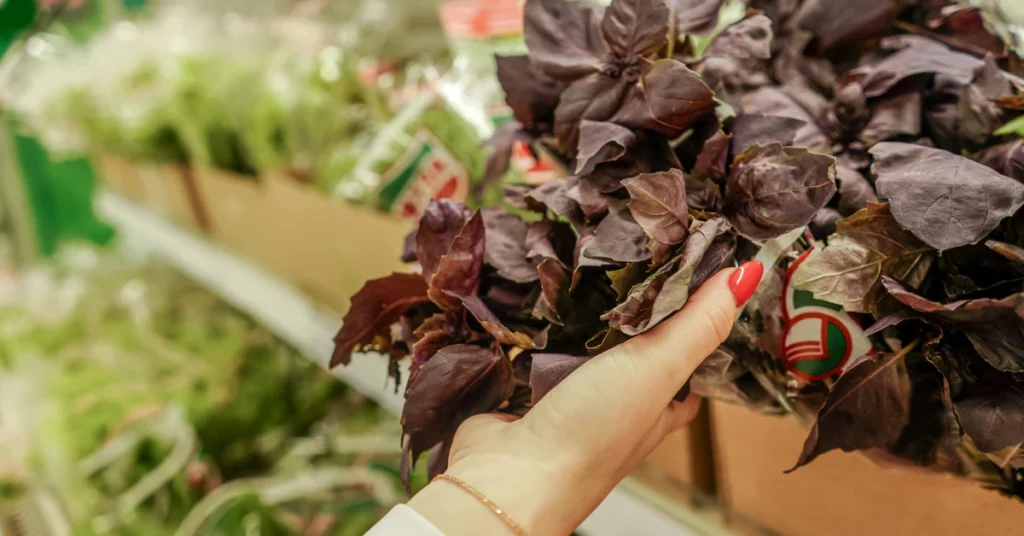
If your grocery store basil looked amazing on day one and was dead by day five, you didn’t do anything wrong. Growing basil from a supermarket plant comes with a hidden catch nobody warns you about.
Those bushy little pots are not one healthy basil plant. They’re commonly 20 to 30 seedlings crammed into a single small container, packed tight so it looks lush on the shelf. Once you get it home, those roots are already fighting each other for water, nutrients, and space. The plant looks fine right up until it can’t keep up anymore, then it collapses fast.
The fix is simple: divide it.
Slide the whole root ball out of its plastic pot. Do this gently over a sink or bowl in case soil falls loose.
Use your fingers to tease the roots apart. They’ll be tangled and dense. Split the mass into smaller clusters, aiming for about 2 to 4 seedlings per group. Don’t worry about being perfectly gentle here. Basil is forgiving.
Give each cluster its own pot. Use fresh potting soil and a container with drainage holes.
Water well and place in a sunny spot. A window with several hours of direct light works, or use a grow light if your kitchen is dim.
Growing basil from a supermarket plant indoors this way turns one doomed pot into several thriving little plants. Give them a few days to settle before you start harvesting, and you’ll have basil that actually lasts for weeks instead of days.
How to Grow Basil from Cuttings & In Water
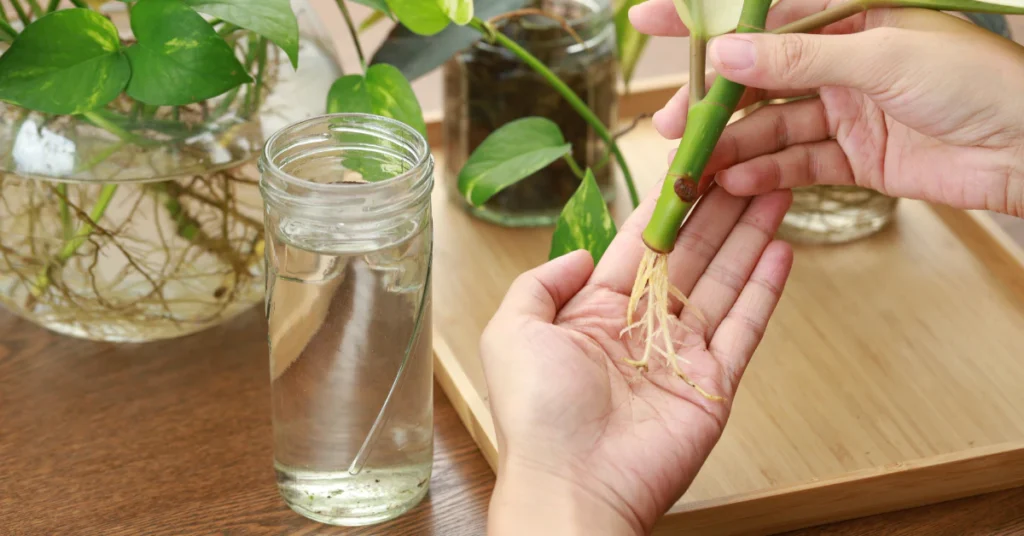
Growing basil from cuttings is one of the easiest ways to get more plants for free. It works whether you’re snipping from your own garden or from a bunch you just bought at the store.
Cut a healthy stem. Snip a 4 to 6 inch piece just below a leaf node, the little bump where leaves meet the stem. Pick a stem that looks strong and green, not wilted.
Remove the lower leaves. Strip off any leaves that would sit underwater in the glass. Leaving them on can cause rot.
Place the stem in a glass of water. A clear glass works great here because you can watch the roots grow. Set it on a sunny windowsill with bright, indirect light.
Change the water every few days. Fresh water keeps bacteria from building up and helps roots grow faster.
Watch for roots. Small white roots typically show up within 7 to 14 days.
Move to soil once roots reach 1 to 2 inches. This is the key step people skip. Growing basil in water is a great short-term method, but the plant needs soil for real, long-term growth. Once those roots are long enough, plant the cutting into a pot with fresh potting soil and water it well.
Leaving a cutting in water indefinitely will eventually weaken it. Think of water rooting as a launchpad, not a permanent home.
How to Grow Basil from Seed
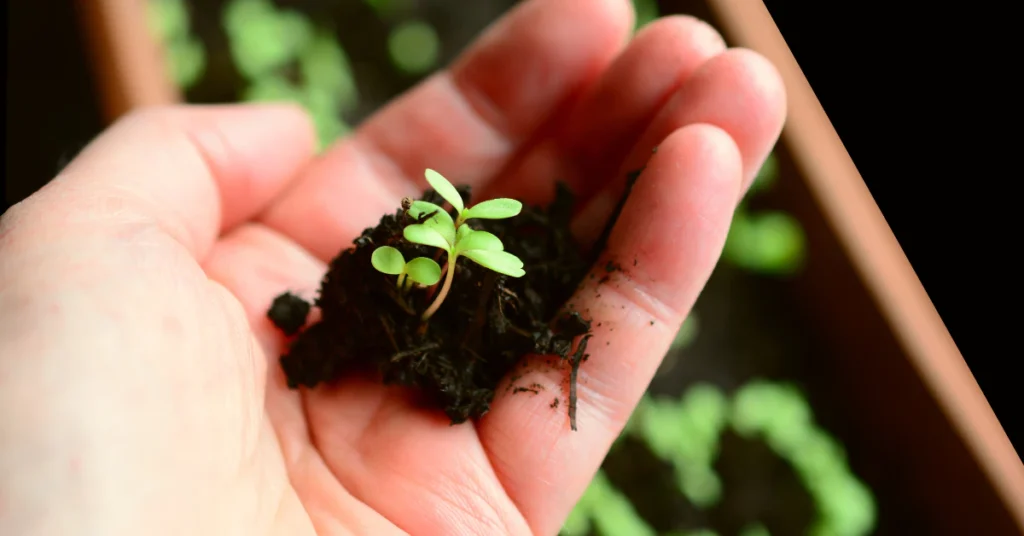
Growing basil from seed takes more patience than the other methods, but it’s the best way to get a full growing season and try out different varieties.
Soil temperature is what really decides your success here. Warm soil at 70°F or higher gets you sprouts in just 5 to 7 days. Cooler soil slows things way down, stretching germination out to 10 to 14 days. This one detail explains why so many beginners think they’ve failed at basil seeds when really they just needed more warmth.
Starting seeds indoors under lights
This is the more reliable route, especially if you’re planting basil from seed indoors during cooler months.
- Fill small pots or trays with moist potting soil.
- Sow seeds about ¼ inch deep.
- Set the tray somewhere warm, ideally near 70°F or use a seedling heat mat.
- Add a grow light if you don’t have strong natural sun, since basil seedlings need bright light to avoid getting tall and weak.
- Keep the soil consistently moist, not soggy.
Direct sowing outdoors
If you’d rather skip transplanting, you can sow seeds straight into garden soil once it’s warm enough.
- Wait until soil temperatures are reliably warm, not just the air.
- Sow seeds ¼ inch deep, spacing them a few inches apart.
- Keep the soil moist until seedlings appear.
Either way, warmth matters more than anything else. Rushing basil seeds into cold soil is the fastest way to a slow, disappointing start.
Basil Care Guide: Sunlight, Water, and Temperature
Basil isn’t complicated, but it does have a few strict rules. Get these three things right and most other problems sort themselves out.
Sunlight
Six to eight hours of full sun is the standard basil needs to thrive. That said, if you live in a hot, humid part of the country, like USDA Zones 8 to 10, including Florida, basil actually does better with some afternoon shade. Intense afternoon sun combined with high humidity can stress the plant out, according to UF/IFAS Extension. So the “full sun always” rule isn’t wrong, it just needs an asterisk depending on where you garden.
Temperature
Here’s where most guides get it wrong. Everyone talks about frost, which happens at 32°F, but basil starts struggling long before that. According to University of Illinois Extension, basil can suffer real damage, including blackened leaves and stunted growth, once temperatures drop below 50°F. That’s a full 18 degrees warmer than frost.
This matters a lot for timing. Don’t just wait for the last frost date and plant the next day. Wait until nighttime temperatures are consistently staying above 50°F, which is often later than people expect.
Is basil an annual or perennial?
Almost everywhere in the US, basil is grown as an annual. It will die once temperatures drop, and it won’t come back the next spring. The only exception is USDA Zones 10 and 11, where basil can survive as a short-lived perennial for a couple of growing seasons since there’s no frost or cold enough to kill it off.
Water
Basil likes soil that stays evenly moist, never bone dry and never soaked. Water deeply when the top inch of soil feels dry, and always let excess water drain away so roots don’t sit in a puddle.
Should You Grow Basil in Pots or the Ground?
Basil doesn’t strongly prefer one over the other. Both work well, so the right choice really comes down to your setup and how much you want to fuss with watering.
Basil planted in the ground usually needs less frequent watering once it’s established. The soil holds moisture more evenly, and you’re not checking on it every single day.
Growing basil in pots trades a little of that convenience for flexibility. You can chase the sun by moving the pot around your patio, or quickly bring it inside if a cold snap is coming. That mobility is a real advantage if your weather is unpredictable or your yard doesn’t get consistent sun all day.
If you go with containers, size matters. Your pot needs drainage holes, no exceptions, since soggy roots will quickly rot. As for width, 6 to 8 inches is the bare minimum. A 10 to 12 inch pot or larger will give you a noticeably healthier, bigger plant, since the roots have more room to spread out and support all that leafy growth up top.
There’s no wrong answer here. Pick whichever fits your space and your lifestyle.
How to Harvest Basil (Without Killing It)
There’s a lot of confusing advice online about which part of the basil plant to pick from. Some sources say bottom, some say top, and it leaves a lot of gardeners guessing. Here’s the clear answer: harvest from the top.
Pinch or snip the stem just above a leaf node, that little bump where a pair of leaves meets the stem. This tells the plant to branch out sideways right at that spot, which is exactly what makes basil bushy and full instead of tall and thin.
Stripping leaves from the bottom of the plant does the opposite. It leaves the top growing unchecked, and you end up with a leggy, sparse plant that looks more like a stick than a bush.
Timing your first harvest matters too. Don’t touch a young seedling right away. Wait until the plant is about 6 inches tall with 2 to 3 sets of true leaves before making that first cut. This gives the plant enough established growth to bounce back strong.
Once you start, keep at it regularly. Frequent light harvesting from the top keeps basil productive and bushy all season, and it’s the single easiest way to avoid the leggy, unhappy plants so many beginners end up with.
Pests, Downy Mildew, and Pet Safety
Downy mildew is the biggest disease threat basil growers face in the US, especially if you live somewhere humid. It shows up as yellowing leaves and a fuzzy gray coating on the underside, and it spreads fast in warm, damp conditions.
The good news is you have a real solution beyond just crossing your fingers. Downy Mildew Resistant, or DMR, varieties have been bred specifically to fight this off. Look for names like Rutgers Devotion, Rutgers Obsession, or Proven Winners’ Amazel Basil. These hold up far better than classic Genovese basil, which is especially prone to the disease. If you’ve struggled with mildew wiping out your basil year after year, switching varieties is worth trying before you switch anything else.
Is basil safe for pets?
Yes. According to the ASPCA’s official toxic plant list, basil is non-toxic to both dogs and cats. You can grow it in your home without worrying that a curious nibble will hurt your pet.
That said, non-toxic doesn’t mean unlimited. If a dog or cat eats a huge amount of any plant, including basil, the sheer volume of fiber can cause mild stomach upset. A leaf or two is nothing to worry about.
Frequently Asked Questions
What are common basil growing mistakes?
Planting too early before nights stay above 50°F, harvesting from the bottom instead of the top, and both overwatering and underwatering are the biggest culprits. All three lead to wilting, yellowing, or a leggy plant.
Does basil come back every year?
No, not in most of the country. Basil only survives year after year as a short-lived perennial in USDA Zones 10 and 11. Everywhere else, it’s grown as an annual and needs to be replanted each year.
Does basil grow better in pots or in the ground?
Both work well. Ground planting needs less frequent watering once established, while pots give you the freedom to move the plant to chase sun or dodge a cold snap.
How do you cut basil so it keeps growing?
Pinch or snip the stem about ¼ inch above a leaf node. This forces the plant to branch out at that spot instead of just growing taller.
Do I pick basil from the top or the bottom of the plant?
The top. Pinching from the top encourages bushy growth, while stripping bottom leaves leaves the plant tall, thin, and leggy.
What cannot be planted near basil?
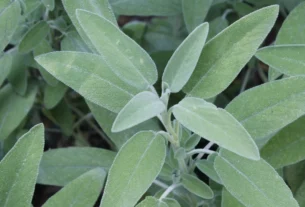
Rue and fennel are the two to avoid. Both are allelopathic, meaning they release compounds that stunt basil’s growth. Sage isn’t harmful in that way, but it prefers dry soil while basil wants consistent moisture, so the two struggle if planted in the same bed long-term.
Conclusion
Basil rewards a little attention with a lot of fresh leaves. Keep it warm above 50°F, give it plenty of sun, water it consistently, and harvest from the top instead of the bottom. Whether you start from seed, a cutting, or a rescued supermarket pot, the same core rules apply. Get those right, and you’ll have basil that lasts all season instead of dying in a week.