yes, you can grow a pineapple plant from the top of a store-bought pineapple, and it’s easier than most people think. Twist or cut off the leafy top, leaving about an inch of fruit attached. Let it dry out on the counter for a few days. Then plant it in moist, well-draining soil. That’s the whole process in a nutshell.
This guide walks you through each step in more detail, from drying the top correctly to picking the right pot and rooting medium. You’ll also learn how long it really takes before you see a new pineapple, what can go wrong along the way, and how to care for the plant once it’s rooted.
One thing to keep in mind before you start: this is a slow project. You’re not growing a quick kitchen herb. You’re growing a tropical plant that takes patience and a long view.
Prepping the Crown (and a Quick Safety Note)
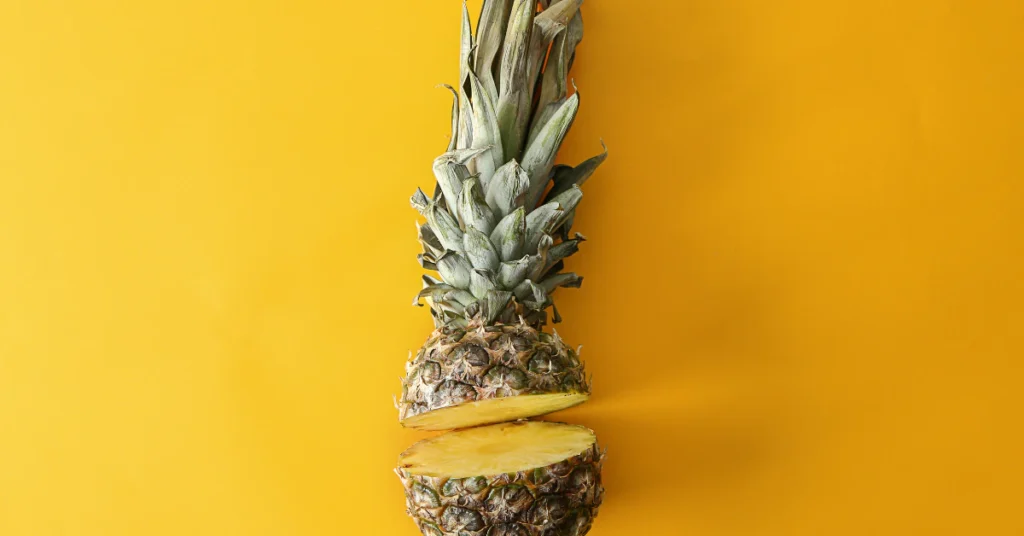
Start by twisting or cutting the leafy top off your pineapple. Leave about one inch of fruit attached to the base of the leaves. Don’t cut it too close to the leaves, or you won’t have enough stem to root.
Next comes the part most people skip, and it’s the one that causes the most failures later: trimming. Use a knife to carefully slice away the sweet, juicy flesh around the base, working your way down until you reach the tough, fibrous core. Any leftover fruit flesh left on the crown will rot once it’s in soil, and that rot can spread up into the stem and kill the whole cutting.
While you’re trimming, pull off a few of the lowest leaves too. This gives you a bare bit of stem, which is exactly where roots will grow from.
Once it’s trimmed, set the crown somewhere dry and out of direct sun for several days. This drying time lets the cut surface callus over, which helps block out bacteria and rot once you plant it.
One quick safety note. Pineapple isn’t on the ASPCA’s toxic plant list for cats or dogs, so it’s considered safe to have around pets. For people, though, the sap and spiny leaf edges can cause mild skin irritation for some, a bit like a scratch or minor rash. It’s nothing serious, but it’s smart to handle the crown with a light touch, or gloves if your skin tends to react easily.
Rooting the Top: Soil vs. Water
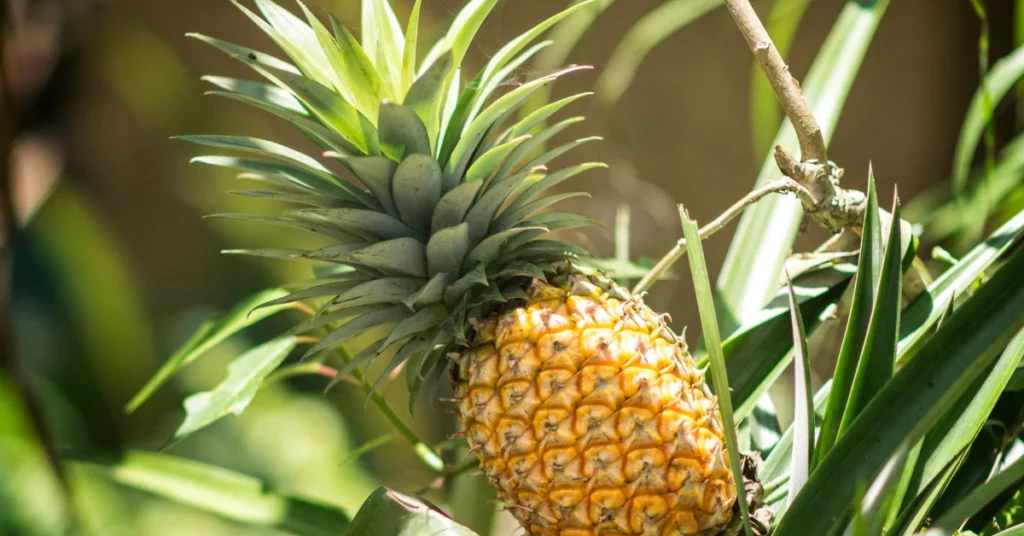
Now it’s time to get your crown rooted. University extension offices test two main approaches, and both work well.
The first is planting directly in soil. Use a pot about 6 to 8 inches wide, filled with a coarse potting mix that drains fast. Bury the base of the crown just deep enough so the bottom leaves rest at the soil line.
The second method skips soil at first and uses perlite, vermiculite, or coarse sand instead. This gives the roots a loose, airy space to grow into before you move the plant into regular potting mix.
Whichever medium you choose, warmth and humidity matter a lot. Aim for a spot around 75 to 80°F, with bright but indirect light. A simple trick that helps a lot is loosely placing a clear plastic bag over the pot and crown. This traps moisture around the leaves and speeds up rooting.
You may have seen people online root pineapple tops in a jar of water instead, like you would with a green onion. It’s a popular idea, but it isn’t the method backed by university extension testing. Both soil and solid rooting mediums are what’s actually been verified to work.
Here’s the part that trips up more beginners than anything else: overwatering. It’s tempting to water on a set schedule, like once a week, no matter what. But a fixed schedule often means watering when the plant doesn’t actually need it yet, and soggy roots are the fastest way to rot a pineapple crown before it ever takes hold.
Instead, check the medium with your finger. If it still feels moist, wait. When in doubt, always lean toward too dry rather than too wet. Rooting typically takes 5 to 8 weeks, and a little neglect during this stage is far safer than too much attention.
The Waiting Game: Lifespan, Pups, and Ratoons
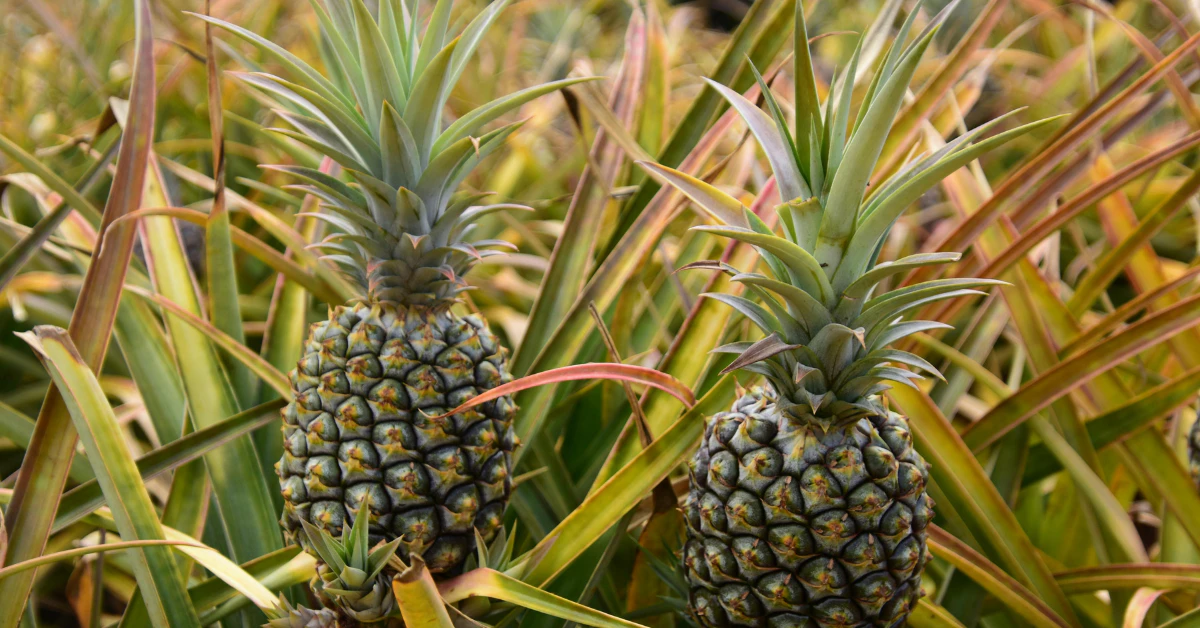
Rooting only takes a matter of weeks, but fruit takes a lot longer. From a planted top, expect roughly 18 to 24 months before you see a pineapple, and some growers report it taking as long as 3 to 4 years depending on growing conditions. Growing from seed is even slower, usually around 4 years, so starting from a crown is the faster route if you want fruit sooner.
Here’s something that confuses a lot of first-time growers: does the plant die after it fruits? The answer is yes and no. The main stem, the one that grew from your original crown, flowers and fruits exactly once. After that, it’s done. It won’t grow a second pineapple from that same stem.
But the plant isn’t finished for good. As it grows, it sends up small side shoots called pups, or suckers, from around the base. If you leave one of these in place instead of removing it, it can grow into its own stem and produce a new pineapple. This is called a ratoon crop.
Ratoon fruit is usually a bit smaller than the first one. A first ratoon typically comes in around 88 percent the size of the original fruit, and a second ratoon drops further, to about 79 percent. Each cycle after that tends to get smaller and weaker, which is why most growers eventually replace the plant with a fresh, strong pup instead of chasing endless ratoon crops.
Outdoor Zones vs. Indoor Care
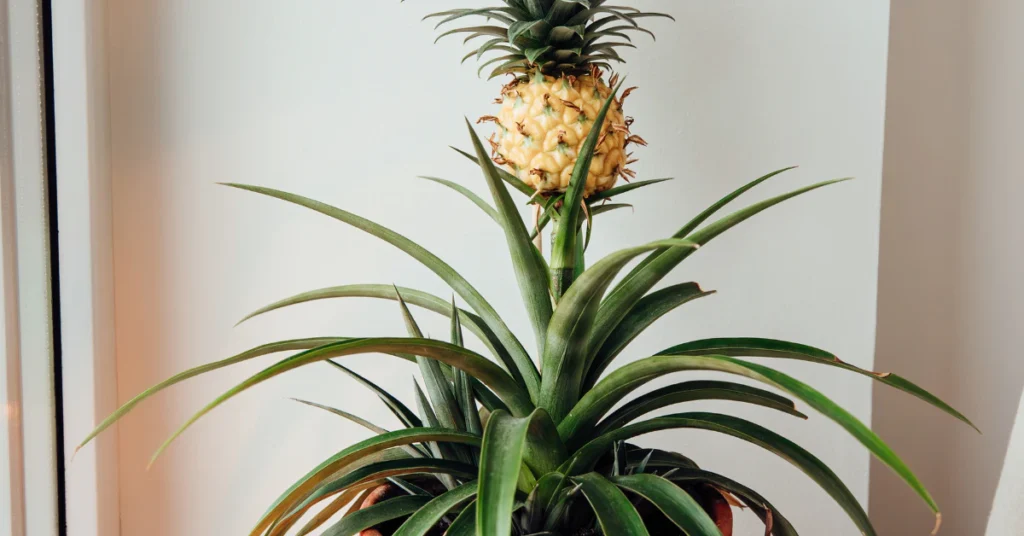
Where you live changes how you’ll need to care for this plant long term.
Pineapples can only survive outdoors all year in USDA Zones 10A through 11B. That covers places like south Florida and Hawaii. If you’re in one of these zones, you can eventually plant it straight into the ground.
For almost everywhere else in the US, including Zone 9, this needs to be treated as a container plant. A hard freeze below 28°F will kill it outright, so even a mild cold snap is a real risk outside its safe zones.
Here’s how to manage it as a container plant. Once your crown has rooted and the weather warms up, move the pot outdoors for the summer. Give it a spot with bright light. During spring and summer, feed it once or twice a month with a houseplant fertilizer to support steady growth.
As fall approaches, keep an eye on the forecast. Before the first frost hits your area, bring the pot back inside and set it in a sunny window. Cut back on feeding over the colder months, since the plant naturally slows down indoors. This moving process, outside for summer and inside before frost, becomes an annual routine until the plant is ready to fruit.
Troubleshooting: Why Pineapple Tops Rot
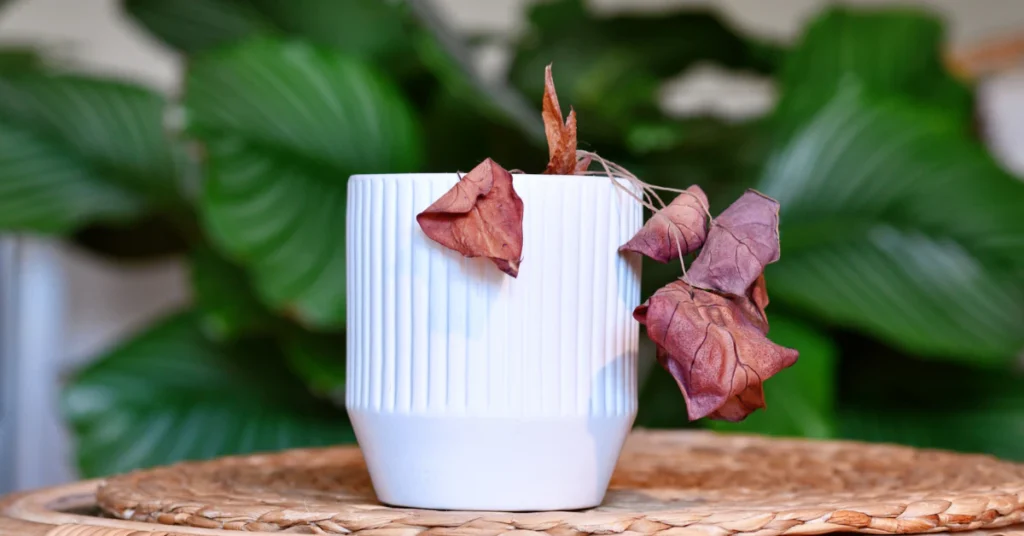
If your pineapple top rots before it roots, it almost always comes down to one of two causes.
The first is watering too often. As covered earlier, watering on a fixed schedule instead of checking the medium first is the most common mistake. If the base sits in soggy soil for too long, rot sets in before roots even have a chance to form.
The second cause is one almost nobody thinks to check: price tags. Many grocery stores pin a small plastic sticker or price tag directly into the crown, right near the base, using a thin metal staple or pin. If you don’t notice it and plant the crown with the tag still in place, that bit of plastic traps moisture right where you don’t want it. It creates a hidden pocket of damp decay inside the core, and the rot spreads outward from there.
Before you trim and dry your crown, take a close look at the base and lower leaves. Run your fingers around the stem to feel for anything hard or sharp poking through. Remove any tag or staple completely before you move on to drying and planting. It’s a small step, but skipping it is a surprisingly common reason a promising crown fails for no obvious reason.
The “Pink Pineapple” Patent Mystery
If you’ve ever paid a premium for a pink pineapple and found the crown already trimmed down or missing most of its leaves, that’s not an accident.
The pink pineapple, sold under the name Pinkglow, is a patented variety owned by Del Monte. The company holds a U.S. plant patent and a trademark on it, which means growing your own from a store-bought top isn’t something you’re legally allowed to do without permission.
To make sure home gardeners can’t easily try, Del Monte deliberately strips or damages the crowns before the fruit ever reaches shelves. That’s why Pinkglow tops often look mangled or incomplete compared to a regular pineapple’s crown. It isn’t shipping damage. It’s intentional, and it’s part of how the company protects its investment in the variety.
Frequently Asked Questions
How long does it take to grow a pineapple from planting the top?
Rooting takes about 5 to 8 weeks. After that, expect another 18 to 24 months before you see fruit, though it can take up to 3 to 4 years depending on growing conditions.
Can I root a pineapple top in water?
A lot of people try this, but it isn’t the method university extension offices actually test. They recommend rooting in a solid medium like coarse potting mix, perlite, vermiculite, or sand instead.
Can I grow a pineapple from just the top?
Yes. This is the standard, most common way to grow a pineapple plant at home.
How many times will one pineapple plant produce fruit? What is its lifespan?
The original stem fruits only once, then it’s done. But the plant sends up pups that can grow into new stems, giving you one or two more ratoon harvests. All together, a pineapple planting usually stays productive for about 3 to 5 years.
Should I water my pineapple plant every day?
No. Check the soil first and water only when it’s starting to dry out. Erring on the dry side is safer than watering on a fixed schedule.
Why is it illegal to grow pink pineapples?
The Pinkglow variety is patented and trademarked by Del Monte. Growing one without permission isn’t allowed, which is why the company strips or damages the crowns before the fruit reaches stores.
Why shouldn’t you eat pineapples on an empty stomach?
It comes down to acidity, not the bromelain enzyme. Pineapple has a natural pH of around 3.2 to 4.0, and on an empty stomach that acidity can trigger heartburn in people who are sensitive to it. Bromelain itself gets deactivated by your stomach acid, so it isn’t the real cause of discomfort.
How do I start roots on a pineapple top?
Cut the top with about an inch of fruit attached, trim away the extra flesh down to the core, let it dry for several days, then plant it in a moist, well-draining medium.
Conclusion
Growing a pineapple from the top is a simple, low-cost project that rewards patience more than skill. Cut the crown carefully, let it dry, root it in the right medium, and keep watering light. The hardest part isn’t the technique. It’s waiting the better part of two years to see your first fruit. But once that pineapple finally forms, and your plant keeps giving you pups for more harvests after that, you’ll see why so many home gardeners keep coming back to this project again and again.