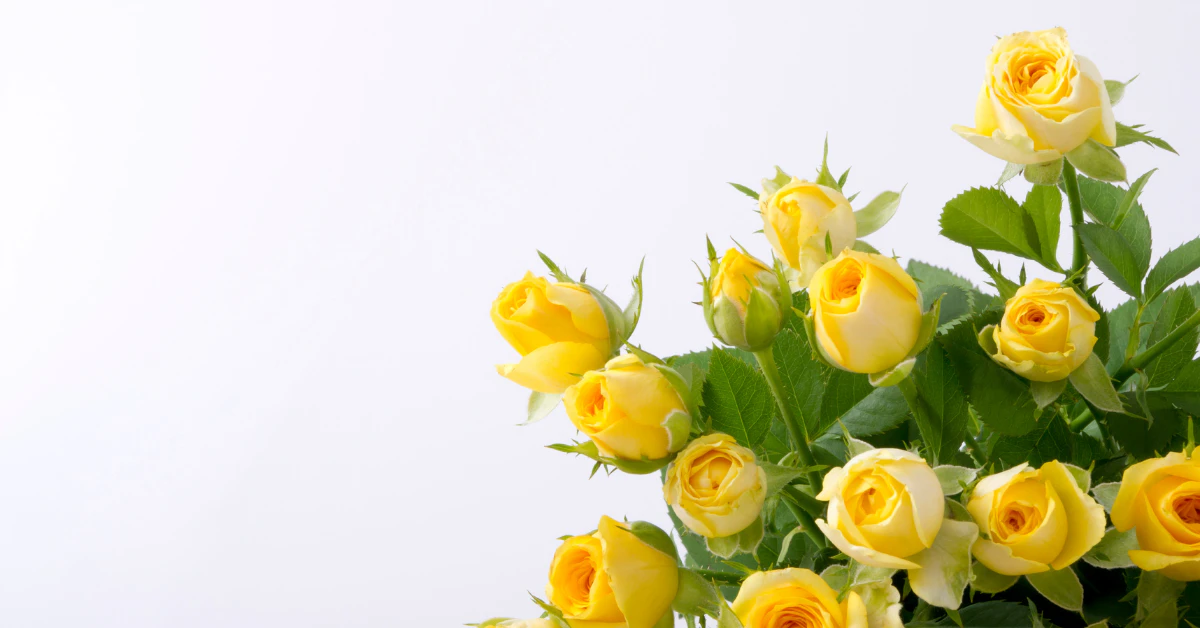
Yellow roses top the list of flowers that symbolize friendship, followed closely by sunflowers, zinnias, and alstroemeria. These blooms share bright, warm colors and a cheerful look that reads as platonic, not romantic. The yellow rose is the most traditional pick, though no single flower has ever been made official by law.
Flowers have carried meaning between friends for a long time. A sunflower’s steady, loyal habit of following the sun has made it a stand-in for a friendship that lasts. A zinnia’s long bloom time echoes a bond that doesn’t fade. Giving someone a flower that symbolizes friendship and loyalty is a small way to say the relationship matters, without needing the words.
Most guides on this topic stop at the florist counter. This one doesn’t. Alongside what each flower means, you’ll find out which of these you can actually grow yourself, in your own yard or containers, based on where you live in the US.
Navigating Romantic vs. Platonic Flowers: How to Avoid Mixed Signals
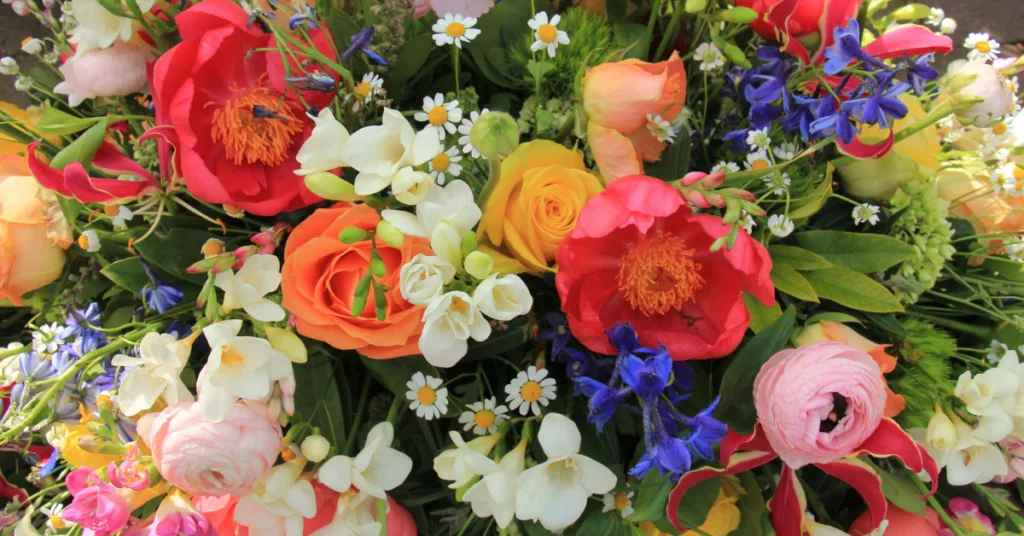
Sending flowers to a friend can feel riskier than it should. You want to show you care, not send a signal you didn’t mean to send. A few simple rules can take the guesswork out of it.
Color is doing most of the talking
Red flowers, especially red roses, are tied to romantic love almost everywhere in the US. Even red flowers that aren’t roses can carry some of that same weight. If the goal is clearly platonic, it’s safest to skip red altogether.
All-white arrangements carry a different risk. They’re often linked to sympathy and funerals, so an all-white bouquet can land as a condolence gift instead of a happy one, even when that’s not what you meant.
A single rose, in almost any color, tends to read as romantic on its own. It’s the classic “I like you” gesture, so it’s one to avoid for a friend unless that’s actually the message you want to send.
A simple Do/Don’t guide
| Do | Don’t |
| Choose yellow as your base color | Lead with red |
| Mix in bright colors like orange, pink, or purple | Send an all-white bouquet |
| Give a full bunch or a small bouquet | Give a single rose by itself |
| Pick cheerful, multi-bloom flowers like sunflowers or zinnias | Stick to one flower type in a formal, romantic style |
Yellow stays the safest overall choice because it reads as warm and friendly without any romantic history attached to it. A mixed, colorful bouquet sends the same message: this is a gift between friends, nothing more, nothing less.
Top Friendship Flowers to Grow at Home (Zone & Timing Guide)
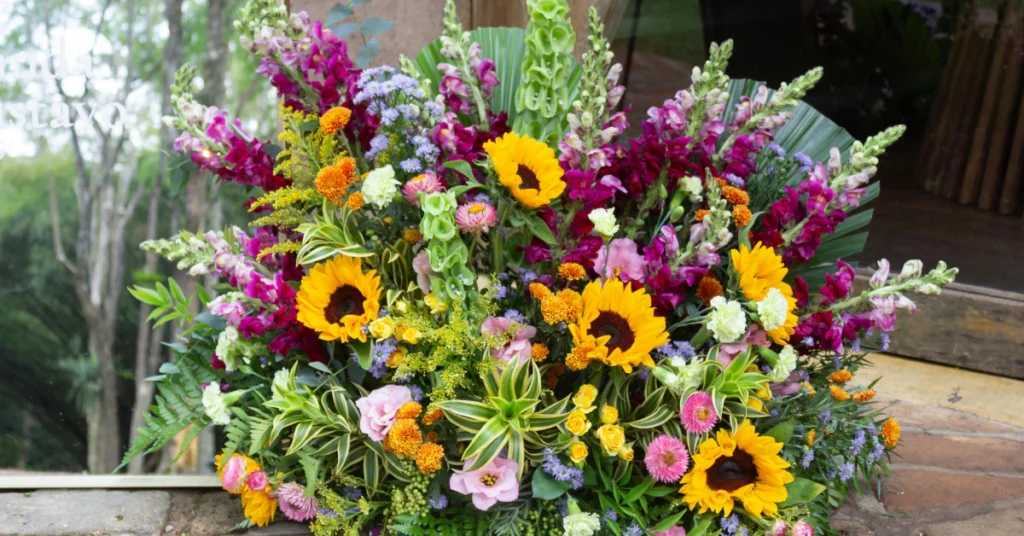
Sunflowers: the flower of loyalty and devotion
Sunflowers symbolize devotion and quiet loyalty. Their habit of turning to follow the sun has made them a lasting stand-in for a friend who’s always there.
The good news for gardeners is that sunflowers are easy almost everywhere. According to University of Florida IFAS Extension, sunflowers grow as a warm-season annual in all USDA hardiness zones. The main thing that changes by region is timing: gardeners in warmer zones (9 through 11) can start planting as early as December through February, while those in cooler zones 7 and 8 wait until spring, around March through May.
Zinnias: color that lasts all summer
Zinnias stand for a friendship that stays strong and doesn’t fade. They bloom for weeks on end, which fits the symbolism well.
Zinnias need warmth to perform. Per Oregon State University Extension, they flower best once daytime temperatures stay above 60°F, and they won’t survive frost. In most of the country, they’re grown as annuals that need replanting each year. Only in USDA zones 9 through 11 can zinnias act more like a perennial, sticking around year to year instead of dying back each winter.
Sweet peas: fragrant, but tricky with timing
Sweet peas carry a meaning of gratitude and lasting affection, which makes them a thoughtful pick for an old friend. They’re also one of the trickiest flowers on this list to time correctly, so pay attention here.
Where you live changes everything about when to plant them. In mild-winter regions, like inland California, sweet peas go in the ground in fall, according to University of California Cooperative Extension guidance. In colder zones, they’re planted in spring instead, once the soil can be worked.
Here’s the catch. Sweet peas are a cool-season flower, and they stop blooming once summer heat arrives. That means if you’re hoping to have sweet peas in bloom for a warm-weather gifting occasion, like National Friendship Day in early August, timing can work against you. Plan on sweet peas for a spring gift instead, not a late-summer one.
Quick zone and timing reference
| Flower | Growing Type | Best Zones | Timing Note |
| Sunflower | Warm-season annual | All zones | Plant spring; earlier in warm zones |
| Zinnia | Annual (perennial-like in warm zones) | Best in 9 to 11 for year-round growth | Needs temps above 60°F to flower |
| Sweet Pea | Cool-season annual | Fall-planted in mild zones, spring-planted in cold zones | Stops blooming in summer heat |
If you’re planting with a specific date in mind, like a birthday or a summer visit, sunflowers and zinnias are the more forgiving choices. Sweet peas reward patience, but they’re a spring flower at heart, not a summer one.
Pet and Child Safety: Toxic vs. Non-Toxic Friendship Blooms
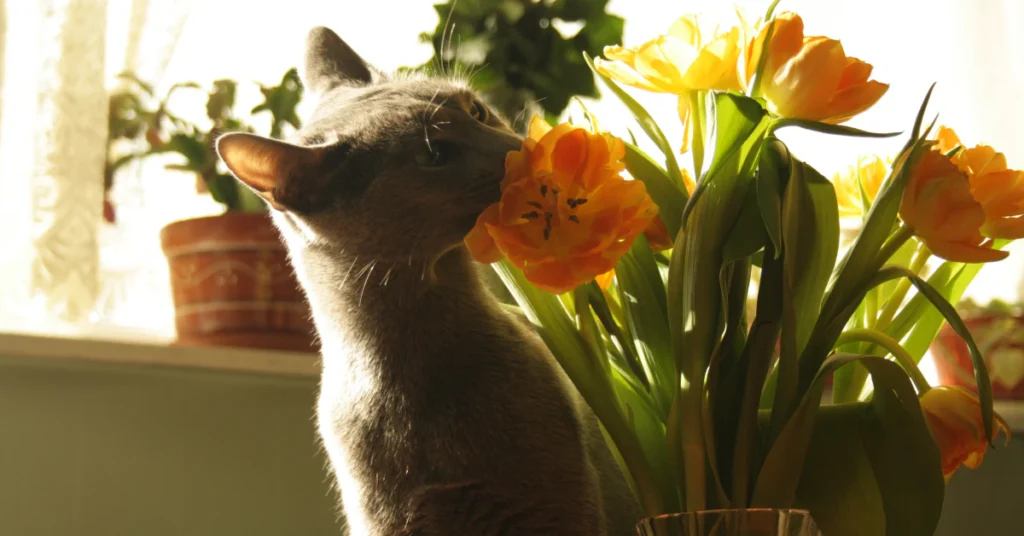
If you’re gifting a friend who has pets, or planting a friendship garden that kids or animals can reach, it helps to know which blooms are safe and which ones aren’t.
Safe bets for pets
According to the ASPCA’s toxic and non-toxic plant list, these friendship flowers are non-toxic to dogs and cats:
- Roses
- Sunflowers
- Zinnias
- Carnations
These are solid choices if your friend has a curious cat or a dog that likes to sniff through a bouquet.
Flowers to keep away from pets
A few popular friendship flowers are not safe around animals. The ASPCA lists these as toxic to dogs and cats:
- Chrysanthemums (mums)
- Daffodils
- Sweet peas
- Irises
- Lavender (toxic to dogs)
If a friend has pets at home, it’s worth skipping these or keeping them somewhere a cat or dog can’t reach.
A mistake home gardeners make with sweet peas
Here’s one worth knowing if you grow your own. Sweet pea pods look a lot like snap pea pods, the kind you’d pick and eat straight from the vine. But sweet pea seeds and pods are not food. They’re toxic and should never be eaten, according to University of California Cooperative Extension.
This mix-up happens most often when sweet peas and snap peas are planted close together in the same garden bed. If you’re growing both, it’s smart to keep them in separate areas and label them clearly, especially if kids help with the harvesting. A pretty, pea-shaped pod isn’t always a safe one to pop open.
The “Peruvian Lily” Mix-Up: Why Alstroemeria is Safe
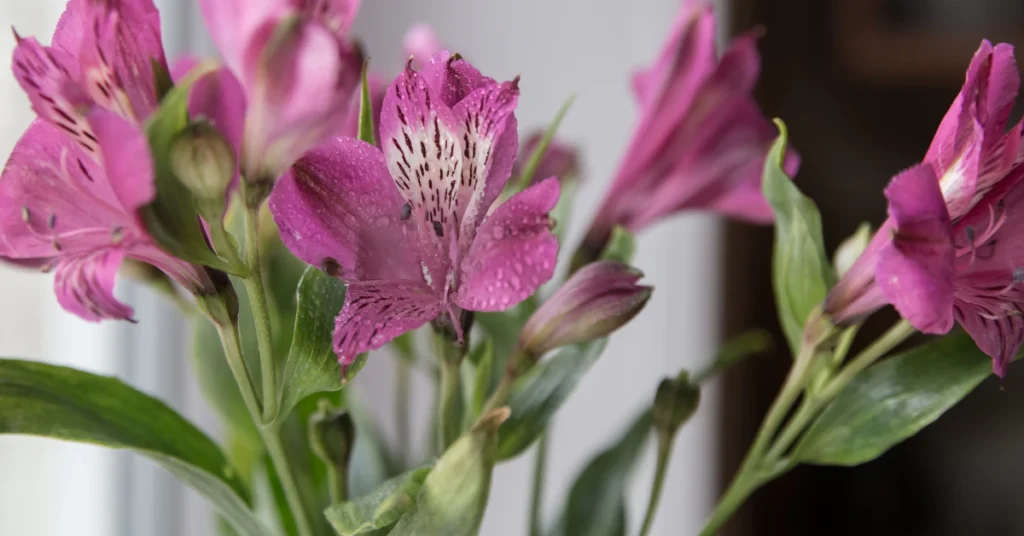
Alstroemeria is one of the friendliest flowers on this list, both in meaning and in looks, with its bright, speckled petals. But its nickname causes more worry than it should.
Why the name “Peruvian lily” scares pet owners
Alstroemeria is commonly called the Peruvian lily, and that name alone sends some pet owners straight to panic mode. True lilies, the Lilium species, are highly toxic to cats and can cause fatal kidney damage even from a small amount of pollen or a few chewed petals.
Alstroemeria isn’t a true lily
Here’s the relief. Alstroemeria only shares a name with true lilies. It’s not part of the same plant family and doesn’t carry the same risk.
According to the ASPCA’s plant database, alstroemeria is non-toxic to dogs, cats, and horses. That makes it one of the safer flowers you can bring into a home with pets, despite the misleading name.
So if a friend’s cat likes to investigate every new bouquet that comes through the door, alstroemeria is one you don’t need to worry about. The name is the only alarming part.
The Friendship Day Confusion: Two Dates, No “Official” Flower
There are actually two different friendship holidays, and most people have never heard that the second one exists.
Two holidays, two dates
In the US, National Friendship Day falls on the first Sunday of August every year. It goes back to the 1930s, when Hallmark Cards founder Joyce Hall pushed the idea of a day to celebrate friends. The US Congress made it official in 1935, proclaiming the first Sunday of August as National Friendship Day.
Then there’s a second, separate holiday. The United Nations’ International Day of Friendship lands on July 30 each year. The UN General Assembly established it in 2011, with a focus on friendship between people and nations around the world.
So depending on which one someone means, “Friendship Day” can land on two completely different dates just a week or so apart.
Is the yellow rose really “official”?
You’ll see the yellow rose called the official flower of Friendship Day all over the internet. It isn’t, at least not in any legal sense. Neither the US Congress nor the United Nations ever passed anything naming a specific flower for the day.
What actually happened is simpler. Yellow roses became the customary choice over time, because yellow reads as warm and friendly without any romantic meaning attached. It’s tradition, not law, but it’s a tradition that’s stuck for good reason.
At-a-Glance: Friendship Flower Comparison Table
Here’s a quick reference pulling together everything covered so far, color meaning, how easy each flower is to grow, and whether it’s pet-safe.
| Flower | Color Meaning | Grow-It-Yourself Difficulty | Pet Safety |
| Yellow Rose | Warmth, trust, joy | Medium | Non-toxic |
| Sunflower | Loyalty, devotion | Easy, all zones | Non-toxic |
| Zinnia | Lasting friendship | Easy, zone-dependent for perennial growth | Non-toxic |
| Sweet Pea | Gratitude, affection | Medium, timing depends on zone | Toxic |
| Alstroemeria | Devotion, friendship | Medium | Non-toxic |
| Chrysanthemum | Cheerfulness | Medium | Toxic |
| Carnation | Admiration, affection | Easy | Non-toxic |
| Iris | Trust, wisdom | Medium | Toxic |
If pet safety and easy growing both matter to you, sunflowers, zinnias, and carnations are the simplest picks on this list.
Frequently Asked Questions (FAQs)
What flowers should I get for a friendship?
Yellow roses, sunflowers, zinnias, and alstroemeria are all solid choices. All four are non-toxic to dogs and cats, which makes them easy picks if your friend has pets at home.
What is the friendliest flower?
The yellow rose holds that title most often. Its color reads as warm and platonic, without the romantic weight that red roses carry.
What is the official flower of Friendship Day?
There isn’t one, legally speaking. No law from the US Congress or the United Nations names a specific flower. The yellow rose is simply the flower that tradition settled on over time.
What color symbolizes friendship?
Yellow. It shows up again and again across friendship flowers, from roses to sunflowers, because it feels cheerful and safe without any romantic meaning attached.
What is the flower of friendship?
The yellow rose, most commonly. Sunflowers and zinnias are close runners-up, each with their own layer of meaning tied to loyalty and lasting bonds.
What symbolizes true friendship?
A few flowers get tied to the idea of a true, lasting friendship. Sunflowers are a common pick, since they track the sun’s path all day, a habit people have long read as loyalty. Zinnias come up too, thanks to how long they stay in bloom. Worth noting that this is cultural tradition, floriography, not a scientific claim, so it’s more about shared meaning than hard fact.
Conclusion
Flowers have a quiet way of saying what words sometimes can’t. Yellow roses, sunflowers, zinnias, and alstroemeria all carry that message of friendship, warmth, and loyalty, without any romantic mix-up. Whether you pick up a bouquet or grow your own based on your zone, the flower itself matters less than the thought behind it. A little care in choosing the right bloom, and keeping pets and timing in mind, goes a long way toward making the gesture land exactly the way you meant it.